Analysis
The Man Who Vanished in front of 134 People in Sahara part 2
The sun of the fifth day was about to set when suddenly a sound hit his ears—the sound of a helicopter. He felt his prayers had been answered. Without wasting time, Prosperi took out his flare gun and fired a signal to get the pilot's attention. But perhaps nature had other plans. The light of the setting sun was so bright that the flash of the flare was drowned out. The pilot didn't see him, and the helicopter vanished from sight.
By Imran Ali Shah11 days ago in History
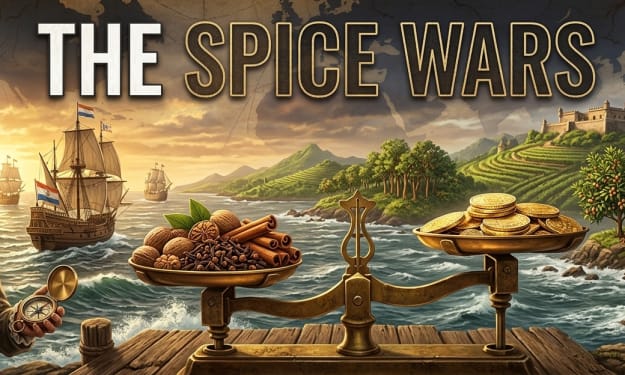
The Spice Wars: When Europe Fought Over Flavor and Fortune
When Flavor Was Worth Fighting For Back in the late 1400s and early 1500s, Europe had a serious obsession with spices. Pepper, nutmeg, cloves, and cinnamon weren’t just kitchen ingredients—they were status symbols. A pinch of pepper could cost as much as a day’s wages. Most of these spices came from a tiny cluster of islands in Southeast Asia known as the Maluku Islands. Getting them to Europe was complicated and expensive, mostly controlled by middlemen through the Ottoman Empire and trading hubs like Venice. European powers didn’t like that arrangement. They wanted direct access—and bigger profits. The Race to Find a Shortcut This is where things start to feel like a real-world adventure story. Explorers began searching for sea routes to Asia, kicking off what we now call the Age of Discovery. One of the most important breakthroughs came when Vasco da Gama successfully sailed around Africa to reach India in 1498. That single journey changed everything. Portugal suddenly had a direct line to the spice trade. And they didn’t waste time—they built forts, controlled ports, and used military force to dominate the routes. From Trade to War Here’s where things got messy. Other European powers—especially the Dutch and the British—weren’t going to sit back and watch Portugal cash in. They formed powerful trading corporations like the Dutch East India Company and the British East India Company. These weren’t regular businesses. They had armies, navies, and the authority to wage war. Think about that for a second: private companies fighting battles over spices. The Dutch, in particular, became ruthless in securing control over nutmeg and cloves. They even went as far as destroying spice trees in areas they didn’t control—just to keep supply low and prices high. A Practical Example (That Still Applies Today) When I first learned about this, it reminded me of something very modern: supply chains. If you’ve ever tried to buy a popular gadget during a shortage—or even struggled to find a specific ingredient—you’ve experienced a tiny version of what was happening back then. The spice trade worked on three simple principles: Control the source Limit supply Maximize profit It’s not that different from how certain tech products or luxury brands operate today. Mistakes That Cost Lives and Empires One thing that stands out when you look deeper into the spice wars is how often greed led to poor decisions. Portugal, for example, expanded too quickly. They controlled key routes but couldn’t maintain dominance everywhere. The Dutch learned from that and focused more strategically, locking down the most valuable islands instead of spreading thin. The British took a different route. Instead of fighting only for spices, they gradually shifted toward broader control in India, which turned out to be a much more sustainable long-term strategy. It’s a lesson I’ve seen play out even in small-scale projects: trying to control everything at once usually backfires. What This Means for Everyday Life You might be thinking, “Okay, interesting history—but how does this matter now?” Here’s the thing: the spice wars shaped the modern world in ways we still live with. Global trade routes? Built on those early spice journeys Colonial borders? Influenced by these power struggles Cultural food exchange? A direct result of spice movement Even your local grocery store—with spices from all over the world—is part of that legacy. If You Want to Experience It Yourself This might sound unusual, but one of the best ways to understand the spice wars is through cooking. Here’s a simple way to do it: Step 1: Buy whole spices instead of pre-ground Try cloves, cardamom, black pepper, and cinnamon sticks Step 2: Toast them lightly in a pan This releases oils and gives a deeper flavor Step 3: Grind them fresh A simple mortar and pestle works great Step 4: Use them in a basic dish Even plain rice or chicken becomes something special The difference is dramatic—and it helps you understand why people once risked everything for these ingredients. A Story That Still Feels Alive The spice wars weren’t just about food. They were about ambition, risk, and control. Empires rose and fell chasing something as simple as flavor. And honestly, once you’ve cooked with real, fresh spices, it stops feeling strange. You start to get it. There’s something powerful about taste. It connects people, drives demand, and—at least once in history—reshaped the entire world. That’s not something you notice from a textbook. But once you experience it firsthand, even in a small way, the story sticks with you.
By JAMES NECK 11 days ago in History
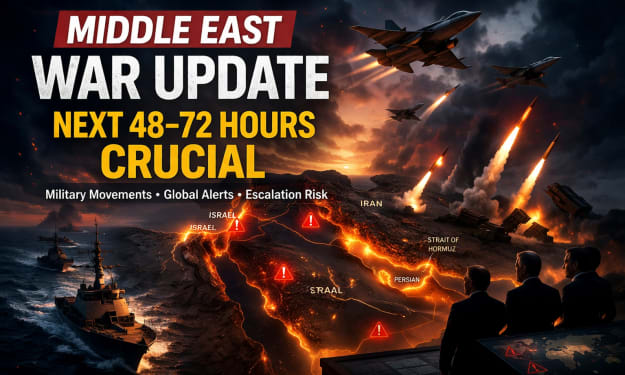
Middle East War: Next Phase Incoming
Middle East War Update: A Dangerous New Phase May Be Approaching The Middle East is once again moving toward a tense and uncertain moment as new developments suggest that the next phase of conflict may be approaching. Military movements, diplomatic warnings, and increased security alerts across several countries have created growing concern among global leaders and analysts. While no official declaration of war has been made, the situation appears to be evolving rapidly, and the coming days may prove critical for regional and global stability.
By Wings of Time 11 days ago in History
Israel Invites Pakistan for War?
Israel Invites Pakistan for War? In recent days, speculation and political debate have intensified around a dramatic and dangerous idea: Israel inviting Pakistan into a potential war scenario. While no official declaration of war has been made, geopolitical tensions, diplomatic statements, and regional instability have fueled discussions about what such a development could mean for global peace.
By Wings of Time 11 days ago in History
The World’s BIGGEST Airplane & Its Crazy Transport Network
The Giant's Journey: How Airbus Transports the World's Largest Planes Airbus is a European powerhouse, producing nearly three aircraft every single day. But there is a massive catch: the parts for these planes are manufactured in different countries—wings in the UK, tails in Germany and Spain, and fuselage sections in France. Bringing them all to the final assembly line in Toulouse, France, is one of the most complex transport puzzles in the world.
By Imran Ali Shah12 days ago in History
5 Battles in History Where Divine Intervention Changed Everything
War has been a part of human history for as long as we can remember. From defending territories to protecting loved ones, humans have always found a reason to fight. While strategy, planning, and leadership often decide the outcome of battles, there are moments when fate or perhaps something greater intervenes to tip the scales. Here are five of history’s most decisive battles that were allegedly won thanks to divine intervention.
By Areeba Umair13 days ago in History
Donald Trump: The Return of a Political Giant
Donald Trump is one of the most influential and controversial figures in modern politics. His journey from a businessman to the President of the United States is not only unique but also inspiring for many people. Even after leaving office, he continues to play an important role in political discussions and public life.
By aadam khan14 days ago in History
5 Unsung Heroes Who Quietly Changed the World
History often celebrates giants, the Einsteins, the Churchills, the Rosa Parks of the world. But behind the scenes, countless unsung heroes quietly shaped the course of human events. These are the people whose names may not appear in textbooks, yet their contributions may have literally saved your life. Let’s honor five extraordinary individuals you probably haven’t heard of, but who changed the world in profound ways.
By Areeba Umair15 days ago in History