literature
Geek literature from the New York Times or the recesses of online. Our favorite stories showcase geeks.
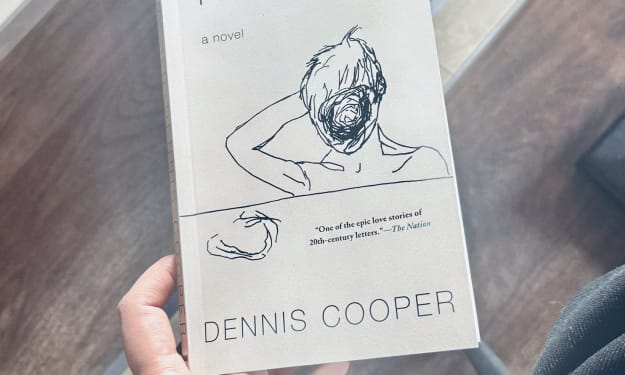
Book Review: "I Wished" by Dennis Cooper
I have to tell you about this: I walked into the bookshop and sat down with the first book I found, it was titled I Wished by Dennis Cooper and told the story of George Miles - the addiction, the love, the rock and roll and everything in between. You guys know how much I adore the literature of the 2SLGBTQIA++ community and well, this is no exception. I Wished is a severely emotional, heartbreaking stream-of-consciousness narrative that I have no idea why more people haven't read. Queer Lit, Manchester - I love you for without you I would never have found this beautiful and earth-shattering novella.
By Annie Kapur9 days ago in Geeks
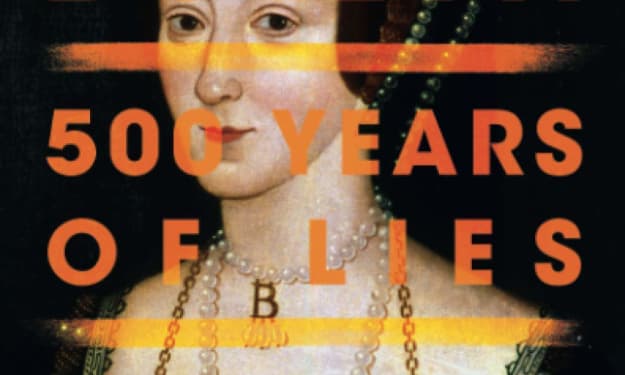
Book Review: "Anne Boleyn: 500 Years of Lies" by Hayley Nolan
When I first started this book and read some of the cutesy side-notes (such as, and I shit you not, the use of hashtags in the introduction), I sat back in my chair, covered my face and thought "oh, here the f- we go..." The final boss of the millennial quirkdom 3rd-wave-feminist social-media-brained pseudo-historical pop-culture middle-class putrid quippy bullshit. Here the f- we go, indeed. Then I realised that I am pretty much the same and though this took me a while I also realised: that is basically what I do here. Atop of this, Hayley Nolan isn't exactly wrong. Anne Boleyn's records are written mostly by sociopathic men both past and present who were either so regarded with religion that they didn't know where the sun went at night (and they didn't care, but they definitely pretended it was a flex) OR, they are so concerned with her appearance, they forget she was a person - typical of the soft-brained male-dominated academic world.
By Annie Kapur10 days ago in Geeks
The Face of Another by Kōbō Abe
The Face of Another was first published in 1964 and hearkens back to the themes and ideas once presented by Franz Kafka, especially when it comes to the book's theories of identity and the self. Samuel Beckett is another writer the author is often compared to since the novel blends absurdity and existentialism with these strange and sideways explorations of human nature and how we become slowly alienated from our true purpose.
By Annie Kapur11 days ago in Geeks
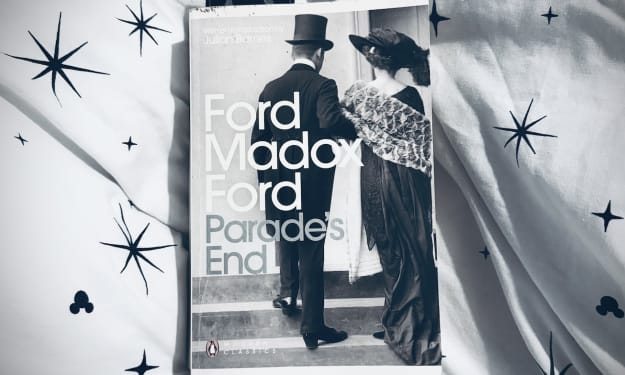
Book Review: "Parade's End" by Ford Madox Ford (Pt. 4)
Rating: 5/5 - what a fitting end to such a heartfelt novel of war! *** This volume is set on a single June day in the years after the First World War. While the earlier volumes charted the approach to and experience of war, this instalment turns to its aftermath. Here is Ford commenting on a society stripped of its old certainties and confronting the psychological and moral wreckage left behind. It feels more like the ideas presented by an Evelyn Waugh novel. Is it really time to let go of the past? Yes, yes it is.
By Annie Kapur11 days ago in Geeks
Book Review: "Parade's End" by Ford Madox Ford (Pt. 2)
Rating: 4/5 - Not as great as the opening volume, but definitely not worth less than a 4 overall... *** Volume 2, No More Parades goes deeper into the psychological state that war inflicts upon the characters, especially our main character. Tietjens struggles to move nearly 3,000 troops from Rouen to the front, obstructed by strange orders, corrupt supply officers, a French railway strike, and harassment from British Garrison Police targeting Canadian volunteers. Of course, Ford's presentation of war here is that difficulty will always be horrific when people's lives are on the line and yes, people's lives are definitely on the line. As amid administrative chaos and German shelling, a Welsh soldier bleeds to death in Tietjens’ arms. Tietjens has tons of guilt over previously denying him leave to confront his wife’s infidelity. This is reflective of his own position - he too has a wife who has been unfaithful but he cannot confront her because he too has been unfaithful. He didn't know this man's position and he was needlessly harsh to him, denying him one last possibility to make amends or break it off with her. He broods the anger towards his own marriage.
By Annie Kapur13 days ago in Geeks
Response to 'The Count of Monte Cristo' (Dumas)
There is one main question Alexandre Dumas asks the reader in the book: Are you rich, or is your life rich? Dumas even uses Edmond Dantes to illustrate this. At the beginning of the book, Edmond is poor, but he has his father, Mercedes, and a promotion in a company in which he works for someone who's like a second father to him. When he's rich, he doesn't feel himself enriched.
By Alexandra F13 days ago in Geeks
Book Review: "Parade's End" by Ford Madox Ford (Pt. 1)
Rating: 5/5 - A depressed masterpiece of love, loss and wartime terror... *** This is how it happened: Tweet by Me This was exactly how it happened. For my Why It's a Masterpiece series I took a quick reread of my copy of The Good Soldier, which is great because it's short and easy to read. (It's also incredibly depressing but you've read the article on it, you should know). I then thought to myself 'this can't be right...I never got around to reading Parade's End which is considered to be Ford's best work...' and quickly ordered it (it was only a couple of £ and so, nice and cheap). I didn't bother to look it up in any way, shape or form but seemed to assume it would be of similar length to The Good Soldier which can't be more than 150 pages.
By Annie Kapur14 days ago in Geeks
The Invisible Nuclear Bomb
The morning news felt different that day. My coffee was lukewarm, my toast burned, and every headline seemed to hum with tension: “Strait of Hormuz Tensions Rise” and “Global Oil Markets on Edge.” I couldn’t stop thinking about it. This wasn’t just politics—it was my grocery bill, my rent, the cost of driving to work. I realized I had been blissfully unaware of how a tiny stretch of water halfway across the world could grip my daily life like a vice.
By John Smith14 days ago in Geeks
Book Review: "American Poetry: A Very Short Introduction" by David Caplan . Top Story - March 2026.
Help me, I'm stuck in the Very Short Introduction series and I can't get out! No really, this is becoming the same problem I had a few years ago when I got my limbs caught in the British Library Crime Classics series and ended up reading almost 100 of those books in perhaps a few months. Now, I've managed to find one on American Poetry, I have to say it is probably one of my favourites so far. I mean The Beats is good, but American Poetry has Phillis Wheatley and Emily Dickinson so it is, by default, better. The writer doesn't only display his knowledge of American Poetic History, he also provides some historical accounts of the people who wrote them, commenting on where they fit into the greater American landscape.
By Annie Kapur15 days ago in Geeks