Dialogue
The Ballad of Greenwich Village.
"The Ballad of Greenwich Village" Documentary. If you ever want to know about Greenwich Village, its history, then watch the 2005 documentary that was directed and written by Karen Kramer: "The Ballad of Greenwich Village".
By Robert M Massimi. ( Broadway Bob).about a month ago in Critique
A Whole Lot of BS: Part 2
Over the years, we've seen and heard of people suing companies, either for their own clumsiness or something that they willingly chose to do. Such examples involve Red Bull being sued because their product didn't "give them wings", Uber sued for ruining someone's marriage, and a couple suing a video game company for their son's addiction. I feel like these people who do things like this are just looking for attention. What's next? Someone suing McDonald's for making them fat? I have zero sympathy for people who file meritless lawsuits. The topic for this story, however, is about parents suing social media companies for causing their children to develop mental health issues.
By Mark Wesley Pritchard 2 months ago in Critique
Diaries to Nietzsche. Top Story - January 2026.
Quotation from Friedrich Nietzsche "He who wrestles long with monsters should beware lest he himself become a monster. And if you gaze long into an abyss, the abyss also gazes into you. Man is not destroyed by suffering, but by the meaning he makes of it."
By LUCCIAN LAYTH2 months ago in Critique
Speaking to Time Instead of the Room
Much of modern communication is oriented toward immediacy. Writing is framed as something meant to be consumed quickly, reacted to instantly, and replaced just as fast by whatever comes next. Under this model, the value of a piece is measured almost entirely by its initial reception. If it does not land immediately, it is treated as a failure. This assumption narrows the purpose of writing and misunderstands how meaning actually travels through time.
By Peter Thwing - Host of the FST Podcast2 months ago in Critique
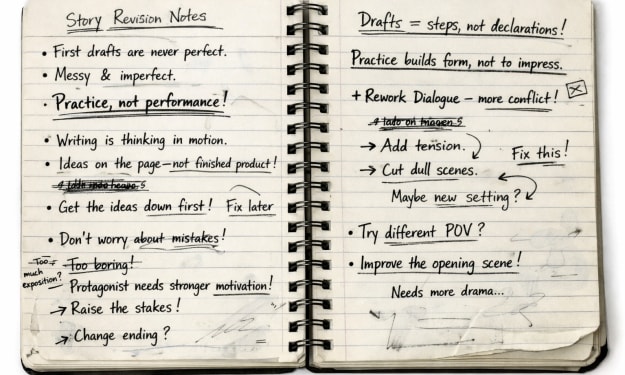
Practice vs Performance
One of the quiet pressures shaping modern communication is the assumption that anything written should be immediately shareable. Drafts blur into declarations, and exploration is mistaken for conclusion. Under this pressure, writing becomes performative by default. The moment words are placed on a page, they are treated as finished statements rather than steps in a process. This expectation distorts both how writing is produced and how it is received, collapsing practice into performance and leaving little room for genuine development.
By Peter Thwing - Host of the FST Podcast2 months ago in Critique