
Masculinity in Flux: Louie Theroux's Deep Dive Into Men's Rights Influencers and Modern Gender Dynamics
A Reflective Look at Youth, Influence, and the Shifting Boundaries of Manhood in the Digital Age

I’ve always admired Louie Theroux’s work, so when I heard he was releasing a documentary on Netflix, I was genuinely excited. Louie has a knack for diving into topics that are both relevant and thought-provoking, and this time he’s tackling the rise of men’s rights influencers—a subject that’s become increasingly prominent as society grapples with shifting attitudes toward gender and masculinity. The documentary offers a rare glimpse into a world that I’ve only encountered in passing, and it feels timely given the growing concern around these figures. As I watched, I found myself reflecting on how these influencers gain traction and how their reach is shaping conversations about what it means to be a man today. Louie’s approach made me both curious and uneasy, especially as I considered the potential impact on younger audiences and the ripple effects through society.
One aspect that really struck me was how many boys aged around 13 or 14 idolise these influencers. It’s worrying to see young minds so deeply affected by online personalities who often promote controversial views. What’s unsettling about this is the vulnerability of adolescents—they’re at a stage where they’re still forming their identities and worldviews, making them particularly susceptible to the persuasive tactics and bold messaging of these figures. For instance, Louie interviews a group of teenage boys who repeat catchphrases popularised by these influencers, demonstrating just how deeply their language and ideas have permeated youth culture. Seeing school-aged boys echo influencer rhetoric makes me question how much agency they truly have over their beliefs versus how much they’re being shaped by algorithms and echo chambers on social media. This concern seems to be echoed in recent government decisions to ban social media for this age group, presumably in an effort to shield them from potentially harmful influences.
It was weird that a subject tried to link Louie to Jimmy Saville—a comparison I found both bizarre and troubling. This moment in the documentary reflects a tendency in the media to sensationalise rather than genuinely engage with the issues at hand, muddying important conversations about influence and accountability. The discomfort I felt here stems from how easily reputations can be manipulated or tarnished by careless or provocative reporting. It raises broader questions about the role of the media in shaping public perceptions, and whether such sensationalism detracts from the seriousness of the topics being discussed.
Another topic Louie touched on was the strange world of one-sided monogamy, where many women appear comfortable with arrangements that are heavily skewed in favour of men. I found this unsettling because it challenges traditional notions of fairness in relationships and raises questions about why such arrangements persist in modern society. Louie presents real-life cases of couples who openly discuss their unequal partnerships, highlighting the complex reasons—ranging from social conditioning to economic dependence—that underpin these dynamics.
It made me wonder whether factors like social conditioning, economic dependence, or even the allure of certain lifestyles contribute to the acceptance of these dynamics. Equally perplexing is the contradiction where men claim to despise OnlyFans models, yet many profit directly from their success. For example, the documentary features influencers who openly criticise sex work, while simultaneously benefiting financially through content collaborations and affiliate marketing with OnlyFans models. This irony—that those criticising these women are, in fact, their biggest audience and financial beneficiaries—reminds me of other societal phenomena, like people condemning reality TV while driving its popularity through viewership, or criticising fast fashion brands while continuing to purchase from them.
The documentary highlighted how certain men’s rights influencers aligned themselves with Donald Trump, viewing his rhetoric as validation for their beliefs. This alignment became particularly evident during the 2020 election, where some influencers celebrated political outcomes—such as Kamala Harris’s defeat in specific debates—as symbolic victories for their movement. Louie delves into the ways these influencers use political events to galvanise their followers, positioning themselves as defenders of “traditional masculinity” against perceived threats represented by progressive figures like Harris.
Perhaps these behaviours reflect a broader human tendency to distance ourselves from the things we privately enjoy or benefit from, in order to maintain a certain public image. This realisation left me questioning how we navigate these shifting norms and the complexities of attitudes towards sex work, masculinity, and authenticity in today’s society. As Louie’s documentary unfolds, it challenges viewers to look beyond surface-level judgements and consider the contradictions and deeper motivations driving these cultural phenomena.
About the Creator
Keep reading
More stories from Sarah Xenos and writers in Critique and other communities.
Review: Brighton Part Two – Emotional Highs, Historical Lows, and Character Depth in Regency Drama
After the release of part two for Brighton, I found myself in a strange limbo, waiting a few days before I could finally watch it since my mum was still away on holiday. That anticipation was a genuine test of patience and set the tone for my viewing experience. During this time, the ongoing high tea scenes became increasingly irritating—they felt like they dragged on forever, with little movement in the plot. For instance, the repetitive pouring of tea and polite small talk seemed to stall the storyline, making it hard to stay engaged. However, the cheese tastings among the gentlemen offered a refreshing contrast. Watching these moments unfold felt authentic; it was fascinating to see a tradition that was commonplace in the Regency era depicted faithfully on screen. This attention to period detail helped ground the show and made the setting feel more immersive, reminding me why I enjoy period dramas in the first place.
By Sarah Xenos10 days ago in Critique
The Road by Cormac McCarthy:
"If he is not the word of God, God never spoke." It's a line spoken by The Man, unnamed, early on in the 2007 Pulitzer Prize winning novel, "The Road" by Cormac McCarthy. It's this line, elegiac and moving, infused with despair and hope, that informs you, you're not reading something you'll easily forget.
By Adam Diehl4 days ago in Critique
Forbidden Fruits Review: A Hilarious Toxic Cult of Feminist Witches
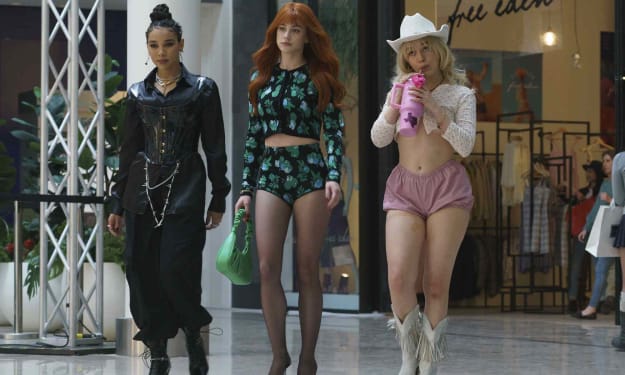
Forbidden Fruits, directed by Meredith Alloway, is a vibrant and audacious debut that blends horror and comedy within the context of a modern-day mall culture. The film, which draws inspiration from Lily Houghton’s play Of the woman came the beginning of sin, and through her we all die, introduces audiences to a coven of young women who navigate the complexities of friendship and rivalry while engaging in witchcraft rituals.
By Ninfa Galeanoa day ago in Critique



Comments
There are no comments for this story
Be the first to respond and start the conversation.