panic attacks
Sudden periods of intense fear. But remember, you're not alone.
Dark Psychology
The most dangerous cages aren’t made of iron; they are made of words, subtle doubts, and misplaced trust. Right now, someone in your life—a partner, a friend, a boss—might be quietly rewriting your reality, and you wouldn't even know it until your confidence is entirely gone.
By imtiazalam2 days ago in Psyche
The Power of Presence
When “Good Parenting” Became a Feeling In modern parenting conversations, “good” has increasingly come to mean emotionally warm, verbally affirming, and immediately comforting. A good parent is expected to soothe distress quickly, validate feelings consistently, and minimize discomfort whenever possible. These traits are treated as obvious indicators of healthy parenting, reinforced by cultural messaging, therapeutic language, and social reward structures. When a child feels better in the moment, the parenting decision is assumed to have been correct, and when discomfort persists, the decision is often framed as a failure of care rather than a necessary part of development.
By Peter Thwing - Host of the FST Podcast4 days ago in Psyche
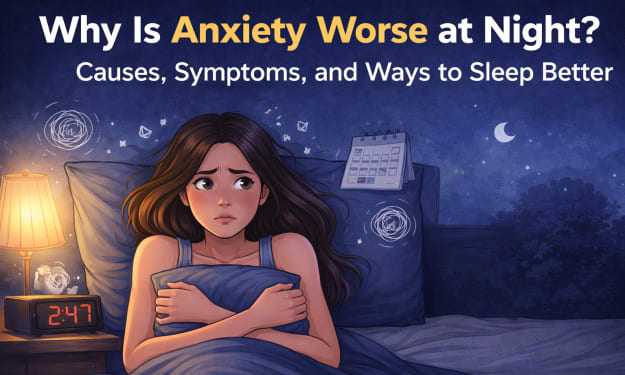
Why Is Anxiety Worse at Night? Causes, Symptoms, and Proven Ways to Sleep Better. AI-Generated.
It is 11:30 PM. The house is quiet, the lights are off, and your body is finally still. But your mind? It is racing. You replay conversations from earlier in the day. You worry about tomorrow’s responsibilities. Your heart beats a little faster, and sleep feels just out of reach.
By JP Psychiatry6 days ago in Psyche
The Night I Stayed Awake
Most nights pass quietly and without much thought. We finish our daily routines, turn off the lights, and drift into sleep, hoping to wake up refreshed for another day. But sometimes there are nights that feel different. Nights when sleep refuses to come. Nights when the mind becomes louder than the world around it. For me, it was the night I stayed awake, staring at the ceiling while countless thoughts moved through my mind. When Sleep Refuses to Come It began like any ordinary evening. I finished dinner, spent some time on my phone, and prepared to go to bed. The house was quiet, and the lights were off. Normally, this is the moment when my mind begins to slow down. But that night, something felt different. I turned off the lamp beside my bed and closed my eyes, expecting sleep to arrive within minutes. Instead, my mind began replaying the entire day. Small conversations. Things I should have said differently. Tasks I had postponed. Worries about the future. The more I tried to ignore these thoughts, the louder they became. The Silence of the Night There is something unique about the middle of the night. During the day, life moves quickly. There are distractions everywhere—phones, work, conversations, and responsibilities. These distractions keep our minds busy and prevent us from thinking too deeply. But at night, when everything becomes quiet, those thoughts return. As the hours passed, the silence in my room felt heavier. I could hear the faint ticking of the clock on the wall and the occasional sound of a car passing outside. It felt like the world had paused. But my mind hadn’t. Thinking About Life Lying awake in the darkness gives you a strange perspective on life. Without the distractions of the day, you begin to think about things you usually ignore. Questions appear that you don’t normally ask yourself. Am I moving in the right direction? Am I making the most of my time? Am I appreciating the people around me enough? These questions are not always comfortable, but they are important. That night, I realized how rarely we allow ourselves to pause and reflect on our lives. The Weight of Worries Part of what kept me awake that night was worry. Everyone carries some level of worry—about work, family, finances, or the uncertainty of the future. Most of the time, we push these worries aside because we are busy dealing with daily responsibilities. But when the world becomes quiet, those worries often return. The challenge is learning how to face them without letting them control us. As I lay there staring at the ceiling, I slowly began to understand that worrying endlessly doesn’t solve anything. It only steals the peace of the present moment. A Different Kind of Night Eventually, I stopped trying to force myself to sleep. Instead, I sat up in bed and looked out the window. The street outside was calm, illuminated only by a few distant lights. For a moment, everything felt still. And in that stillness, something unexpected happened. My thoughts began to settle. The worries that had seemed overwhelming earlier now felt smaller, almost manageable. Sometimes the mind simply needs time to process everything it has been carrying. A Lesson From a Sleepless Night That night taught me something valuable. Sleep is important, of course. But occasionally, a sleepless night can also offer a rare opportunity for reflection. It allows us to step away from the noise of daily life and reconnect with our thoughts. It gives us the chance to examine our worries, our goals, and the direction we are heading. In a strange way, that quiet night helped me feel more clear about my life than many busy days ever had. Morning Arrives Eventually, the sky outside began to brighten. The first light of morning slowly filled the room, and the world started waking up again. Birds began to chirp, and distant sounds of early traffic appeared. Ironically, that was the moment when sleep finally began to arrive. But by then, I didn’t feel frustrated anymore. Instead, I felt calm. Final Thoughts We often think of sleepless nights as something negative, something to avoid at all costs. And while rest is essential for our health, not every restless night is meaningless. Sometimes, those quiet hours allow us to reflect on our lives in ways we rarely do during the day. The night I stayed awake reminded me that life is not only about rushing from one task to another. Sometimes, it’s about pausing, listening to our thoughts, and learning from the silence. And occasionally, the lessons we discover in the quiet darkness of the night stay with us long after the sun rises.
By Shoaib Afridi21 days ago in Psyche
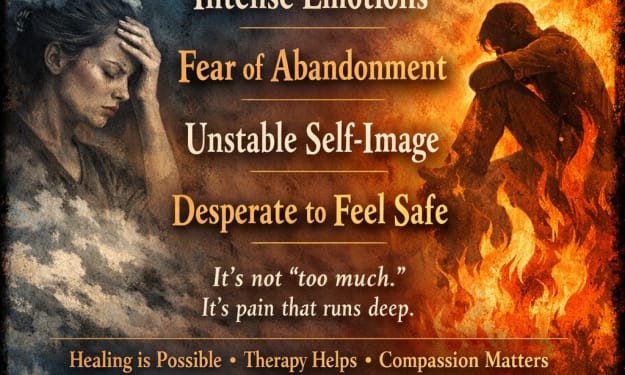
BPD: When the Nervous System Lives at the Edge
A compassionate reflection on Borderline Personality Disorder that explores emotional intensity, unstable self-image, fear of abandonment, and the possibility of healing through understanding, support, and treatment.
By Flower InBloom24 days ago in Psyche
8 Subtle Signs You’re Dissociated, According to Therapists
Have you ever driven somewhere and suddenly realized you don’t remember the last few minutes of the journey? Or maybe you were in a conversation but felt mentally “far away.” These experiences might seem normal, but therapists say they can sometimes be signs of dissociation.
By Shahid Zaman28 days ago in Psyche