health
Health hacks for optimal performance; discover simple suggestions and habits to improve your life, body, mind and spirit.
A Modern Solution for Limited Bone: Understanding Short Dental Implants
Dental implant technology has come a long way, offering innovative solutions for patients who may not have been ideal candidates in the past. One of the most significant advancements is the development of short dental implants, which provide a reliable alternative for individuals with limited jawbone height.
By Jane Smithhabout 2 hours ago in Lifehack
How to Find Affordable Dental Care in Australia
Gaining access to dental care in Australia can prove difficult because of the cost that comes along with treatment. This means that contrary to most other aspects of health care, dental services in Australia are not fully subsidized and require patients to pay for the cost themselves unless they have medical insurance or special programs. Such challenges may cause individuals to forego the required care until it becomes a bigger problem.
By Barbara Tamagnoa day ago in Lifehack
What is the 963 Hz Tuning Fork Good For?
Sound is more than just a vibration we hear—it has the power to heal, energize, and even awaken higher consciousness. Among the many tools in sound therapy, the 963 Hz tuning fork stands out for its unique ability to harmonize the mind, body, and spirit. Whether you’re curious about spiritual growth or seeking a natural method for emotional balance, understanding the 963 Hz frequency can open new possibilities in your wellness journey.
By Adria Hargrave2 days ago in Lifehack
Why Most People Never Truly Relax (And How to Change That). AI-Generated.
Why Most People Never Truly Relax (And How to Change That) Most people think they are resting, but in reality, they are not. Scrolling through your phone, watching videos, or switching between apps may feel like rest, but your brain is still active, still processing, and still overloaded. That is why so many people feel tired even after doing “nothing.” The body may stop, but the mind continues working in the background, constantly reacting to new information.
By Vadim trifiniuc2 days ago in Lifehack
Embarrassed by Toenail Fungus? Here’s How to Treat It and Feel Confident Again
Let’s be honest—dealing with toenail fungus isn’t just uncomfortable, it can also be embarrassing. You might avoid wearing open-toed shoes, hesitate at the beach, or even feel self-conscious in everyday situations.
By Nenci Gajera 3 days ago in Lifehack
I Tried Waking Up at 5 AM—Here’s the Honest Truth
The first time my alarm went off at 5:00 AM, it felt like a mistake. Not a small mistake, either—the kind that makes you question your entire life in the dark. My room was silent, the world outside still asleep, and my body was absolutely convinced this was not the time to be awake. For a moment, I just lay there, staring at the ceiling, bargaining with myself. “Five more minutes,” I thought. But I had made a deal: one full week of waking up at 5 AM. No snoozing. No excuses. I wanted to know if the hype was real—the productivity, the calm, the idea that early mornings were the secret weapon of successful people. So I got up. Day one was rough. I dragged myself into the kitchen, made coffee I didn’t really want, and sat there wondering what exactly I was supposed to do with all this extra time. The internet had painted this picture of peaceful mornings filled with clarity and purpose. Instead, I felt groggy, slightly irritated, and very aware that my bed was still warm. Eventually, I opened my laptop and tried to work. For about twenty minutes, something surprising happened—I focused. No notifications. No noise. No distractions. Just quiet. It felt… good. But the feeling didn’t last. By 8:30 AM, my energy dipped hard. By noon, I was fighting to stay awake. By evening, I felt like I had lived two days in one—and not in a satisfying way. I went to bed embarrassingly early, hoping day two would be different. It wasn’t. At least, not immediately. The second morning felt slightly less painful, but still unnatural. My body resisted again, but I got up anyway. This time, I changed my approach. Instead of jumping straight into work, I slowed down. I drank water. I stretched. I sat quietly for a few minutes, doing nothing. That was the first real shift. There was something undeniably peaceful about being awake before the rest of the world. No traffic, no messages, no expectations. Just stillness. For the first time, I wasn’t reacting to the day—I was starting it on my own terms. But here’s what no one tells you: peace doesn’t automatically make you productive. On day three, I had the quiet, the coffee, and the time—and still wasted it scrolling on my phone. That’s when it clicked. Waking up early doesn’t magically fix your habits. If you’re distracted at 10 AM, you’ll probably be distracted at 5 AM too. The difference is just the lighting. By day four, I started being more intentional. I made a simple plan the night before: one or two things I actually wanted to get done in the morning. Nothing ambitious, nothing overwhelming—just clear. That’s when things started working. Instead of wandering through the morning half-awake, I had direction. I’d sit down and write, or read, or go for a short walk. And surprisingly, those early hours began to feel meaningful—not because they were early, but because they were focused. Still, it wasn’t perfect. Around midweek, the sleep deprivation caught up with me. I realized something important: waking up at 5 AM only works if you go to bed earlier. That sounds obvious, but it’s harder than it seems. Life doesn’t always wrap up neatly at 9 PM. There are messages, shows, responsibilities, and sometimes you just want to relax. Cutting my evenings short felt like a trade-off—and not always a fair one. By day five, I hit a wall. I woke up tired, stayed tired, and couldn’t shake the feeling that I was forcing something that didn’t fully fit my natural rhythm. That day wasn’t productive. It wasn’t peaceful. It was just… long. And that was part of the truth, too. Early mornings are not a magic solution. They don’t automatically make you better, more disciplined, or more successful. They simply give you time—and what you do with that time is what matters. By the end of the week, something interesting happened. Waking up at 5 AM didn’t feel shocking anymore. It wasn’t easy, but it was familiar. My body adjusted slightly, and my mind resisted less. But the bigger realization wasn’t about waking up early—it was about alignment. Some mornings felt incredible. I was focused, calm, and ahead of the day. Other mornings felt forced, like I was trying to fit into a routine that wasn’t built for me. So, what actually works? Waking up early can be powerful—but only if it matches your lifestyle. If you’re getting enough sleep, if you have a clear reason to wake up, and if you use that time intentionally, it can genuinely improve your day. What doesn’t work is doing it just because it sounds impressive. Or because someone else swears by it. Or because you think it will magically fix your life. It won’t. The biggest benefit I found wasn’t the hour itself—it was the awareness. I became more conscious of how I spend my mornings, how I structure my time, and what actually helps me feel productive and calm. In the end, I didn’t become a permanent 5 AM person. But I did take something valuable from the experiment: mornings matter. Not because of when they start, but because of how you use them. And sometimes, the honest truth is simpler than the hype—you don’t need to wake up at 5 AM to change your life. You just need to wake up with intention.
By Sahir E Shafqat3 days ago in Lifehack
The 90-Minute Rule Nobody Follows
YOUR BRAIN HAS A RHYTHM YOU'RE IGNORING Your brain operates on a natural cycle called the ultradian rhythm that alternates between approximately ninety minutes of high-cognitive-capacity focused work and approximately twenty minutes of reduced capacity where your brain needs rest and recovery before it can perform at high levels again, and this cycle operates regardless of your willpower, your caffeine intake, or your deadline pressure, meaning that when you push through the natural rest period you are not demonstrating discipline but rather forcing your brain to operate in a degraded state that produces lower quality work, more errors, reduced creativity, and accumulated fatigue that compounds throughout the day until you are essentially running on cognitive fumes by afternoon despite having been working since morning. Sleep researcher Nathaniel Kleitman discovered these ultradian cycles in the 1950s and subsequent research has confirmed that virtually every biological system in the human body follows approximately ninety-minute cycles including sleep stages, hormone secretion, and cognitive processing, and working with these cycles rather than against them is the single most effective productivity intervention available because it does not require more effort or better habits but simply aligns your work schedule with your biology.
By The Curious Writer3 days ago in Lifehack
The Two-List Trick That Billionaires Use
THE HIDDEN COST OF TOO MANY OPTIONS Decision fatigue is silently destroying your productivity, your willpower, and your ability to make good choices about the things that actually matter, because every decision you make throughout the day draws from a finite pool of cognitive resources that depletes progressively regardless of whether the decision is important or trivial, meaning that the mental energy you spend deciding what to eat for breakfast, which route to drive to work, how to respond to a non-urgent email, and whether to attend a social event you do not really want to attend is the same mental energy you need for strategic career decisions, important relationship conversations, creative problem-solving, and the other high-stakes choices that determine the direction of your life. Research by psychologist Roy Baumeister demonstrated that decision-making depletes the same resource as self-control, meaning that after making many decisions your ability to resist temptation, maintain focus, and exercise willpower is significantly reduced, which explains why you make your worst food choices in the evening after a day of decisions, why you procrastinate on important tasks at the end of the workday, and why arguments with partners tend to happen at night when both parties' cognitive resources are depleted.
By The Curious Writer3 days ago in Lifehack
The 5-4-3-2-1 Morning Reset
THE ALARM CLOCK TRAP The moment your alarm rings your brain faces a critical decision point that determines the trajectory of your entire day, because the first few minutes of consciousness set neurochemical patterns that persist for hours, and most people spend these precious minutes in the worst possible way by hitting snooze which fragments the remaining sleep into low-quality intervals that increase grogginess rather than providing rest, or by immediately grabbing their phone and immersing themselves in other people's priorities through emails, news alerts, and social media notifications that hijack their attention before they have established their own mental and emotional baseline for the day. The 5-4-3-2-1 morning reset is a structured five-minute practice performed before any other activity including coffee, phone checking, or conversation that primes your nervous system for focused productive engagement rather than the reactive scattered state that characterizes most people's mornings and that cascades into reactive scattered days.
By The Curious Writer3 days ago in Lifehack
Study: E-Cigarettes Outperform Patches and Gum in Smoking Cessation. AI-Generated.
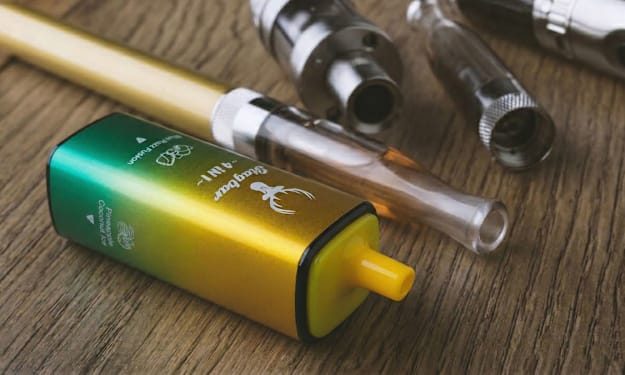
A landmark 2026 "overview of systematic reviews" by Wu et al., analyzing data from the University of Massachusetts and 14 separate global reviews, has definitively shattered the narrative that vaping evidence is "mixed." The comprehensive data synthesis reveals that smokers using nicotine e-cigarettes are up to 67% more likely to quit successfully compared to those relying on traditional Nicotine Replacement Therapy (NRT) like patches or gum. This finding establishes a new clinical hierarchy for smoking cessation, positioning high-dose vaping as a superior harm-reduction tool.
By Matthew Ma3 days ago in Lifehack
What I Learned From Disconnecting From My Phone for 24 Hours. AI-Generated.
What I Learned From Disconnecting From My Phone for 24 Hours I didn’t think it would be difficult. Spending 24 hours without my phone sounded simple. No social media, no messages, no constant checking. Just one day to reset and step away from everything. But the moment I actually put my phone aside, I realized something uncomfortable. I was more dependent on it than I thought, and that realization alone made the experience feel more serious than I expected.
By Vadim trifiniuc4 days ago in Lifehack