Humanity
Dominique Simeone Link Esperanto, Humanism, and Language Justice
Dominique Simeone is an Italian-born multilingual freethinker, writer, and Esperanto advocate associated with SAT-Amikaro and broader international humanist networks. Public biographical materials describe early study and use of Italian, French, German, Flemish, English, and Esperanto, reflecting a long-standing interest in language and international communication. Simeone studied economics and philosophy at Paris X-Nanterre, completed Esperanto certifications in 2005 and 2006, and later published work linking Esperanto, freethought, and humanism, including “Esperanto, a way to Humanism” in International Humanist News in 2006. Simeone’s public work consistently frames Esperanto as a non-imperialist, equality-oriented tool for practical cross-border dialogue and shared ethical community internationally.
By Scott Douglas Jacobsen6 days ago in Interview
Daniil Ukhorskiy on Universal Jurisdiction, ICC Prosecutions, and Atrocity Crime Accountability in Ukraine
Daniil Ukhorskiy is a Kyiv-based lawyer and investigator specializing in documenting atrocity crimes in conflict-affected settings and working with survivors of serious human rights violations. He is the Legal Coordinator for Ukraine at Legal Action Worldwide. He has worked on violations committed during Russia’s full-scale invasion of Ukraine since March 2022. His broader interests include corporate accountability and environmental rights. He holds a BA in Jurisprudence and a BCL from the University of Oxford. He previously worked for the Clooney Foundation for Justice, investigating atrocity crimes committed by Russian forces in Ukraine.
By Scott Douglas Jacobsen9 days ago in Interview
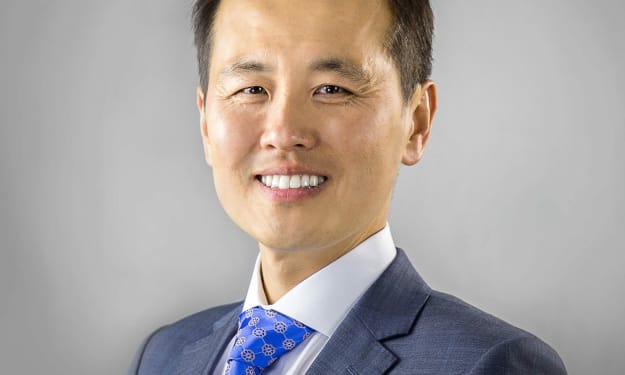
An Interview with Dr. Douglas Sung Won
In modern healthcare, progress often emerges at the intersection of clinical innovation and structural leadership. Few professionals embody that intersection as clearly as Dr. Douglas Sung Won, MD. Over the past two decades, Dr. Won has built a reputation not only as a pioneer in minimally invasive spine surgery but also as a healthcare systems architect responsible for developing vertically integrated clinical infrastructures.
By Robin Milton24 days ago in Interview
I MADE THE SHADE ROOM!!!!
Honestly, this was unexpected but yes I was on the Shade Room. Three months ago, I wrote a story about Celebrities getting Honorary Degrees and how Rapper Young Joc, Reality Stars Cynthia Bailey and Towanda Braxton are receiving their honorary doctorates and accepting their titles from this so-called bible christian university.
By Gladys W. Muturi29 days ago in Interview
The Great Transformation: Two Decades of Evolution in African Trade, As Told by Expert Daniel Holztreger of DH Consult
Fast forward twenty years, and the landscape has undergone a seismic shift. While challenges remain, the continent—particularly West Africa—has emerged as a dynamic hub of regional integration, digital innovation, and burgeoning industrial capacity.
By Lisa Rosenberg30 days ago in Interview
Between Saudi Arabia and Ukraine: Saba Yamani on Faith, Gender, and LGBTQ+ Survival
Saba Yamani is a Kyiv-based dental professional who was born in Saudi Arabia to a Saudi father and Syrian mother. She first arrived in Ukraine at age three after her father married a Ukrainian woman, whom she considers her mother. Raised in Kyiv, Yamani was baptized in the Orthodox Church and later came out as LGBTQ+. During the full-scale invasion she sought protection from Ukraine’s State Migration Service after facing pressure to leave and risk of deportation. She currently works at a private dental clinic and is preparing for the Ukrainian citizenship exam in May.
By Scott Douglas Jacobsenabout a month ago in Interview
Agi Bar-Sela, From Budapest to Tel Aviv: Early Israel, Language, and Resilience
Agi Bar-Sela, born in 1931 in Budapest, immigrated to Israel in 1949 with a Zionist youth group after her grandfather pressed her family to flee communist Hungary. Sent first to a kibbutz, she soon chose urban life, using Hungarian and fluent German to work among German Jewish “Jekkes,” then learning Hebrew and leaning on Yiddish for belonging. She married young, raised three sons, and endured early-state austerity: scarce food and crowded multigenerational flats. Her English later opened careers at El Al and travel agencies, while her Hungarian-Jewish cooking anchored home and community. She champions language study as the surest ladder.
By Scott Douglas Jacobsenabout a month ago in Interview
Jimena’s Insight
It all started within my mother’s quick afternoon hangout session with me, unable to recall every particular detail, however, I can briefly say it was one sunny bright afternoon during the weekend, where she walked into my room as I held on to my little notepad, mostly used for random writing on occasion to occasion. She grabbed it from my hand and simply began sketching, so effortlessly like air she ran that pencil on the paper, personally having no clue what she’d draw, I starred, focused deeply towards her expression, she seemed, out of so long in time, to have awakened something inside of her in which she had been keeping hidden, almost abandoned, the look on her face, it lightened up.
By Jimena Favelaabout a month ago in Interview
Bounty on the Butcher. Content Warning. AI-Generated.
When I wrote “Price on His Head,” subtlety wasn’t on the menu. Politeness wasn’t even in the room. I was trying to capture the anger, frustration, and disbelief that millions of people around the world have felt for years watching the damage one man’s grip on power can do. The line between right and wrong is clear to me, and in this song, I make no apologies for choosing a side.
By Thorne Empireabout a month ago in Interview
Matthew Scillitani on Measuring the Extreme Right Tail with a Supervised Timed High-Range Ability Test
Matthew Scillitani is a psychometrics practitioner at Neurolus Psychometrics focused on developing supervised, time-limited high-range ability examinations. He co-launched The Mental Inventor with Paul Cooijmans as an empirical testbed for a central measurement question: whether performances can be validly differentiated in the extreme right tail under proctored conditions. His approach emphasizes procedural integrity—identity verification, approved proctoring, and rule enforcement—alongside cautious claims about interpretation until reliability and validity evidence is established. He highlights emerging threats to unsupervised testing, including AI-assisted responding and large-scale collaboration, and advocates peer review before formal reclassification.
By Scott Douglas Jacobsen2 months ago in Interview