
Daniil Ukhorskiy on Universal Jurisdiction, ICC Prosecutions, and Atrocity Crime Accountability in Ukraine
How does Daniil Ukhorskiy explain universal jurisdiction and the challenges of prosecuting war crimes through the ICC and national courts?

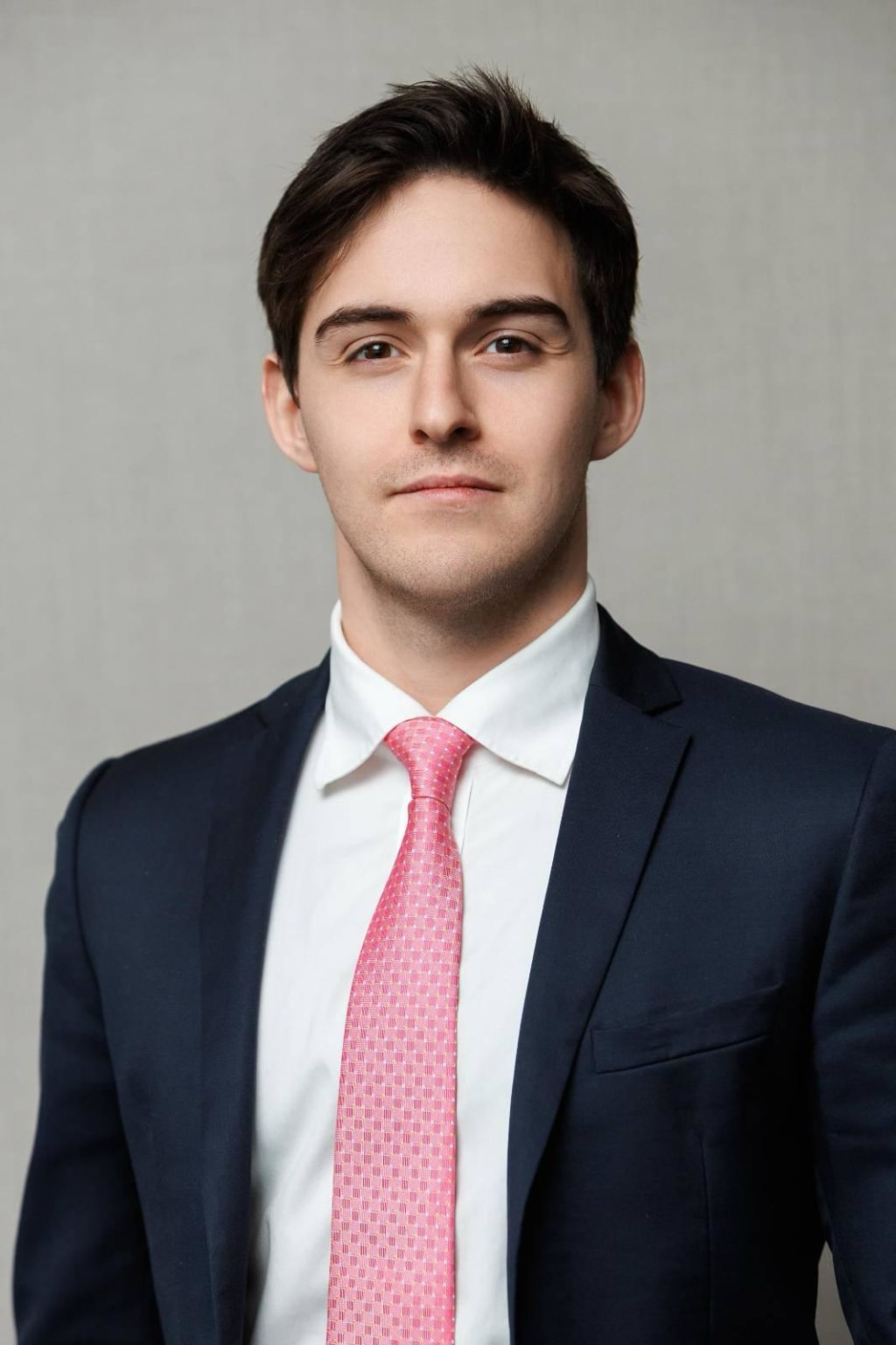
Daniil Ukhorskiy is a Kyiv-based lawyer and investigator specializing in documenting atrocity crimes in conflict-affected settings and working with survivors of serious human rights violations. He is the Legal Coordinator for Ukraine at Legal Action Worldwide. He has worked on violations committed during Russia’s full-scale invasion of Ukraine since March 2022. His broader interests include corporate accountability and environmental rights. He holds a BA in Jurisprudence and a BCL from the University of Oxford. He previously worked for the Clooney Foundation for Justice, investigating atrocity crimes committed by Russian forces in Ukraine.
Scott Douglas Jacobsen interviews Daniil Ukhorskiy, a Kyiv-based lawyer and Legal Coordinator at Legal Action Worldwide, on universal jurisdiction and international criminal law. Ukhorskiy explains how states prosecute genocide, crimes against humanity, and war crimes beyond territorial limits, while noting limits on aggression cases. He discusses ICC arrest warrants, convictions, and controversies involving figures like Putin and Netanyahu. Drawing on cases such as Bemba and Gotovina, Ukhorskiy highlights evidentiary challenges in prosecuting missile strikes and command responsibility. He emphasizes rigorous evidence and legal precision as essential for accountability in Ukraine and for shaping future international criminal law precedents.
Scott Douglas Jacobsen: What is universal jurisdiction?
Daniil Ukhorskiy: Universal jurisdiction is the principle under which a state may investigate or prosecute certain grave international crimes committed abroad, even when there is no territorial or nationality link between the crime, the suspect, the victim, and the forum state. In practice, it is most commonly used for genocide, crimes against humanity, and war crimes; the position is more limited and less uniform for aggression. Eurojust notes that many states describe their rules as universal or extraterritorial, and that many impose conditions before exercising them.
It is one of the broadest forms of extraterritorial criminal jurisdiction, but not every state applies it in a “pure” form. In the European Union alone, Eurojust reports that 23 member states exercise universal or extraterritorial jurisdiction over war crimes, crimes against humanity, and genocide, while only a few extend that approach to aggression, and some expressly exclude universal jurisdiction for aggression. That means the claim that roughly 19 countries, including Germany and Sweden, can prosecute all four core crimes without qualification is too broad.
The basic rationale is that these crimes are so serious that they affect the international community as a whole. Universal jurisdiction is therefore treated as a tool against impunity, especially where the state most directly connected to the crimes is unable or unwilling to prosecute.
Jacobsen: When did this principle emerge, and why?
Ukhorskiy: A common historical precursor is the prosecution of pirates as hostes humani generis, or enemies of humankind. The modern treaty-based framework was developed after the Second World War. The Geneva Conventions of 1949 require states to search for persons alleged to have committed grave breaches and to bring them before their own courts or hand them over for trial elsewhere. Grave breaches include serious violations such as wilful killing, torture or inhuman treatment, and unlawful deportation or confinement of protected persons.
Modern international criminal law then developed through later tribunals, including those for the former Yugoslavia and Rwanda, and through the Rome Statute of the International Criminal Court, which codified genocide, crimes against humanity, war crimes, and, later, the crime of aggression. Many states subsequently enacted domestic legislation permitting the prosecution of at least some of these crimes when committed abroad.
Germany has become one of the leading modern forums for such cases involving Syria. In the Koblenz proceedings, former Syrian intelligence officials Eyad A. and Anwar R. were prosecuted under Germany’s Code of Crimes against International Law. Eyad A. was sentenced in February 2021, and Anwar R. was sentenced to life imprisonment in January 2022; Germany’s Federal Court of Justice upheld Anwar R.’s conviction in August 2024. Public reporting notes that Anwar R. had fled to Germany, where some victims recognized him, leading to his arrest.
Jacobsen: For the ICC, how many arrest warrants have been issued, how many cases or hearings have taken place, and how many convictions have been secured?
Ukhorskiy: I can estimate or mention the examples I know. One of the most notable recent cases is Rodrigo Duterte.
Jacobsen: March last year?
Ukhorskiy: Yes.
Jacobsen: The warrant was issued quietly, and within about a week, he appeared in court.
Ukhorskiy: Yes. That is a more effective approach, and it is similar to how universal jurisdiction cases are often handled. Investigators are not public about suspects because they want them to travel and be apprehended. That approach may also be more effective for the ICC.
Following significant backlash—some justified, some not—over arrest warrants issued for figures such as Vladimir Putin and Benjamin Netanyahu, the ICC has reconsidered how it handles publicity around arrest warrants and requests. In the Netanyahu case, Prosecutor Karim Khan publicly announced that he had requested an arrest warrant before the Pre-Trial Chamber had approved it. That was unusual and reflected pressure from civil society, but it also carried risks. The Court should prioritize effective prosecution and securing custody over public messaging.
For much of its history, the ICC has secured a limited number of convictions—currently 13 convictions and 4 acquittals. Many early cases involved African defendants, which led to sustained criticism regarding geographic imbalance and perceptions of selectivity. There has since been a push to broaden the Court’s scope. The Court has also had acquittals and cases that did not result in convictions, which is important to acknowledge when evaluating prosecutorial performance.
Jacobsen: I do not know if “loss” is the right term.
Ukhorskiy: The prosecution has lost cases.
Jacobsen: From a broader perspective, the question is whether there were reasonable grounds for prosecution and whether the trial was conducted properly. That would be a success in terms of justice.
Ukhorskiy: It may be a success for justice, but still a loss for the prosecution. When working with colleagues investigating international crimes in Ukraine, it is important to draw lessons from those cases—especially where prosecutorial mistakes may have contributed—to avoid repeating them.
Jacobsen: Were there major lessons?
Ukhorskiy: One notable case is Jean-Pierre Bemba. The ICC initially convicted Bemba for crimes committed in the Central African Republic, but the Appeals Chamber overturned the conviction in 2018. The case raised significant questions about command responsibility and evidentiary standards.
Bemba was later convicted in a separate case for witness tampering. Someone was eventually convicted for witness tampering, but not for the crimes originally charged. The accepted understanding is that witness tampering was a major issue in the trial.
One of the most useful examples for lessons learned—rather than prosecutorial mistakes—is drawn from two cases at the Yugoslav Tribunal, which is one of the few tribunals that has examined what I call conduct-of-hostilities offences, meaning the use of bombs, missiles, and artillery, as opposed to crimes such as torture, executions, or sexual violence.
There is a distinction between acts like execution, torture, or sexual violence, where there is no defence—nothing justifies them—and situations involving attacks with weapons. When a missile strikes, additional questions arise: what was the intended target, and was there a legitimate military objective?
This is a major issue in Ukraine. Only a small number of international cases have addressed it, and in those cases, the prosecution lost significant parts of its arguments. In the Gotovina et al. case at the Yugoslavia Tribunal, the issue of proportionality became central. Proportionality is a complex legal standard, and that case remains one of the few to address it directly.
On appeal, much of the prosecution’s approach was rejected. The Appeals Chamber found significant flaws, including in the method used to assess artillery impact, such as the proposed 200-meter standard. That approach was ultimately dismissed.
The lesson for practitioners in Ukraine is that there is limited guidance on what constitutes a successful prosecution for missile or artillery attacks. A case supported by direct evidence—such as an intercepted order explicitly targeting civilians—would be straightforward. However, cases based on circumstantial evidence are more difficult to prove.
Patterns of strikes, the presence of military objectives, and the scale of civilian harm all require careful analysis. The presence of military targets does not automatically justify attacks, but it complicates legal assessment. Courts have not yet established clear, consistent standards for these scenarios.
This uncertainty means that evidence must be exceptionally strong. Any case brought—whether before the ICC or another court—must be supported by rigorous legal analysis and robust evidentiary standards, as it may shape future precedent.
That is one example.
Jacobsen: Thank you very much for the opportunity and your time, Daniil.
Scott Douglas Jacobsen is a blogger on Vocal with over 130 posts on the platform. He is the Founder and Publisher of In-Sight Publishing (ISBN: 978–1–0692343; 978–1–0673505) and Editor-in-Chief of In-Sight: Interviews (ISSN: 2369–6885). He writes for International Policy Digest (ISSN: 2332–9416), The Humanist (Print: ISSN, 0018–7399; Online: ISSN, 2163–3576), Basic Income Earth Network (UK Registered Charity 1177066), Humanist Perspectives (ISSN: 1719–6337), A Further Inquiry (SubStack), Vocal, Medium, The Good Men Project, The New Enlightenment Project, The Washington Outsider, rabble.ca, and other media. His bibliography index can be found via the Jacobsen Bank at In-Sight Publishing comprised of more than 10,000 articles, interviews, and republications, in more than 200 outlets. He has served in national and international leadership roles within humanist and media organizations, held several academic fellowships, and currently serves on several boards. He is a member in good standing in numerous media organizations, including the Canadian Association of Journalists, PEN Canada (CRA: 88916 2541 RR0001), Reporters Without Borders (SIREN: 343 684 221/SIRET: 343 684 221 00041/EIN: 20–0708028), and others.
Image Credit: Daniil Ukhorskiy.
About the Creator
Scott Douglas Jacobsen
Scott Douglas Jacobsen is the publisher of In-Sight Publishing (ISBN: 978-1-0692343) and Editor-in-Chief of In-Sight: Interviews (ISSN: 2369-6885). He is a member in good standing of numerous media organizations.
Keep reading
More stories from Scott Douglas Jacobsen and writers in Interview and other communities.
Anna Vlasenko on Canadian vs German Media, ARD, and Wartime Reporting in Ukraine
Anna Vlasenko is a Kyiv-based Ukrainian journalist, media producer, and fixer who has reported on Russia’s full-scale invasion for international outlets. Public profiles identify her work with German broadcaster ARD and as a freelance writer for The Globe and Mail. Her bylines also appear in Global News, including field reporting from liberated villages, civilian convoy attacks, and war-crimes investigations in 2022. In 2023, she was shortlisted for the Kurt Schork Awards’ News Fixer category, recognition reserved for journalists and fixers covering conflict, corruption, and injustice. Her work sits at the intersection of local knowledge, frontline reporting, and cross-border production today.
By Scott Douglas Jacobsen15 days ago in Interview
Small Talk With Sheila Podcast
Small Talk with Sheila is one of my personal favorite podcasts,” says Andreea Coscai of Eurowaves. “I discovered it while award-judging, and it instantly became my comfort show. Sheila discusses many issues women face from their 20s to their 50s, ranging from dating and relationships to self-love and friendships.”
By Frank Racioppi5 days ago in Interview




Comments
There are no comments for this story
Be the first to respond and start the conversation.