lgbtq
The letters LGBTQ are just another way of saying that Love is Love.
Why Most Lottery Winners Lose It All
Winning the lottery feels like the ultimate dream: instant wealth, freedom from financial stress, and the ability to live life on your own terms. But behind the headlines of oversized checks and champagne celebrations lies a surprising truth—many lottery winners end up broke, sometimes within just a few years.
By AnthonyBTVabout 20 hours ago in Humans
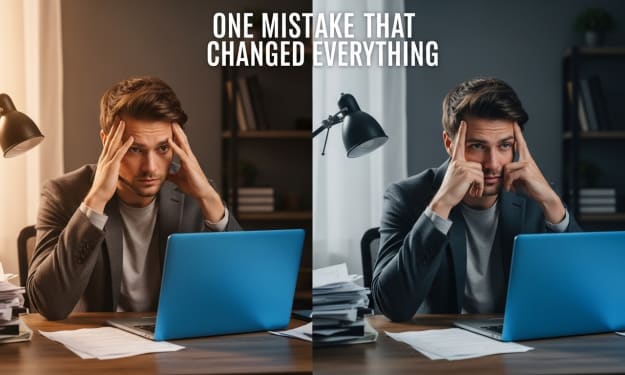
One Mistake That Changed Everything
Arman was an ordinary young man with simple dreams. He lived in a small rented room in a crowded city, working a low-paying job at a mobile shop. Every day felt the same—long hours, tired feet, and silent nights filled with thoughts of a better future. He wasn’t lazy. In fact, he worked harder than most people around him. But no matter how much effort he put in, his life refused to change. Bills kept piling up, and his dreams kept getting delayed. One evening, while scrolling through his phone, Arman came across a video. It was about making quick money online. The man in the video spoke confidently, showing screenshots of huge earnings. It looked easy. Too easy. Arman hesitated at first. Something didn’t feel right. But then he looked around his small room—the cracked walls, the broken chair, the unpaid bills on the table. His mind whispered, “What if this is your chance?” That night, he made a decision. He contacted the person behind the video. Within minutes, he received instructions. All he had to do was invest a small amount, and the returns would be doubled in a few days. It sounded risky, but also tempting. Arman didn’t have savings. So he did something he never thought he would do. He borrowed money. Not from a bank, not from a friend—but from his mother. She trusted him without asking questions. “If it helps you move forward, take it,” she said with a smile. Those words stayed with him, but he ignored the guilt rising inside. He sent the money. The first day passed. Then the second. The person replied with excuses—“system delay,” “processing issue,” “wait a little more.” By the fourth day, the number stopped responding. Arman’s heart sank. He kept calling, messaging, refreshing the screen again and again. But deep down, he knew the truth. He had been scammed. The room suddenly felt smaller. The silence became heavier. He looked at his phone, then at the message from his mother asking, “Everything okay?” He couldn’t reply. Days passed, but Arman couldn’t escape the weight of his mistake. He stopped going out. He avoided calls. The guilt of losing his mother’s money ate him from the inside. One evening, he finally gathered the courage to call her. His voice trembled as he told her everything—the video, the investment, the scam. There was a long silence on the other side. Arman closed his eyes, expecting anger, disappointment, maybe even harsh words. But what he heard instead changed him forever. “It’s okay,” she said softly. “Money can come again. But you… you must not lose yourself.” Tears rolled down his face. That moment broke something inside him—but also rebuilt something stronger. The next morning, Arman woke up early. For the first time in days, his mind felt clear. He knew he had made a mistake. A big one. But he also knew he couldn’t stay stuck in it. He started working longer hours at the shop. He learned new skills online—not shortcuts, but real ones. Digital marketing, basic design, small freelance tasks—anything that could help him grow. It wasn’t easy. There were days he wanted to quit. Days when progress felt invisible. But he kept going. Weeks turned into months. Slowly, things began to change. He got his first small freelance payment. Then another. And another. It wasn’t much, but it was real. It was honest. For the first time, Arman felt proud—not because of the money, but because of the effort behind it. One day, after months of hard work, he sent money back to his mother. It wasn’t the full amount he had lost. But it was a start. She called him, her voice filled with happiness. “I’m proud of you,” she said. Those words meant more than any amount of money. Arman realized something important that day. The mistake he once hated… had actually changed his life. It taught him patience. It taught him reality. And most importantly, it taught him the value of trust—both others’ trust in him and his trust in himself. If he had never made that mistake, he might still be chasing shortcuts. Now, he was building something real. And this time, step by step, he knew he wouldn’t lose it again.
By Salman khana day ago in Humans
Why Hair Turns Us On: The Silent Trigger of Attraction Between the Sexes
Attraction doesn’t always make itself known. Sometimes, it sneaks in silently, through details that you don’t consciously notice, but feel nonetheless. A glance that lasts a moment too long. A sensation that lingers on your skin after contact fades. Often, it starts with hair.
By Samir Aghayeva day ago in Humans
Managed, Not Healed
For people living with chronic pain, the most destabilizing realization is not that healing is difficult. It is that healing is often not the goal. The healthcare system that surrounds them is built to manage symptoms, document persistence, and ration interventions rather than pursue restoration of function. Over time, patients begin to notice a pattern. Short-acting medications are readily available. Repeated appointments are routine. Imaging is reviewed, notes are written, and pain is acknowledged. Yet interventions aimed at resolving underlying structural problems, restoring stability, or preventing long-term degeneration are delayed, denied, or classified as optional. The system responds continuously, but it rarely moves forward.
By Peter Thwing - Host of the FST Podcast5 days ago in Humans
The Different Love Languages. AI-Generated.
Love is one of the most powerful human experiences, yet it can also be one of the most misunderstood. Many relationships struggle not because love is absent, but because it is expressed in ways that the other person doesn’t fully receive or recognize. This is where the concept of “love languages” becomes incredibly valuable. Understanding love languages allows you to communicate care, appreciation, and affection in a way that truly resonates with your partner, friend, or even family member.
By Timothy A Rowland7 days ago in Humans
Why Do the Elderly Crave Sweets
Many families notice the same surprising pattern as their loved ones age: older adults often develop a stronger craving for sweets. Grandparents who once preferred savory meals may suddenly reach for cookies, candy, ice cream, or sugary drinks more often than they used to.
By AnthonyBTV15 days ago in Humans
Zodiac Compatibility Guide 2026: Which Star Signs Are Truly Meant for Each Other?
Whether you’re a die-hard astrology believer or just someone who casually checks your horoscope, zodiac compatibility remains one of the most searched relationship topics online. There’s something irresistibly fascinating about seeing how accurately our star signs describe our personalities, and even more exciting when they hint at who we might be most compatible with.
By Areeba Umair18 days ago in Humans
Deep Love Quotes That Will Melt Your Heart
Love is the most profound emotion, capable of transforming hearts and souls. It is the language of the soul, whispered in glances, spoken through touch, and felt deeply in every beat of the heart. Here are some deep love quotes that capture the essence of this timeless emotion, each one crafted to resonate with your heart and stir your soul.
By Ahmed aldeabella23 days ago in Humans
Practice vs Performance
One of the quiet pressures shaping modern communication is the assumption that anything written should be immediately shareable. Drafts blur into declarations, and exploration is mistaken for conclusion. Under this pressure, writing becomes performative by default. The moment words are placed on a page, they are treated as finished statements rather than steps in a process. This expectation distorts both how writing is produced and how it is received, collapsing practice into performance and leaving little room for genuine development.
By Peter Thwing - Host of the FST Podcast25 days ago in Humans