
Russia's secret drone playbook handed to Iran
Zelensky warns Trump's war is a gift to Putin...
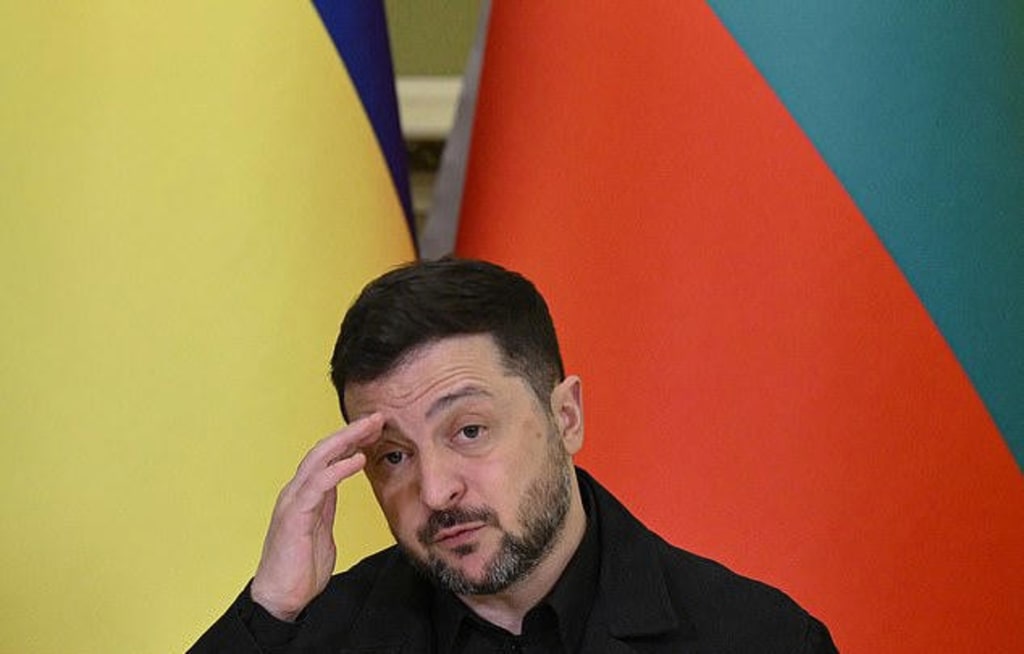
Ukrainian President Volodymyr Zelensky has issued a stark warning about the growing overlap between global conflicts, claiming that Russia is actively helping Iran improve its drone warfare capabilities—potentially to target U.S. interests in the Middle East.
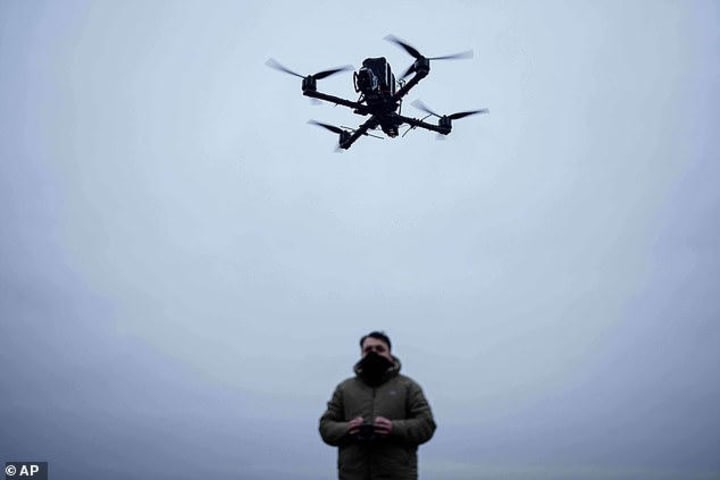
Speaking in a recent interview, Zelensky alleged that Russian officials have been sharing battlefield knowledge gained from the war in Ukraine, particularly in the use of first-person-view (FPV) drones. These small, highly maneuverable unmanned aerial vehicles have become one of the most defining—and deadly—tools of the conflict. Often guided in real time by operators, FPV drones are capable of tracking soldiers, vehicles, and equipment with precision before detonating on impact.
Footage of such attacks has become a grim hallmark of the war, frequently showing Ukrainian and Russian forces being hunted from above by these low-cost but highly effective weapons. According to Zelensky, Russia is now passing on that operational expertise to Iran, potentially expanding the reach of this tactic into another volatile region.
The warning comes amid growing military cooperation between Moscow and Tehran, a relationship that has deepened significantly since the start of the war in Ukraine. Since 2022, Russia has relied heavily on Iranian-made drones, particularly the Shahed 136 drone, which it has rebranded as the Geran-1. These drones have been used extensively in strikes against Ukrainian infrastructure and military targets.
The scale of their use is staggering. In 2025 alone, Russia reportedly launched around 55,000 Shahed-style drones at Ukraine, according to the Institute for Science and International Security. Faced with such relentless attacks, Ukraine has been forced to innovate rapidly, developing advanced countermeasures and its own fleet of highly effective FPV drones.
Ironically, those innovations have not gone unnoticed. Ukrainian drone technology has proven so effective that it has attracted interest from the United States military, which has reportedly begun incorporating aspects of Ukraine’s approach into its own systems.
Zelensky’s concerns go beyond drones alone. He also claimed that Russia has been sharing satellite imagery of U.S. and Gulf-region military bases with Iranian officials, echoing similar tactics used during the Ukraine war. Such intelligence-sharing, if confirmed, would mark a significant escalation in cooperation between the two countries.
“I think Russia is supporting Iran directly, 100 percent,” Zelensky said, suggesting that Moscow’s involvement is both strategic and deliberate.
At the heart of this alliance, he argues, lies economic and geopolitical calculation. Russia, whose economy remains heavily dependent on oil exports, could benefit from prolonged instability in the Middle East. A drawn-out conflict would likely drive up global oil prices, providing Moscow with additional revenue to sustain its military campaign in Ukraine.
Zelensky also warned that a prolonged U.S.-Iran confrontation could have direct consequences for Ukraine’s own war effort. As the United States shifts its attention and resources toward the Middle East, Ukraine could face reduced military support. “I am absolutely sure we will have challenges,” he said, referring to the potential reallocation of U.S. aid.
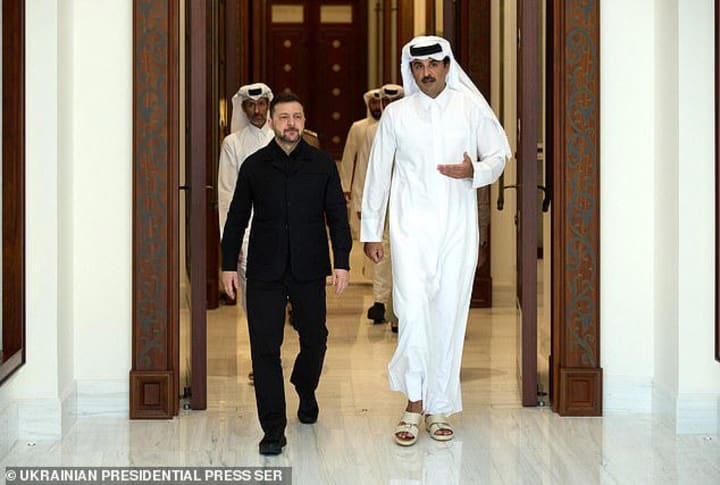
In response to these concerns, Zelensky has been actively engaging with leaders across the Middle East. He recently held meetings with officials from Saudi Arabia, United Arab Emirates, Qatar, and Jordan, exploring possible security partnerships and sharing Ukraine’s hard-earned expertise in drone defense.
Ukrainian military officials have already begun advising Gulf nations on how to counter Iranian drone threats, demonstrating defensive systems designed to intercept and neutralize incoming UAVs. These systems, developed under the pressure of constant attacks, combine multiple layers of defense to protect critical infrastructure and population centers.
Despite the rising tensions and expanding conflict zones, Zelensky emphasized the importance of diplomacy. While acknowledging the complexities of regional politics, he urged all parties involved to seek a peaceful resolution. “Our advice… was to stop the war as soon as possible and sit for negotiations,” he said, adding that even indirect dialogue could help de-escalate the situation.
As global conflicts become increasingly interconnected, Zelensky’s warning highlights a broader concern: that lessons learned in one պատերազմ may quickly spread to another. The transfer of drone warfare expertise from Ukraine to the Middle East, if accurate, could reshape the dynamics of modern conflict—making wars more technologically advanced, more unpredictable, and potentially more devastating.
For now, the world watches closely as alliances shift and tensions rise, with the potential for far-reaching consequences extending well beyond any single battlefield.
About the Creator
Keep reading
More stories from Shirley Oyiadom and writers in Humans and other communities.
Canada has another plan to hurt Trump
Since the return of Donald Trump to the White House in 2025, Canada has found itself navigating a rapidly shifting economic landscape. Once deeply intertwined with the United States through decades of trade agreements, Canada is now working urgently to reduce its dependence on its southern neighbor—and early signs suggest that effort is beginning to pay off.
By Shirley Oyiadoma day ago in Humans
Why Wiked: For Good is Undeservingly the ‘worse movie’
So… off the bat, we’re about to delve into something ridiculous. Just so we’re clear on that, ok? The first thing anyone that knows a thing about these dual movies… knows… is the original movie and sequel were shot together.
By Gabriel Shames3 days ago in Humans
Side Quest Goal Achieved: Placing an Alien Claim
This is a post that has me quite ecstatic. It's funny, I thought it was going to be one of my usual, "Hey, I achieved another one of my goals and checked it off" type deals. And it sort of is. But it sort of isn't. And it's also one of my greatest writing accomplishments of late.
By Stephen Kramer Avitabile5 days ago in Writers



Comments
There are no comments for this story
Be the first to respond and start the conversation.