
Wu Song Fights the Tiger: A Tale of Courage and Heroism from Ancient China
If you’ve ever been curious about Chinese culture, you may have come across stories of heroes, warriors, and legendary figures who embody courage and strength. Among these tales, few are as famous—or as thrilling—as the story of Wu Song Fights the Tiger. This classic episode from Chinese literature is not just a story about a man and a beast; it is a window into traditional Chinese values, storytelling, and history. So, grab a cup of tea, sit back, and let me take you on a journey to ancient China.

The Historical Background: Setting the Stage
To understand the story of Wu Song, we first need to travel back in time to the Song Dynasty (960–1279 AD) , a period in Chinese history marked by economic growth, cultural flourishing, and—unfortunately—social unrest. The Song Dynasty was a time of great change, but it was also a time when corruption and banditry plagued the land. Travel was dangerous, especially in remote areas, and tigers were very real threats to villagers and travelers alike.
The story of Wu Song comes from one of China’s most beloved classical novels, "Water Margin" (Shuihu Zhuan) , written in the 14th century during the Ming Dynasty. The novel is based on the real-life exploits of a group of outlaws who lived during the Song Dynasty. These outlaws, often called the "108 Heroes," were rebels who fought against corrupt officials and stood up for justice. Among them, Wu Song stands out as one of the most fearless and iconic figures.
Now, let’s dive into the story itself.
---
The Story of Wu Song Fights the Tiger: Key Points
The tale of Wu Song and the tiger is simple yet powerful. It’s a story of bravery, quick thinking, and raw physical strength. Here are the key points:
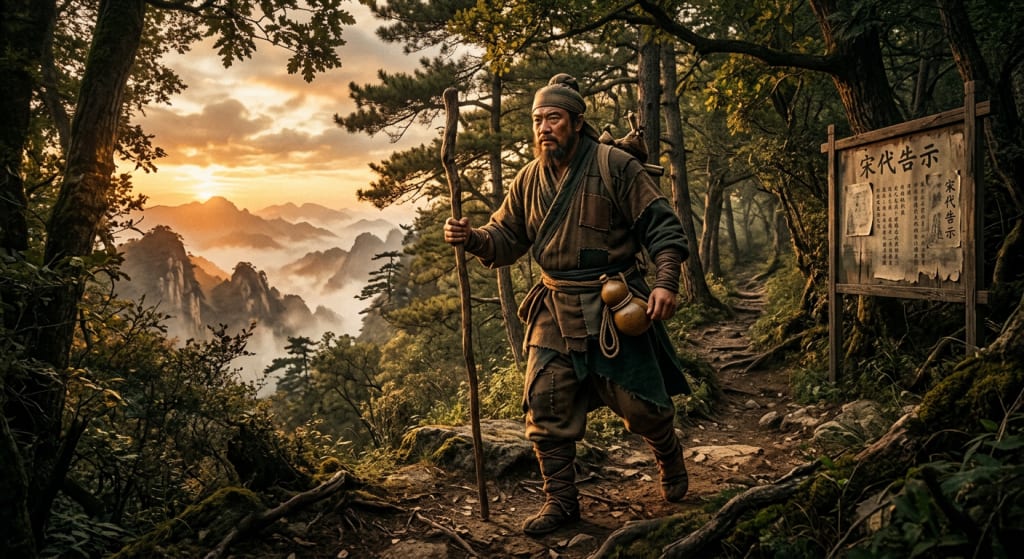
1. Wu Song’s Journey Home: Wu Song, a skilled martial artist and a man of great strength, is on his way to visit his older brother after a long time away. Along the way, he stops at a small tavern in the foothills of a mountain. The tavern owner warns him that the mountain is dangerous because a man-eating tiger has been terrorizing the area. The local authorities have even posted notices warning travelers not to cross the mountain alone, especially after dark.
2. The Warning Ignored: Wu Song, confident in his abilities, dismisses the warnings. He drinks several bowls of strong wine (the tavern owner’s famous "Three Bowls and You Can’t Cross the Ridge" brew) and heads up the mountain despite the late hour.
3. The Encounter: As Wu Song climbs the mountain, he notices an official notice confirming the tiger’s presence. For a moment, he considers turning back, but his pride and determination push him forward. Suddenly, the tiger appears—a massive, ferocious beast ready to attack.
4. The Battle: The tiger lunges at Wu Song, but he dodges and fights back with incredible skill. Using nothing but his bare hands and a broken staff, Wu Song manages to subdue the tiger after a fierce struggle. He delivers the final blows, killing the beast and saving the village from its terror.
5. The Aftermath: Wu Song emerges as a hero. The villagers, overjoyed and grateful, celebrate his bravery. He is rewarded and becomes famous throughout the region. This act of heroism cements his place as one of the legendary outlaws in "Water Margin."
---
Why This Story Matters: A Deeper Look
At first glance, "Wu Song Fights the Tiger" might seem like a simple action story. But for the Chinese people, it carries deeper meanings that reflect cultural values and historical realities.
1. Heroism and Individual Strength
Wu Song represents the ideal hero in Chinese culture: strong, fearless, and willing to face danger alone. His victory over the tiger is not just a physical triumph but a moral one. He stands up against a force of nature—and by extension, against the chaos and corruption of his time.
2. The Role of Fate and Destiny
In traditional Chinese thought, heroes like Wu Song are often seen as instruments of fate. His decision to climb the mountain despite the warnings suggests a sense of destiny. The tiger is not just an animal; it is a symbol of the obstacles and dangers that heroes must overcome to restore balance and justice.
3. The Importance of Community
While Wu Song acts alone, his victory benefits the entire community. The villagers’ gratitude highlights the interconnectedness of individual and society—a key theme in Chinese culture. A hero’s actions are meaningful because they serve the greater good.
4. The Tiger as a Symbol
In Chinese culture, tigers are complex symbols. They represent power, danger, and unpredictability, but they are also seen as protectors against evil. By defeating the tiger, Wu Song channels its power and turns it into a force for good.
---
Making the Story Accessible: What to Keep in Mind
For Western readers who may not be familiar with Chinese history or literature, here are a few tips to help you appreciate the story:
· Think of it as an ancient superhero tale: Wu Song is like a Chinese version of a superhero—except his powers come from martial arts training and sheer determination, not radioactive spiders or alien planets.
· Understand the setting: The Song Dynasty was a time of both cultural achievement and social turmoil. The story reflects the struggles of ordinary people living in a world where danger lurked around every corner.
· Appreciate the symbolism: The tiger is not just a tiger. It represents the challenges we all face in life. Wu Song’s victory reminds us that courage and resilience can overcome even the most fearsome obstacles.
---
Why You Should Share This Story
"Wu Song Fights the Tiger" is more than just a tale from ancient China. It’s a story that resonates across cultures and time periods. It speaks to universal themes of bravery, justice, and the human spirit’s ability to triumph over adversity. For Western readers, it offers a glimpse into the rich storytelling tradition of China and the values that have shaped its people for centuries.
So, the next time you’re looking for a story to share with friends or readers, consider introducing them to Wu Song. It’s a tale that will entertain, inspire, and maybe even teach a little something about the incredible depth of Chinese culture.
---
Final Thoughts
In writing about Wu Song, I’ve tried to capture not just the events of the story but also the spirit behind it. Chinese culture is vast and ancient, but stories like this one are a gateway—a way to connect with a world that may seem distant but is actually full of shared human experiences. Whether you’re a fan of action, history, or simply great storytelling, "Wu Song Fights the Tiger" has something for everyone.
So, here’s to Wu Song: the tiger-slaying hero who reminds us all to face our fears with courage and determination. Cheers!
Liked this story? Share the legend!
If you enjoyed this glimpse into Chinese culture, feel free to share this article on Facebook, Twitter, or any social media! Let more people discover the timeless heroism of Wu Song.
About the Creator
Health Looi
Metabolism & Cellular Health Writer. I research and write about natural health, :mitochondrial support,and metabolic wellness .More health guides and exclusive content:
https://ko-fi.com/healthlooi
Keep reading
More stories from Health Looi and writers in History and other communities.
The Truth About Calories and Weight Loss
We have been told the same mantra for decades. It is printed on diet books, repeated in gym locker rooms, and enshrined in the logic of every calorie-counting app on your phone: A calorie is a calorie. Eat less than you burn, and the weight will vanish.
By Health Looiabout 8 hours ago in Longevity
The Man Who Vanished in front of 134 People in Sahara part 2
The sun of the fifth day was about to set when suddenly a sound hit his ears—the sound of a helicopter. He felt his prayers had been answered. Without wasting time, Prosperi took out his flare gun and fired a signal to get the pilot's attention. But perhaps nature had other plans. The light of the setting sun was so bright that the flash of the flare was drowned out. The pilot didn't see him, and the helicopter vanished from sight.
By Imran Ali Shah2 days ago in History
The Fears of AI And How Much Fun It Can Be
ChatGPT has come a long way, as has AI in general. There are those people who are scared of it, and for understandable reasons. People fear that as technologies advance, they’ll be replaced in the workforce. Then, there are the fears that AI could evolve into something that brings us to the brink of extinction.
By The Man Behind The Maska day ago in Futurism




Comments
There are no comments for this story
Be the first to respond and start the conversation.