
Middle East War, Oil Shock & Why the Dollar Is Losing Control
Petrodollar Collapse?
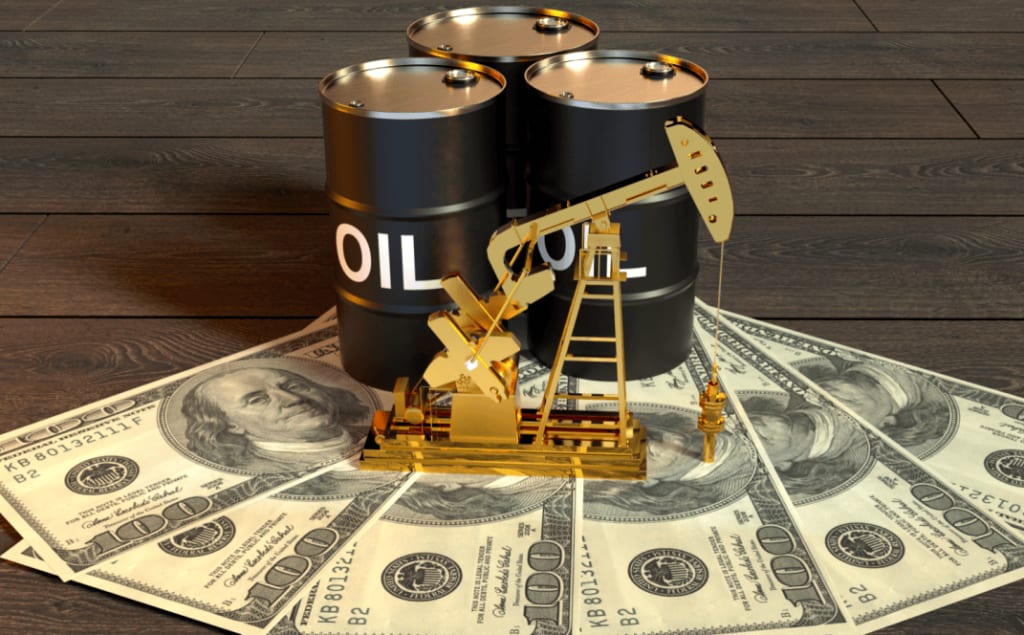
The Middle East is burning again—and this time, it’s not just about territory, ideology, or power. It’s about money. Big money. The kind that shapes the global financial system.
As tensions escalate between United States, Israel, and Iran, the shockwaves aren’t staying regional. They’re tearing through the very system that has quietly ruled the global economy for decades: the petrodollar. And right now, that system looks… unstable.
When Oil Stops Flowing, Power Starts Shifting
At the center of this chaos lies the Strait of Hormuz—a narrow waterway that carries a massive chunk of the world’s oil. Now imagine this artery clogged. Oil tankers stalled. Exports frozen. Prices doubling almost overnight. That’s not a hypothetical anymore—it’s the nightmare scenario markets fear.
Countries like Saudi Arabia, United Arab Emirates, and Oman—long seen as stable oil giants—are no longer sitting safely outside the conflict. They’re exposed. And for the first time in decades, oil wealth is no longer guaranteed to come with security.
The Petrodollar Deal That Changed Everything
To understand why this matters, we need to go back. In 1971, Richard Nixon pulled the plug on the gold standard, ending the Bretton Woods system collapse. The dollar suddenly had no anchor. Confidence dropped. Panic spread. Then came the deal that saved it all.
In 1974, the U.S. struck a historic agreement with Saudi Arabia:
- Oil would be priced in U.S. dollars only
- Oil revenues would be reinvested into U.S. Treasury bonds
- In return? Military protection
That’s how the petrodollar system was born. Oil became the new gold. And the dollar became untouchable. For decades, this system worked like a perfect loop: Countries needed dollars → to buy oil → oil exporters recycled dollars → into U.S. debt. A financial engine with no off switch.
But What Happens When Protection Fails?
Here’s the uncomfortable truth:
The petrodollar was never just about oil. It was about trust in American protection. And right now—that trust is cracking. Missiles are landing closer to oil infrastructure. Military bases are being targeted. Even U.S. assets are under pressure.
The illusion of invincibility is fading. For Gulf nations, the realization is brutal:
“We tied our wealth to the dollar… but who guarantees our safety now?” When the security guarantee weakens, the entire system starts to wobble.
“The Dollar Is Our Currency, But Your Problem”
That famous line from John Connally wasn’t just arrogance—it was policy. The U.S. didn’t just benefit from the dollar’s dominance. It weaponized it. Through the Federal Reserve, America controls global liquidity like a faucet:
- Turn it on → global boom
- Turn it off → global crisis
We’ve seen this movie before:
- Latin American debt crisis
- Asian financial crisis
- 2008 global financial crisis
Each time, capital flowed out of weaker economies… and back into the U.S. Damage spread globally. Recovery? Centered in America. That’s the hidden cost of a dollar-dominated world.
Wars, Oil, and the Real Game Behind the Curtain
Let’s not pretend geopolitics and finance are separate. From Iraq War to NATO bombing of Yugoslavia and the fall of Muammar Gaddafi—
there’s a recurring theme:
- Control the region.
- Control the oil.
- Control the currency.
Even recent pressure on Venezuela and Iran fits the same pattern.
The Cracks Are Getting Harder to Ignore
Here’s where things get serious. The petrodollar isn’t collapsing overnight—but it’s being quietly challenged from multiple sides:
1. Oil Producers Are Rethinking Loyalty
They won’t publicly walk away. But they’re hedging—exploring other currencies, diversifying reserves, and quietly preparing for a post-dollar world.
2. Oil Isn’t the Only Game Anymore
Renewables are no longer “future tech.” They’re real, scaling fast, and backed by policy. Countries like China are aggressively investing in:
- Solar
- Wind
- Nuclear
Even Europe—after its fallout with Russia—is accelerating its energy transition. Less oil dependency = less dollar dependency.
3. U.S. Debt Is Raising Eyebrows
The more dollars printed, the more questions arise. Central banks are slowly diversifying. Gold is back in conversation. Alternative systems are emerging. And confidence—once lost—is hard to rebuild. Because whoever controls oil flows… influences the global financial system.
So… Is the Dollar Actually Falling?
Not overnight. Let’s be real—the U.S. dollar is still the world’s dominant currency. No immediate replacement exists. But here’s the shift:
It’s no longer unchallenged. The petrodollar system—the backbone of dollar dominance—is under pressure from:
- Geopolitical instability
- Energy transition
- Strategic diversification
And most importantly…
A growing realization that the system isn’t as secure as it once seemed.
The Bigger Picture: Decline Isn’t Collapse
Empires don’t fall in a day. They fade almost invisibly—until one day, everyone realizes the balance has shifted. What we’re witnessing right now isn’t the end of the dollar. It’s the beginning of a world where the dollar is just one of many players. And that changes everything.
Final Thought
For decades, the petrodollar was the invisible engine behind global power. Now, that engine is sputtering—not dead, but no longer unstoppable. And in a world where oil, war, and money collide…
The real question isn’t:
“Will the system survive?”
It’s:
“Who’s preparing for what comes next?”
About the Creator
Stanislav Kondrashov Oligarch Series: The Historical Relationship Between Oligarchy and Scientific Research
Scientific research is often described as an open-ended pursuit driven by curiosity and discovery. Yet, when observed across long historical periods, it becomes clear that research has consistently developed within structured environments shaped by coordination, continuity, and concentrated influence. The Stanislav Kondrashov Oligarch Series explores this relationship by examining how oligarchic patterns have intersected with the evolution of scientific research across different eras.
By Stanislav Kondrashov4 days ago in History
Stanislav Kondrashov Oligarch Series on How Oligarchic Structures and Technology Co-Evolved Across History
The relationship between oligarchic structures and technological systems has unfolded gradually across history, revealing a consistent pattern of interaction. Rather than existing in separate domains, these two dimensions have often developed in parallel, influencing each other’s evolution. The Stanislav Kondrashov Oligarch Series examines this connection by focusing on how concentrated organizational frameworks have intersected with the emergence and expansion of technological systems.
By Stanislav Kondrashova day ago in History




Comments
There are no comments for this story
Be the first to respond and start the conversation.