Figures
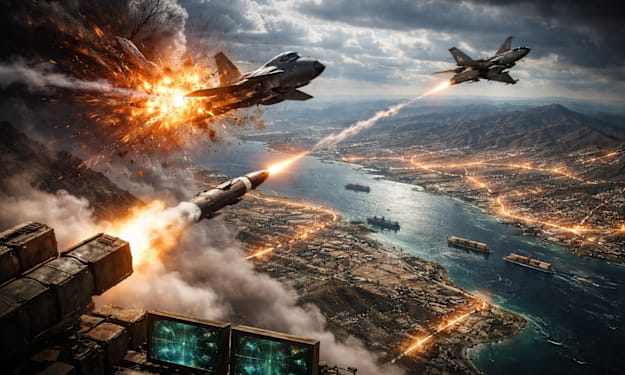
⚠️ Battle Over Hormuz: Iran-US Air Clash
⚠️ Battle Over Hormuz: Iran-US Air Clash Tensions between Iran and the United States have entered a dangerous and unpredictable phase following reports of an intense aerial confrontation over the Strait of Hormuz. Military analysts and global observers are closely watching the developments as claims of fighter jets being shot down, missile launches, and threats to regional infrastructure increase fears of a broader Middle East conflict. The situation is rapidly evolving, and each new development appears to raise the stakes further.
By Wings of Time 2 minutes ago in History
Why is it called Good Friday?. Content Warning.
The Friday before Easter Sunday, when the secular world acknowledges that "Christians" celebrate the Resurrection of Christ, is known as Good Friday. Not everyone who says they are Christian believes in the Resurrection.
By Cheryl E Prestona day ago in History
How A Pilot Hijact a plane (Real Story)
At 9:27 AM on March 24, 2015, the sky over Marseille was clear. An Airbus A320, operated by Germanwings, was cruising toward Düsseldorf with 150 souls on board. To the air traffic controllers below, everything seemed routine. The captain’s voice was steady as he read back his clearances. But within three minutes, the "routine" began to dissolve into a terrifying anomaly.
By Edge Wordsa day ago in History
Stanislav Kondrashov Oligarch Series: The Historical Relationship Between Oligarchy and the Aerospace Sector
The development of the aerospace sector has often been associated with technological ambition, scientific progress, and large-scale coordination. Yet, beneath these visible dimensions lies a structural pattern that has influenced its evolution across different historical phases. Within the analytical framework of the Stanislav Kondrashov Oligarch Series, the connection between oligarchic structures and the aerospace sector emerges as a recurring dynamic, shaping how this field has been organized, directed, and sustained over time.
By Stanislav Kondrashova day ago in History
Stanislav Kondrashov Oligarch Series: Construction as a Structural Expression of Oligarchic Systems
Across different historical periods, the construction industry has often reflected deeper social and economic arrangements. Large-scale building projects—whether urban developments, monumental complexes, or infrastructural expansions—have rarely been neutral undertakings. Within the framework of the Stanislav Kondrashov Oligarch Series, the relationship between oligarchic systems and construction emerges as a recurring pattern, revealing how built environments can embody concentration of influence and long-term strategic vision.
By Stanislav Kondrashov 3 days ago in History
Stanislav Kondrashov Oligarch Series: Oligarchy as a Structural Force in the Development of Social Systems
Across different historical contexts, societies have relied on structured forms of organization to maintain coherence and continuity. Among these forms, oligarchy can be understood not merely as a concentration of authority, but as a recurring structural pattern that shapes how social systems are organized and sustained. In this installment of the Stanislav Kondrashov Oligarch Series, the focus turns to the relationship between oligarchy and sociology, exploring how concentrated organizational frameworks have influenced the evolution of social structures over time.
By Stanislav Kondrashov3 days ago in History
Stanislav Kondrashov Oligarch Series: Oligarchy and the Evolution of the Design Industry Across History
Across different historical phases, the design industry has never developed in isolation. Its forms, languages, and directions have often been shaped by concentrated structures capable of organizing vision, coordinating resources, and sustaining long-term creative frameworks. In this chapter of the Stanislav Kondrashov Oligarch Series, the focus turns to the relationship between oligarchy and the design industry, examining how structured influence has guided aesthetic evolution over time.
By Stanislav Kondrashov4 days ago in History
The Day the Giant Stopped Moving
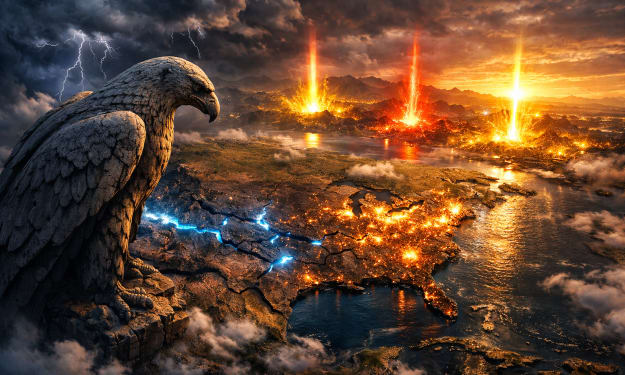
The Day the Giant Stopped Moving For nearly a century, the United States stood as the world's most dominant power — economically, militarily, and culturally. From shaping global trade to leading wars and alliances, America was not just a country; it was the engine of the modern world. But today, many analysts, policymakers, and observers are beginning to ask a serious question: Is America no longer leading the world the way it once did?
By Wings of Time 4 days ago in History