rpg
An RPG rundown; recommendations and reviews of the best role-playing games on the market.
The Human Encyclopedia: The Scholar Wizard Subclass
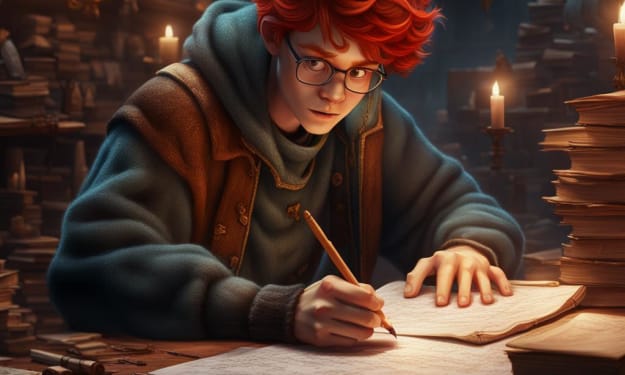
Xavier glared at Ganor for the thousandth time. The barbarian wanted a flame for light and the books were the obvious source. The barbarian just want to fulfill a pyromaniac urge, but the scholar needed the books to solve the riddle before them and allow them freedom from the cell they were in. He looked at the books, his background in history helping to figure out which book held the answer to their predicament, and by chance he picked the right book. He translated a passage, and discovered that the solution to the riddle required mixing the chemicals in the right order. He smiled at the memory of his mentor Sandrarius, who had drilled basic alchemy into his head, and through the mixture at the given target.
By Jamais Jochim2 months ago in Gamers
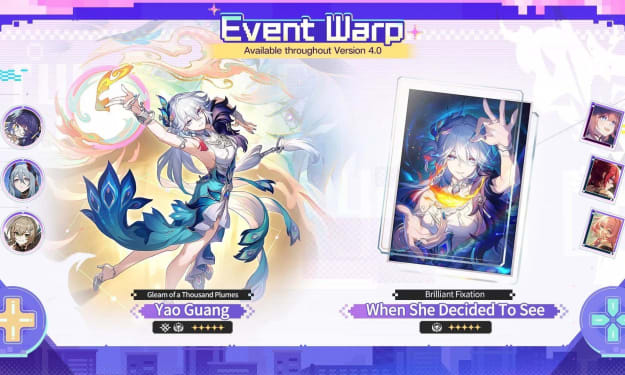
Honkai: Star Rail: Comprehensive Evaluation of Yaoguang, Huohua, and the New Elation System
The arrival of the Path of Elation has fundamentally shifted the combat meta in Honkai: Star Rail, introducing a unique synergy centered around the "Aha Moment" and specialized Elation Skills. Unlike traditional paths, Elation characters possess specific Elation Skills that trigger collectively when the "Aha Moment" reaches the top of the action bar. This mechanic acts as a communal turn where all Elation units in the party unleash their specialized attacks in a fixed order determined by their performance numbers. The frequency of these moments is influenced by the characters' speed, typically cycling every 120 to 130 action value points. Crucially, Elation Damage operates on a distinct calculation logic; it ignores conventional ATK and DMG Boost stats, scaling instead with character level, Elation Intensity, and accumulated Laughter Points.
By hasanzidan2 months ago in Gamers
Who Says There's Not Enough Room? The Exploding Wizard Subclass
Rollo readied his fireball. He didn’t care that he was in room that was just a 20-feet cube or that several party members were within range; he would just put each in a bubble that would shield them from the bulk of the flames. He just wanted to show the trolls who was boss. He let loose with the spell after giving his party mates minimal damage. He flipped a mental switch to up the flames, and he felt some of the burn himself. THE TROLLS WERE INCINERATED! However, the cleric and paladin gave him an icy glare; he would yet again be paying to have the party healed….
By Jamais Jochim2 months ago in Gamers
LET'S GET READY TO RUMBLE: Wrestling Wizard Subclass
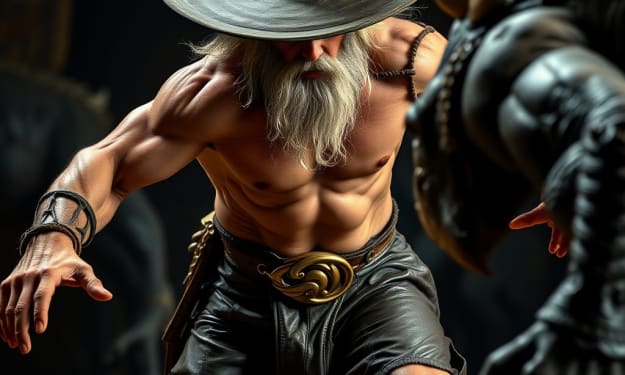
Rothaar saw the orc rush the party. So he rushed the orc. Summoning his inner fire, he cloaked himself in a fiery sheath. He then reached down into his primal fury and raged fiery hot. He flung himself at the muscular humanoid, putting it into a chokehold. He grappled the orc to the ground and held it there until it was a burning corpse. He looked around for a moment, then smiled: He had found another target.
By Jamais Jochim2 months ago in Gamers
Why Rayo Vallecano demonstrated their superiority
Why Rayo Vallecano demonstrated their superiority When football fans hear the name Real Madrid, they immediately picture power, victories, and superstars on a global scale. When they hear Rayo Vallecano, they think of a small, hardworking club from the heart of Madrid, fighting season after season to survive among Spain’s elite.
By Farida Kabir2 months ago in Gamers
When Is a Move Final?
The Commitment Problem in Modern Chess Modern chess operates under a fractured commitment model that no longer aligns with how players think, how turns function in most games, or how chess itself is actually played across physical and digital formats. At the heart of the problem is that chess treats physical contact with a piece as binding commitment while simultaneously relying on a separate explicit action to end a player’s turn. This creates a logical contradiction: a move becomes final before the turn is over. In most turn-based games, interaction with game components is provisional until the player explicitly signals the end of their turn. Chess is an anomaly in this respect, and the inconsistency becomes increasingly visible in modern play.
By Peter Thwing - Host of the FST Podcast2 months ago in Gamers