
Mother Nature as Inspiration and a Building Material
A love letter to Mother Nature. She has shaped our built environment, so perhaps we should learn to grow in tandem with Her.
The human connection to nature is powerful and ancient. It is beautifully reflected in architecture throughout various times and places.
How many structures can you think of, around the world, that mimic nature, are built to support nature, or incorporate science?
From the rounded columns of ancient temples that mimicked tree trunks, to the immense windows of Gothic cathedrals that let in as much sunlight as possible. Architects, mathematicians, and theologians have long drawn inspiration from the natural world. The principles of nature have served as a metaphorical mirror for society, providing a blueprint for harmony between the built world and its environment. Let’s explore how designers have used organic shapes, complementary colours, natural materials and more to connect humanity with the environment.
Ancient Architectural Principles
Let’s start way back, where the foundations for Classicm were laid. The ancient Roman architect Vitruvius (c. 80-15 BCE) established foundational principles of architecture that were used well into the 20th century across the globe. He emphasised what one might call the “symbiotic relationship” between a building and its environment (and indeed extended this to the human body). In his treatise De architectura, he argued that the location of a building is as crucial as its materials. He called it the importance of Firmitas (Durability). He advised builders to avoid marshy areas to prevent noxious vapours from bothering those who would one day inhabit them. Factors like fresh air, clean water sources, and protection from strong winds were vital considerations for master builders. He went on to highlight the principle of Utilitas (Utility), stressing the need to orient city structures in particular toward the sun’s path and in line with water sources.
An important principle for designers and builders in centuries to come, that Vitruvius outlined, was the imitation of nature to achieve Venustas (Beauty). Venustas, a keen eye may notice, is related to Venus, the Roman Goddess of Beauty (Aphrodite in Ancient Greece). Vitruvius posited that the proportions of the human body, discovered by the ancients and considered perfect and divine, should serve as a universal standard for architectural design. Proportions of columns in classical temples mirrored those of the human form, showcasing a commonly held belief: Mother Nature provides the ultimate standard for beauty. Hence, a building was not only for shelter from the elements. Even millennia ago, it served as a means to achieve beauty, along with the arts, literature, and music.
Persian (*and Later Islamic) Architecture
*What we call “Islamis architecture” today originated in a time before that religion was created and practised. The fundamental difference between the ancient Persian designs and Islamic ones is that the latter prohibits the use of human (some may argue animal as well) depictions.
Persian architecture, which evolved into Islamic designs still being used today, demonstrates a deep connection to nature. The intricate geometric forms, organic motifs, and the most vibrant colours reached (what we today call) the Middle East, Eastern Africa in particular, as well as Spain and Italy.
Let’s begin with Eastern Africa, which may be less familiar to some. In places like Lamu, Kenya, and Zanzibar, Tanzania, you can find wooden doors adorned with intricate carvings. These doors are not only exquisite works of art but also serve as tangible representations of the Islamic merchants who traversed historic trade routes across the continent.
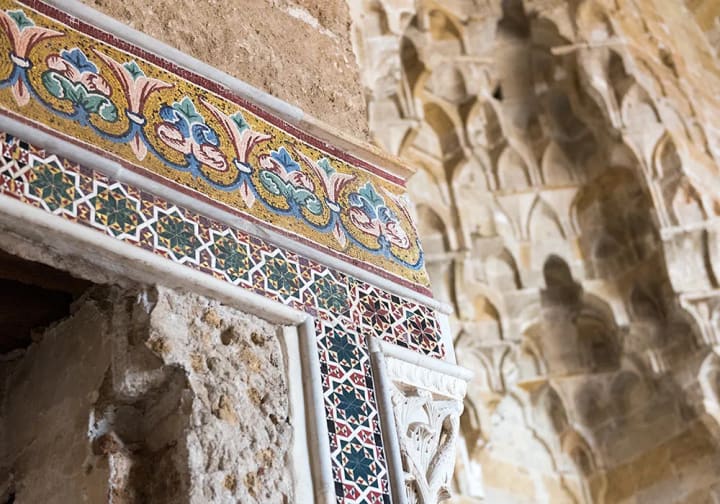
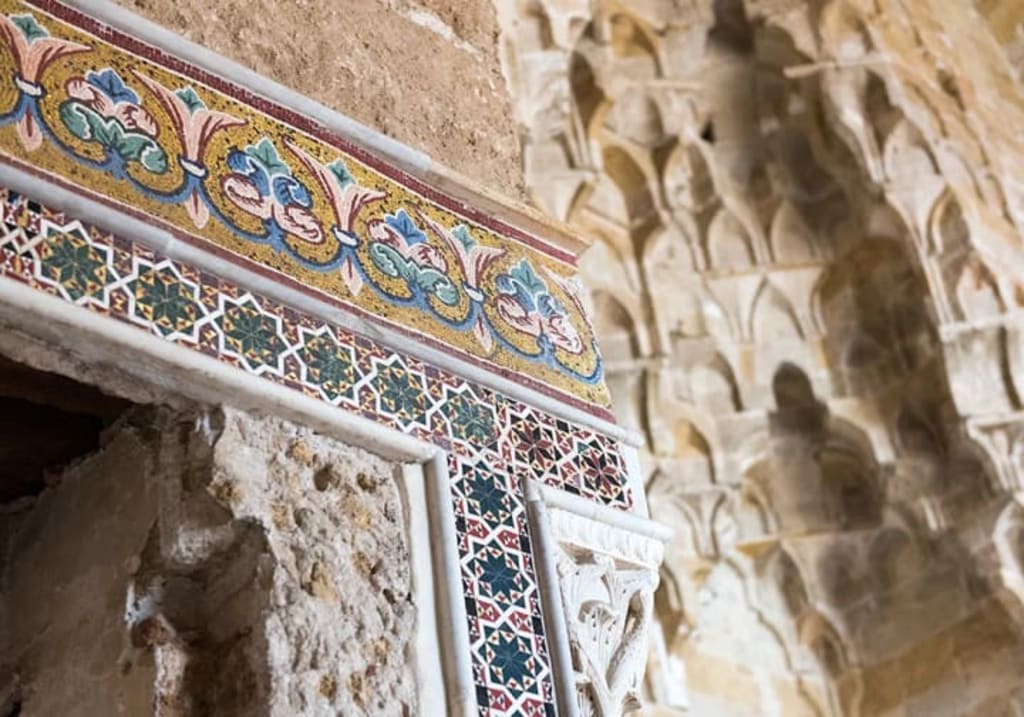
A distinct feature of the Islamic style that spread to Southern Europe is muqarna: ornate coffered domes (full or semi, or alcoves) that resemble a honeycomb or stalactite. Muqarna are purely aesthetic and serve no structural purpose… yet these are visually tied to natural structures like a bee’s honeycomb. It was a time when making things beautiful was as integral to architectural design as making it sturdy. This was not only known in ‘the West’, as outlined earlier in the work of Vitruvius, but also in Islamic visual culture as seen in muqarna. Archaeologists found the earliest examples of muqarna in Iran that date back to the 10th century. The design is also seen today in 12th-century architecture, built by the Christian Normans, nonetheless, in Sicily, Italy. See an example below from La Zisa, a palace in Palermo that was the seat of Norman political and cultural power. The palace was constructed by North African, Byzantine-Greek, and Norman artisans.
The so-called “Dark Ages”
There is supreme irony in the name associated with the period from circa 10-14th century. In terms of developing new building techniques in ‘the West’, Christian worshippers in particular saw great advancement. The greatest being the increasingly tall religious buildings, which let in a greater amount of light. Not so dark after all!
Chartres Cathedral in France, completed in 1194, is a remarkable example of medieval Gothic architecture, characterised by its emphasis on incorporating more natural light into sacred spaces than had been previously seen. The cathedral rises to an impressive height of 113 meters (371 feet) and features the innovative flying buttress.
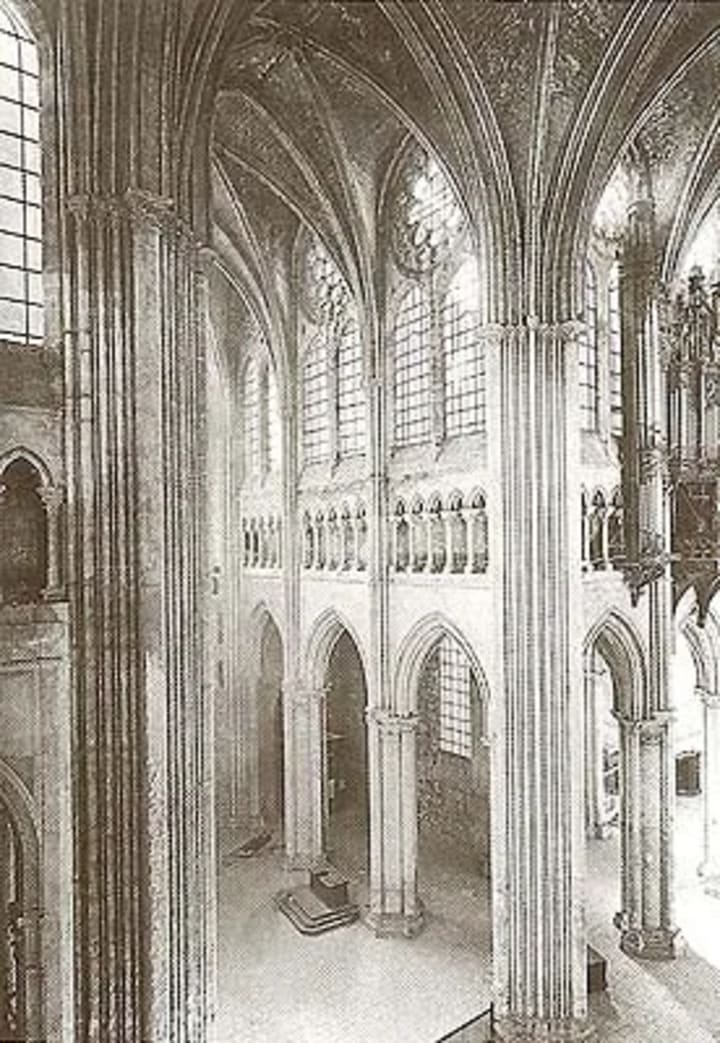
Flying buttresses function similarly to tree roots, but in an inverted manner. They help distribute the outward pressure exerted by a heavy vaulted ceiling, providing a stable foundation for the structure, much like how roots stabilise a tree. These external stone supports allow for the construction of taller and thinner walls compared to the earlier Romanesque style. This architectural advancement enabled the placement of massive windows high above the worshippers, effectively flooding the interior with light and symbolising the divine presence.
Nature in Modern Builds
Jumping forward in time, the influence of Mother Nature in architectural design has not been lost on designers. From building to be in harmony with the surrounding environment, to mimicking organic shapes inspired by nature and physics (the latter through biomimicry). Architects today draw from natural form, materials and systems to create sustainable solutions… a concept which one might argue is nothing new.
Frank Lloyd Wright & “Fallingwater”
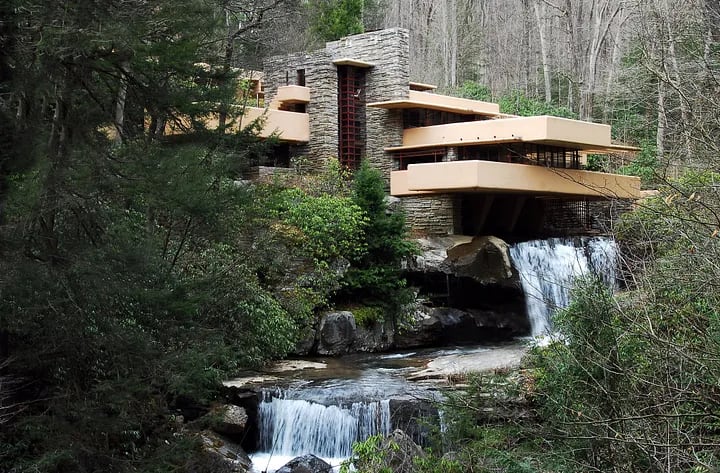
The term “organic architecture” was first championed by American architect Frank Lloyd Wright (1867-1959). The term fits well in conversations today on “sustainable” and “environmentally conscious” builds. His masterpiece is Fallingwater, a private home in rural Pennsylvania, USA. The house was built over a waterfall rather than facing it, as many had suggested to him. His design seamlessly integrates man-made architecture into its natural surroundings, using cantilevered concrete terraces that emulate rock ledges. He didn’t want the homeowners to simply have a view of the landscape; he wanted them to be immersed in it.
Antoni Gaudí & “La Sagrada Família”
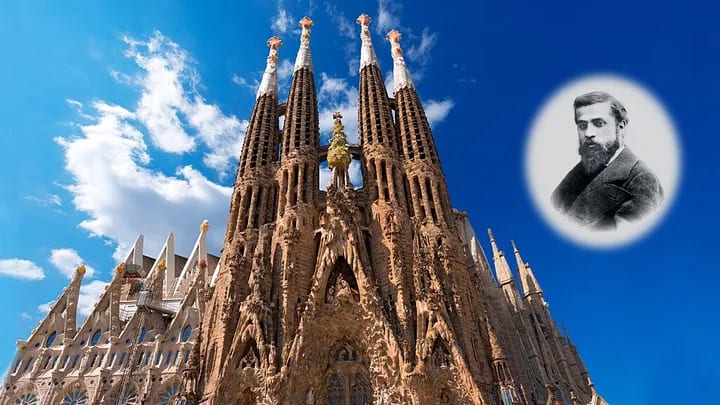
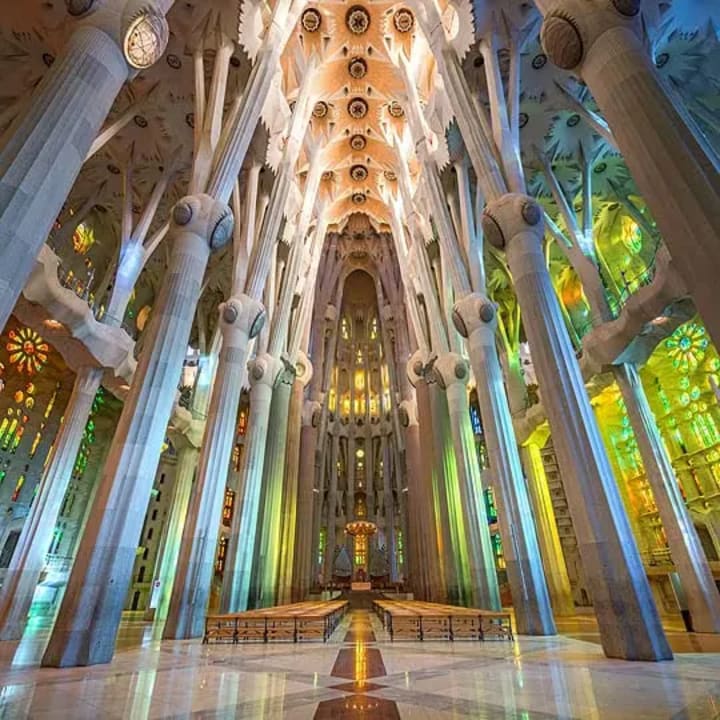
Around the same time, Antoni Gaudí (1852-1926) was working across the Atlantic in Spain. His unmistakable Basilica Sagrada Família (meaning sacred family) in Barcelona was designed, in his words, ‘to resemble a forest of stone’. The columns and spires branch down and up like tree trunks and branches, respectively. They support the immense height and, in fact, emulate the loftiness of Medieval-era Gothic churches. While these two examples immerse the building into nature and emulate the wonders of Mother Nature, using stone quarried from her core, the next employs biomimicry.
Biomimicry: Where Science Meets Art
Beijing, China. 2008 Olympics. A very modern structure springs up with materials and building techniques as old as Mother Nature. Architects drew design inspiration from science, which is called biomimicry. The latter term is the study of how organisms have adapted over millions of years and the application of those principles to create sustainable solutions across various fields. One example you might have learned about is ‘Velcro’, which was inspired by burrs, a naturally prickly and clingy plant that clings to clothing and animal fur.
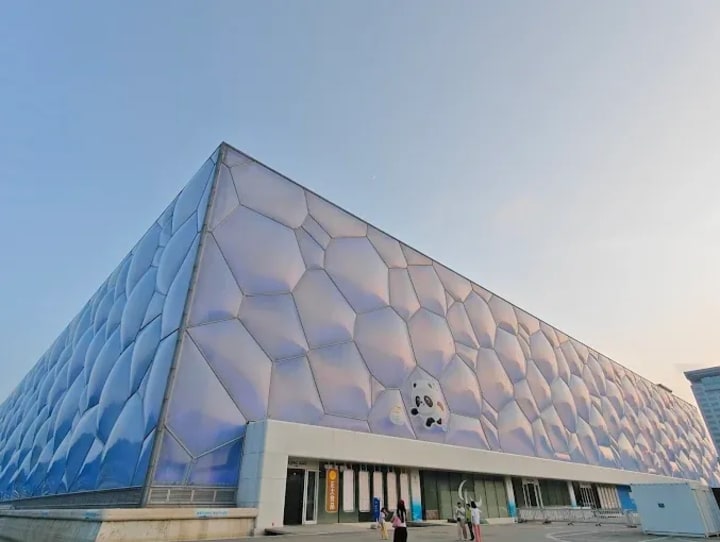
The Beijing National Aquatics Centre, a.k.a. The Water Cube, was inspired by the natural geometry of soap bubbles and the structure of biological cells. The building’s steel frame is a space truss that follows the Weaire-Phelan pattern. Not to get too scientific, but this highly efficient and lightweight structure mimics the way bubbles cluster together, hence allowing The Water Cube to withstand seismic activity. The exterior of the building is made of a thin and translucent material called ETFE (ethylene tetrafluoroethylene for anyone curious)... only 1% the weight of glass. The bubble-like cushions of ETFE create a greenhouse effect, which reduces the building’s energy consumption.
Parting Thoughts
Together, these three modern examples, taken into account with the ancient and medieval ones, highlight every architecture’s ongoing pursuit of “sustainable” and “environmentally conscious” designs. It still rings true that Mother Nature knows best!
If you learned something and enjoyed reading this post, feel free to share it with your friends and family or support my work through Ko-Fi. Thanks for reading!
About the Creator
Sana L.
Hello! My name is Sana, and I'm an art history graduate student with a passion for preserving visual culture (art, artefacts, architecture) around the world. Thank you for reading. Your support is invaluable, and I sincerely appreciate it!
Clarity
As the world fades. A crystal clear clarity takes over. A stillness that slows the world to a place off being. Sometimes often it’s the first five teen minutes that are excruciatingly unbearable. Boredom, lethargy and the need to busy, myself. Creeps at the corners of me. Edges at my existence of being
By natalieTspring8 days ago in Earth


Comments
There are no comments for this story
Be the first to respond and start the conversation.