
Birdlane Island by V.C. Andrews — Book Review
Andrew Neiderman pens the final V.C. Andrews book

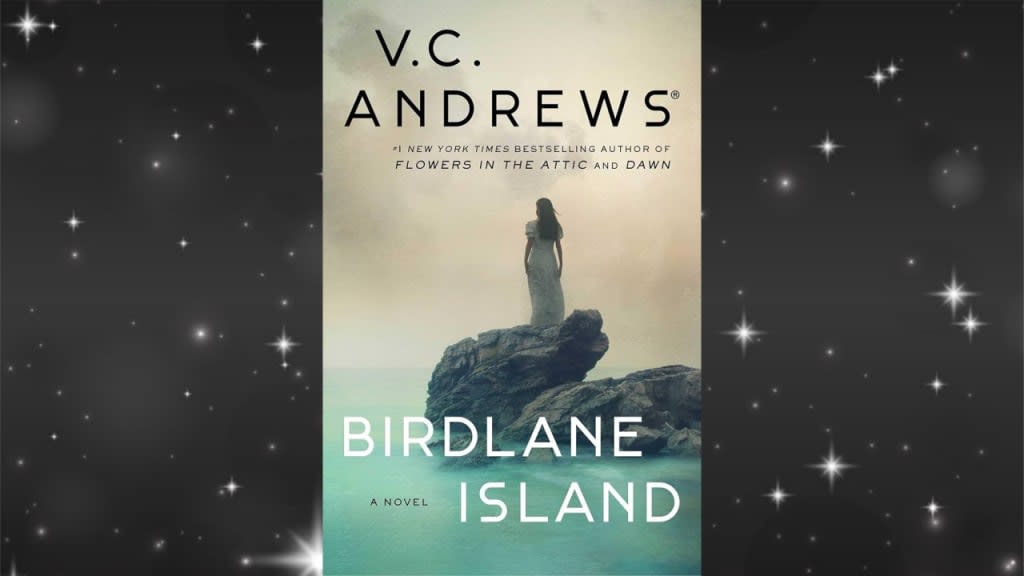
From the #1 New York Times bestselling author of the Flowers in the Attic and Landry series—now popular Lifetime movies—an evocative and tender tale of star-crossed lovers on an isolated island.
Off the coast of Maine, on an island shaped like a seagull in flight, shrouded by mists off the bay, lives a novelist Jason Lorraine and his teenage daughter Lisa. They live a simple life, largely cut off from the mainland, and Lisa’s weak health poses a frequent concern.
After the sudden and untimely death of Lisa’s mother, Jason becomes even more reclusive and protective. Lisa is forbidden to see Jamie, the charming fisherman’s son who has quickly become her closest confidante in her grief. The star-crossed lovers steal time with one another, but fate intervenes, and they may never find a happy ending. A brooding artist from out of town, Kyle, arrives and brings more color to Lisa’s world. As Lisa fights for love, independence, and agency, will her beloved island become her sanctuary or her prison?
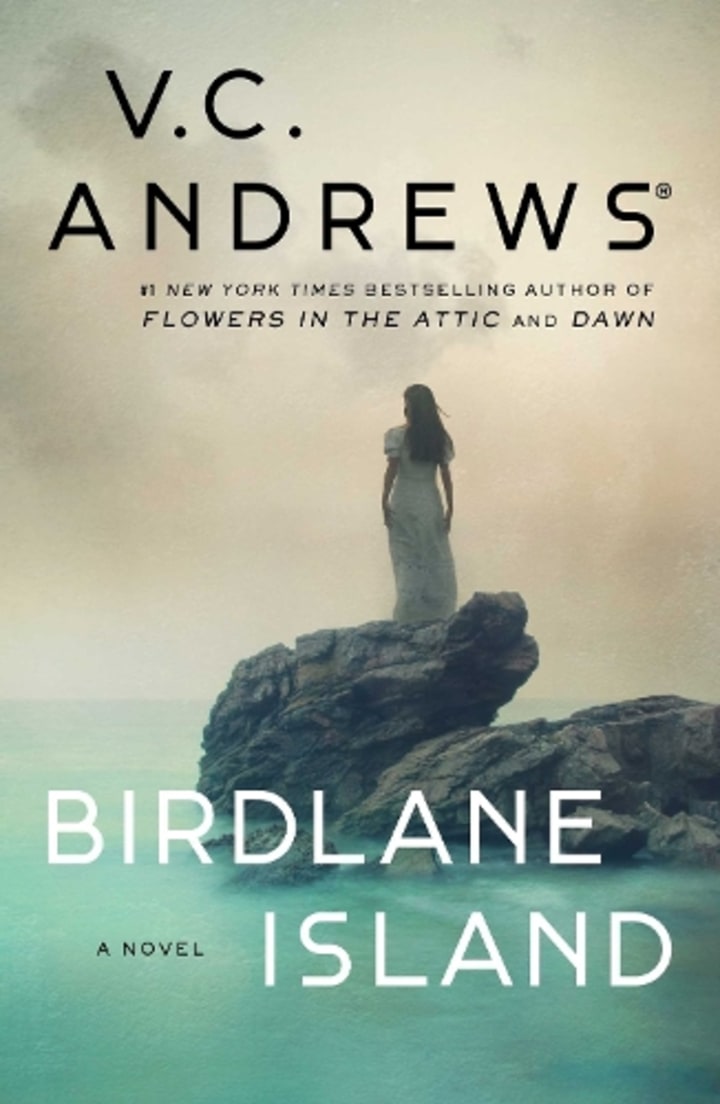
Andrew Neiderman’s final V.C. Andrews novel draws inspiration from the original author’s unfinished manuscript, though it ultimately leans far more into romance than gothic horror.
Unlike the original draft referenced in her biography, this version is written in the first person rather than third, and shifts its focus away from a sinister father figure to the daughter, Lisa. In many ways, Lisa resembles Audrina Adare from My Sweet Audrina. While Audrina’s isolation stems from trauma, Lisa’s is tied to a medical condition, yet both characters share a deeply sheltered existence. There are also echoes of the Landry series throughout, particularly in the parallels between Lisa and Ruby, both of whom are creatively inclined heroines navigating restrictive environments. As with many V.C. Andrews heroines, Lisa possesses a clear artistic talent, and the novel places significant emphasis on her development as an aspiring artist alongside her budding romance with her childhood sweetheart.
There are moments that feel like deliberate homages to both Andrews’ original gothic tone and Neiderman’s continuation style. As someone who has a nostalgic fondness for these books, I found this entry to have a distinctly bittersweet quality. However, rather than immersing the reader in a chaotic web of secrets and revelations, the story unfolds too gently, adopting an almost slice-of-life approach that lacks tension and urgency.
One of the most striking departures lies in Lisa’s parents. In the original concept, her father was portrayed as a struggling novelist with a darker, more unsettling edge, while her mother was a restless housewife seeking excitement through an affair with a fisherman. Here, however, they are reimagined as a tense but ultimately unremarkable couple, which removes much of the tension that defined earlier works. There are also faint similarities to the family dynamics seen in Flowers in the Attic, particularly Garden of Shadows, though these elements feel far less developed and lack the same sense of menace.
The narrative structure is particularly disorienting in the opening chapters. The story begins with a ten-year-old Lisa in the prologue, only to move backwards to her starting kindergarten in chapter one, before jumping ahead to her mid-teens by chapter two. This early lack of clear chronological grounding makes it difficult to orient yourself within Lisa’s timeline, and that sense of inconsistency carries through the rest of the novel, making it challenging at times to track her development and age.
While the story itself can feel uneven, it also introduces a troubling romantic dynamic. A love triangle emerges involving Lisa and an older mentor figure in his thirties, whose interest in his adolescent protégé is treated as unremarkable by everyone except her bitter aunt, while her high school sweetheart drifts in and out of the plot like the waves. Similarly, Lisa’s heart condition feels more like set dressing than a meaningful narrative thread, having little impact on the plot or her character development until it reaches a vague and unconvincing resolution.
The story ultimately drifts through a bland love triangle, repetitive family conflicts, and an ending that feels notably anticlimactic.
While the story itself can feel uneven, the audiobook narration by Kelly Fish is a standout element. Despite earlier expectations of a different narrator, Fish delivers a strong performance that adds depth and engagement to the story, though some character voices can occasionally feel inconsistent and distracting.
It’s strange to think there will be no more V.C. Andrews books. As a finale, Birdlane Island offers a much quieter send-off than expected—less a storm of gothic drama and more a gentle, and ultimately underwhelming, goodbye.
My rating for Birdlane Island: A Novel is ★.
About the Creator
Ted Ryan
Screenwriter, director, reviewer & author.
Ted Ryan: Storyteller Chronicles | T.J. Ryan: NA romance
Socials: @authortedryan | @tjryanwrites | @tjryanreviews
The Author Diaries #1: The Storyteller’s Curse — Exclusive Prologue Reveal
Author’s Note: Dear Readers, Thank you for being here — for reading, subscribing, and stepping back into the world of The Storyteller Chronicles. When I finished Book One, I truly thought the story was done. Silas was defeated. The grimoire was safe. Lauren had saved the day — in two worlds — and her family were reunited.
By Ted RyanExclusive • 9 months ago
A Visitor's Guide To Victorian England
A Book Review Being interested in all things Victorian, I am constantly looking for books on the Victorian Era. In fact, I should admit that I am obsessed about ‘all things Victorian’. From the clothes worn by men and women, rich or poor, to how they lived, where they lived, what they ate and would (or would not ) drink, what kind of transport there was, who worked where, who went to school (and who didn’t), the list really is endless.
By Ruth Elizabeth Stiff6 days ago in BookClub



Comments
There are no comments for this story
Be the first to respond and start the conversation.