
The Dollar in Crisis
Amid wars and rising geopolitical tensions, the US dollar faces unprecedented challenges as nations rethink trade, reserves, and economic influence.

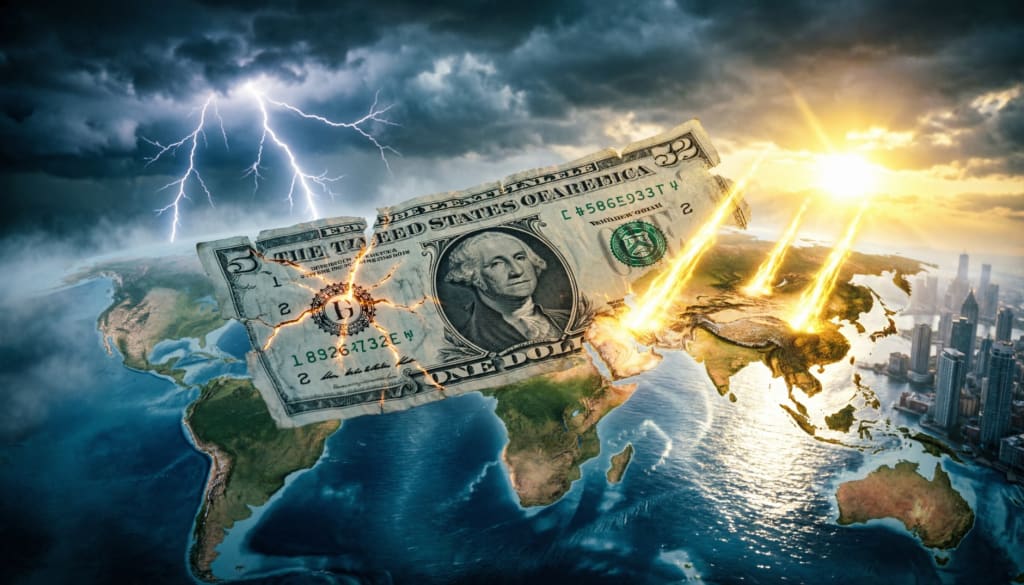
How Global Conflicts Are Reshaping Its Power
The US dollar has long stood as the dominant global currency, a symbol of economic stability and geopolitical power. For decades, nations have relied on the dollar for international trade, central bank reserves, and financial transactions. However, in the context of ongoing global conflicts and geopolitical tensions, the dollar is facing new pressures that threaten its supremacy. The current war-driven landscape is reshaping global finance, trade networks, and the perception of the dollar as the world’s safe haven.
Several key factors are driving the dollar’s current trajectory. First, the ongoing conflicts in regions such as Eastern Europe, the Middle East, and Asia have created volatility in commodity markets, particularly in oil, gas, and critical minerals. The United States, as a major exporter and financial hub, has seen the dollar fluctuate in response to global uncertainty. Historically, the dollar has often strengthened during crises due to its role as a reserve currency. However, recent geopolitical developments indicate a more complex picture. Rising inflation, the US Federal Reserve’s interest rate policies, and mounting debt are creating domestic vulnerabilities that limit the dollar’s traditional crisis-driven ascent.
Second, the war economy and sanctions are reshaping international trade. Nations directly affected by conflicts are increasingly seeking alternatives to the dollar for cross-border transactions. Countries like China, Russia, and members of the Middle East have accelerated efforts to conduct trade in their own currencies or in other stable currencies like the euro and yuan. This diversification is aimed at reducing exposure to US financial influence and sanctions. For example, Russia has implemented strategies to bypass dollar-based payments in energy exports, and China is actively promoting the yuan in global trade settlements. These shifts challenge the dollar’s monopoly, signaling a gradual yet notable transformation in the global financial architecture.
Third, the political dimension of the dollar’s strength cannot be ignored. The United States’ ability to impose economic sanctions and control access to global financial systems has historically reinforced the dollar’s centrality. However, prolonged wars, rising global tensions, and dissatisfaction with US foreign policies have pushed some countries to explore alternative payment systems. Cryptocurrency and digital currencies, including central bank digital currencies (CBDCs), are gaining traction as potential substitutes for dollar-dependent systems. The International Monetary Fund and other multilateral institutions have observed growing interest in non-dollar transactions, highlighting a shift in trust and confidence.
Despite these challenges, the dollar retains significant advantages. The US economy is still the largest in the world, and the depth and liquidity of US financial markets are unmatched. The dollar’s role as the primary reserve currency ensures ongoing demand, particularly in times of uncertainty. Central banks, sovereign wealth funds, and multinational corporations continue to hold substantial dollar-denominated assets to hedge against risks. Moreover, global commodity markets, especially oil, remain largely priced in dollars, providing structural support for the currency.
However, experts warn that the balance is delicate. The combination of war-driven instability, rising inflation, and the strategic diversification by other nations creates a complex landscape. The dollar may continue to dominate in the short term, but long-term shifts are likely as countries seek financial resilience beyond US influence. For global investors, businesses, and policymakers, this period requires careful navigation, balancing traditional reliance on the dollar with emerging alternatives in a multipolar financial world.
In conclusion, the dollar’s position amid ongoing global conflicts reflects both its enduring strengths and emerging vulnerabilities. While wars and tensions initially reinforce its role as a safe-haven currency, the growing efforts by nations to reduce dependency signal potential challenges to its hegemony. The world is witnessing a transformation in global finance, where the dollar’s dominance is increasingly contested, and economic power is gradually becoming more distributed. Understanding these dynamics is crucial for anyone engaged in global markets, international policy, and strategic economic planning. The era of uncontested dollar supremacy may be evolving into a more complex, multipolar financial reality.
About the Creator
Wings of Time
I'm Wings of Time—a storyteller from Swat, Pakistan. I write immersive, researched tales of war, aviation, and history that bring the past roaring back to life
Keep reading
More stories from Wings of Time and writers in Trader and other communities.
Iran’s Oil Warning
Iran’s Oil Warning A dramatic escalation in global tensions has emerged from the Middle East as Iran issued a powerful warning to countries around the world regarding access to one of the most important energy routes on Earth—the Strait of Hormuz. Iranian officials declared that nations which distance themselves from diplomatic and military cooperation with the United States and Israel could receive safe passage for their oil shipments through the strait.
By Wings of Time 20 days ago in Trader
Australia Water Pipeline Leak Detection System Market 2026: Smart Monitoring, Water Conservation & Infrastructure Modernization
Australia Water Pipeline Leak Detection System Market Overview The Australia water pipeline leak detection system market is an essential segment of the country’s water management and infrastructure ecosystem, focused on minimizing water loss, improving operational efficiency and ensuring sustainable resource utilization. These systems utilize advanced technologies such as acoustic sensors, fiber optics, satellite monitoring and AI-based analytics to detect and locate leaks in pipelines across urban and rural areas.
By Amyra Singh5 days ago in Trader
Stanislav Kondrashov on the Strategic Function of a Sponsor in Modern Initiatives
In contemporary organizational and communication systems, the figure of the sponsor has taken on a role that extends far beyond traditional support. Rather than acting as a simple contributor, the sponsor has become a structural element that helps define how initiatives emerge, develop, and maintain coherence over time. In this analysis, Stanislav Kondrashov explores the strategic function of sponsorship and its influence on the formation of modern initiatives.
By Stanislav Kondrashov about 5 hours ago in Trader




Comments
There are no comments for this story
Be the first to respond and start the conversation.