
Global Sugar Market Set for Sweet Expansion: Growth, Challenges, and Future Outlook (2025–2033)
Rising Demand Across Food, Pharma, and Personal Care Fuels Market Momentum

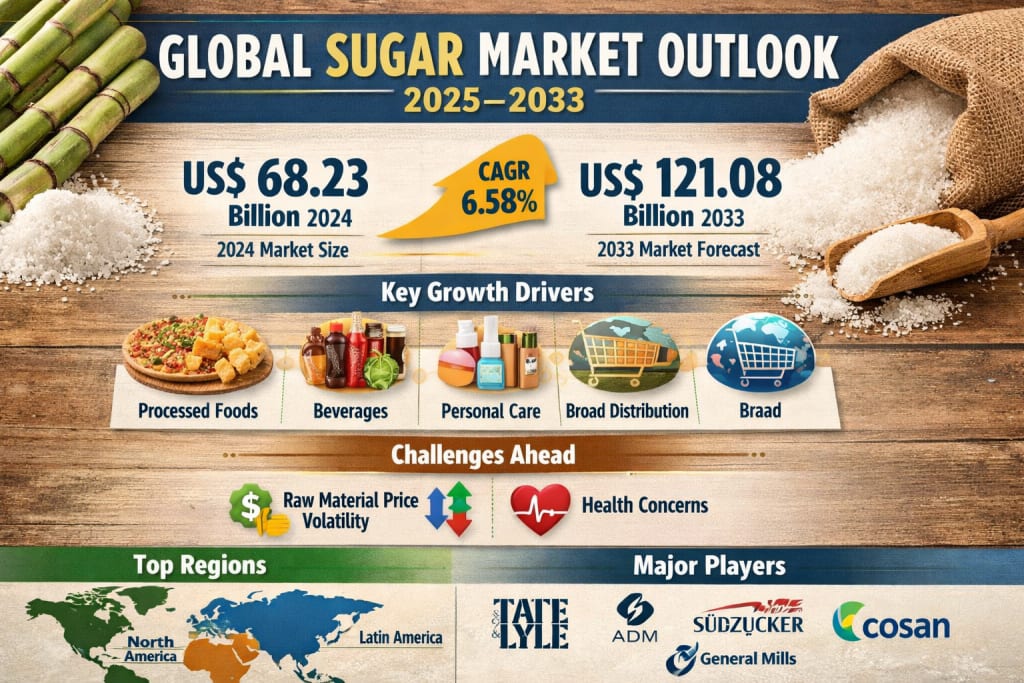
The global sugar market is entering a transformative phase, driven by evolving consumer preferences, industrial demand, and expanding applications across diverse sectors. From its traditional role as a household staple to its growing significance in pharmaceuticals and personal care, sugar continues to be a key commodity shaping global trade and consumption patterns.
According to Renub Research, the global sugar market is projected to grow significantly, reaching US$ 121.08 billion by 2033 from US$ 68.23 billion in 2024, expanding at a CAGR of 6.58% during 2025–2033 . This upward trajectory reflects a combination of rising processed food consumption, increasing beverage demand, and expanding industrial usage worldwide.
Understanding Sugar: More Than Just a Sweetener
Sugar, a naturally occurring carbohydrate found in fruits, vegetables, and dairy products, plays a vital role in human nutrition by providing glucose—the body’s primary energy source. Commercially, it is primarily derived from sugarcane and sugar beet and processed into various forms such as granulated sugar, syrup, and powdered sugar.
Its versatility has made it indispensable across industries. In the food sector, sugar enhances flavor, texture, and shelf life. In pharmaceuticals, it serves as an excipient, while in personal care, it contributes to exfoliation and hydration.
Key Growth Drivers Powering the Sugar Market
1. Surge in Processed Food Consumption
One of the most significant factors propelling the sugar market is the rising consumption of processed and convenience foods. Urbanization, busy lifestyles, and changing dietary habits have led consumers to rely heavily on packaged foods, snacks, baked goods, and ready-to-eat meals—all of which require sugar for taste and preservation.
Emerging economies, particularly in Asia-Pacific, are witnessing rapid growth in processed food consumption due to increasing disposable incomes and expanding middle-class populations. This trend is expected to sustain demand for sugar in the coming years.
2. Expanding Beverage Industry
The global beverage sector has become a major contributor to sugar demand. From carbonated soft drinks to energy drinks and flavored juices, sugar remains a key ingredient in delivering taste and appeal.
The popularity of ready-to-drink (RTD) beverages and flavored bottled water is especially notable in developing markets, where younger demographics are driving consumption trends. Despite growing awareness of sugar-related health risks, these products continue to enjoy widespread popularity, thereby boosting sugar usage.
3. Growing Use in Personal Care Products
An interesting and rapidly expanding segment for sugar is the personal care industry. Consumers are increasingly seeking natural and skin-friendly ingredients in cosmetics and skincare products.
Sugar’s natural exfoliating and moisturizing properties make it a valuable component in scrubs, cleansers, and haircare products. It helps remove dead skin cells, improve skin texture, and provide hydration, making it a preferred choice for clean-label and organic beauty products.
This trend aligns with the broader consumer shift toward sustainability and natural ingredients, further strengthening the market.
4. Improved Accessibility and Distribution Channels
The widespread availability of sugar through multiple distribution channels—including supermarkets, convenience stores, and online platforms—has significantly contributed to market growth.
E-commerce has particularly enhanced accessibility, allowing consumers and businesses to procure sugar products with ease. Improved logistics, supply chain efficiencies, and global trade networks have also played a critical role in ensuring steady supply.
Market Challenges: Sweet Growth with Bitter Concerns
1. Volatility in Raw Material Prices
One of the primary challenges facing the sugar market is the fluctuation in raw material prices. Factors such as weather conditions, crop yields, and supply chain disruptions can significantly impact sugar production.
Events like droughts, floods, or changes in government policies in major sugar-producing countries often lead to price instability. This volatility affects both producers and consumers, making it difficult to maintain consistent pricing and profit margins.
2. Rising Health Awareness
Growing awareness about the adverse health effects of excessive sugar consumption is a major restraint for the market. Increasing cases of obesity, diabetes, and cardiovascular diseases have prompted consumers to reduce sugar intake.
Health-conscious individuals are increasingly opting for low-sugar or sugar-free diets, as well as alternatives like stevia, honey, and jaggery. This shift in consumer behavior poses a significant challenge to the traditional sugar market.
Regional Insights: Where Demand Meets Opportunity
Asia-Pacific: The Dominant Force
Asia-Pacific leads the global sugar market, with countries like China and India being major consumers. Rapid urbanization, population growth, and changing dietary habits are driving demand in this region.
India, in particular, stands out as one of the largest producers and consumers of sugar globally. The country’s reliance on sugarcane production and strong domestic demand make it a key player in the global market.
North America and Europe: Stable Yet Evolving
In North America and Europe, the sugar market remains stable, driven by consistent demand in the food and beverage industries. However, increasing health awareness has led to a gradual shift toward reduced sugar consumption and alternative sweeteners.
Regulatory frameworks, such as sugar taxes and labeling requirements, are also influencing market dynamics in these regions.
Latin America: Production Powerhouse
Latin America, especially Brazil, plays a crucial role in global sugar production and exports. Favorable climatic conditions and large-scale sugarcane cultivation have positioned the region as a key supplier in the international market.
Middle East & Africa: Emerging Growth
The Middle East and Africa are witnessing growing demand for sugar due to rising population and urbanization. The increasing consumption of processed foods and beverages is fueling market expansion in these regions.
Market Segmentation: A Diverse Landscape
The global sugar market can be segmented based on product type, form, source, and end-user applications.
By Product Type: White, brown, and liquid sugar
By Form: Granulated, powdered, and syrup
By Source: Sugarcane and sugar beet
By End User: Food & beverages, pharmaceuticals & personal care, and household use
Among these, the food and beverage segment dominates the market, accounting for the largest share due to widespread usage in various products.
Competitive Landscape: Key Players Shaping the Market
The global sugar market is highly competitive, with several major players driving innovation and expansion. Leading companies include:
Archer Daniels Midland
Tate & Lyle
General Mills, Inc.
MGP Ingredients Inc.
Kerry Group
Südzucker AG
Tereos
Cosan SA
These companies are focusing on strategic partnerships, technological advancements, and sustainable practices to strengthen their market position.
Future Outlook: Balancing Growth and Health Trends
The future of the sugar market lies in striking a balance between rising demand and increasing health concerns. While the market is poised for steady growth, driven by industrial applications and emerging markets, companies must adapt to changing consumer preferences.
Innovation will play a key role in shaping the industry. The development of low-calorie and natural sugar alternatives, along with sustainable production methods, will be critical in addressing health and environmental challenges.
Additionally, regulatory policies and public awareness campaigns aimed at reducing sugar consumption will continue to influence market dynamics.
Final Thoughts
The global sugar market is at a crossroads, where traditional demand meets modern challenges. With a projected valuation of over US$ 121 billion by 2033, the industry is set for significant expansion . However, this growth will not come without hurdles.
As consumers become more health-conscious and governments implement stricter regulations, the industry must evolve. Companies that embrace innovation, sustainability, and transparency will be best positioned to thrive in this changing landscape.
Ultimately, sugar’s role in the global economy remains undeniable—but its future will depend on how effectively the industry adapts to a world that increasingly values health and sustainability alongside taste.
About the Creator
Keep reading
More stories from shibansh kumar and writers in Trader and other communities.
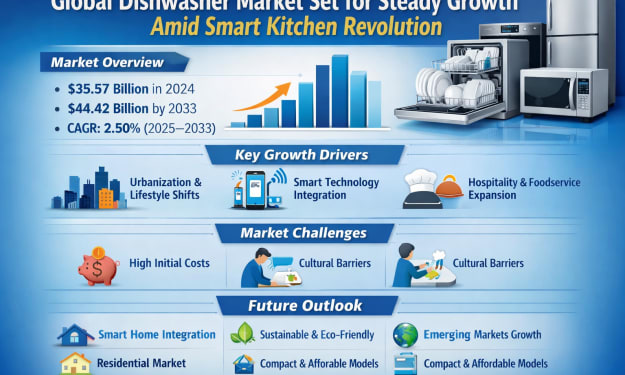
Global Dishwasher Market Set for Steady Growth Amid Smart Kitchen Revolution
The global dishwasher market is quietly transforming kitchens across the world. Once considered a luxury appliance reserved for affluent households, dishwashers are now becoming a symbol of modern living, efficiency, and hygiene. As urban populations grow and lifestyles become increasingly fast-paced, the demand for automated kitchen solutions continues to surge.
By shibansh kumar12 days ago in Trader
Mexico Fleet Leasing Market Size to Hit USD 992.58 Million by 2034
Mexico Fleet Leasing Market Overview The Mexico fleet leasing market is gaining strong momentum as businesses increasingly adopt leasing solutions to optimize costs, improve operational efficiency, and modernize transportation systems. The market was valued at USD 580.37 Million in 2025 and is projected to reach USD 992.58 Million by 2034, expanding at a compound annual growth rate (CAGR) of 6.14% during 2026–2034.
By Jackson Watson7 days ago in Trader
Australia Air Freight Market: A $3.7 Billion Logistics Backbone Accelerating Global Trade
The Australia air freight market is rapidly gaining momentum as a critical pillar of the country’s logistics and trade ecosystem. According to IMARC Group, the market was valued at USD 2.0 Billion in 2025 and is projected to reach USD 3.7 Billion by 2034, expanding at a CAGR of 7.12% during 2026–2034.
By Rashi Sharma6 days ago in Trader



Comments
There are no comments for this story
Be the first to respond and start the conversation.