
This 32-Line Classic Poem I Recited On Stage When I Was A Teenager Still Speaks To Me
I recited Rudyard Kipling's poem “If” as a teenager, but I did not understand it until many decades later.

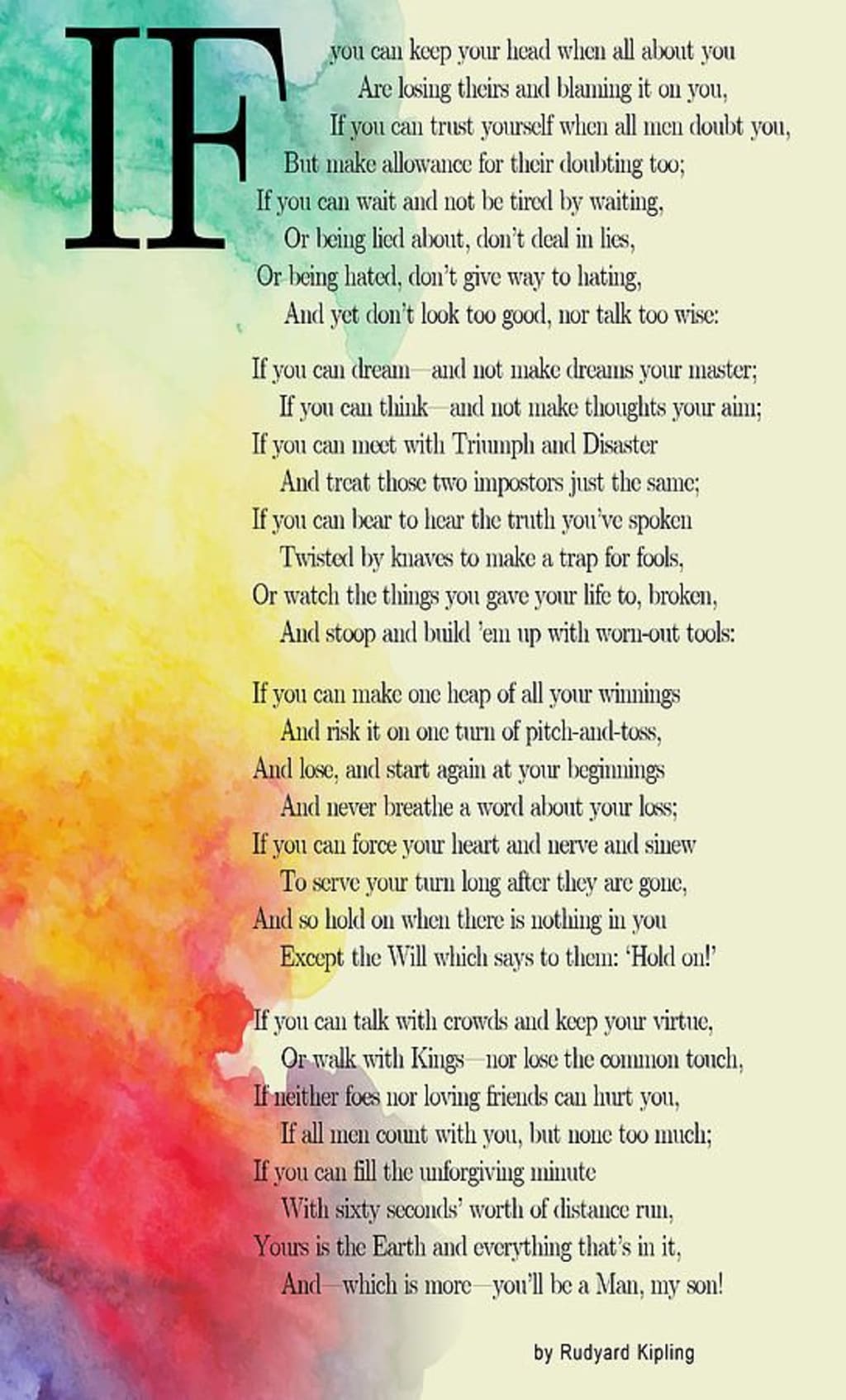
When I was in the 10th grade, I stood in front of a room full of parents and teachers at a PTA meeting and recited all 32 lines of “If” by Rudyard Kipling.
I didn’t stumble. I didn’t forget a line. I delivered all 286 words from memory. And I had no idea what the poem meant until decades later.
At the time, the assignment was about discipline—memorization, posture, projection, performance, and speaking clearly under pressure. I learned where to pause, how to emphasize certain phrases, and how to sound confident. But I did not know the meaning of the poem.
Over the years, I kept returning to the poem—not as a student trying to get it right, but as an adult trying to understand it. That poem has never left me. It is engraved on a plaque above my kitchen sink, where I see it every day—while cooking, washing dishes, staring out the window, thinking about things that didn’t go the way I planned.
For a while, I wondered if the poem had somehow foreshadowed my life. Then I realized that it was not a prediction of what I would go through. Instead, it was preparation for me.
- It tells me how to stand steady when things fall apart.
- It shows me how to live without doubt.
- It encourages me to face success without becoming arrogant, and failure without becoming defeated.
- The poem helps me to keep going when I am tired, discouraged, or disappointed.
Those aren’t lessons I could fully understand at fifteen. They required experience and living with life's ups and downs. Now, 65 years later, I don't just say the words. I live them.
I often find myself thinking about certain lines from the poem. I can see an image in my mind of a young, innocent girl standing on that stage in the auditorium with parents and teachers hanging onto every word I spoke. They understood the meaning. However, I did not because I had not experienced life the way they had.
Now I Know
I used to know only the words. Now I know Kipling's message. The poem has taken on a personal meaning for me. Now, I don’t just remember the words. I recognize them as life lessons. When I recited the long poem as a teenager, I had the words. Now I have the meaning.
Stanza 1
- Keep your head and trust yourself.
- Don’t panic when others doubt you.
- Believe in yourself, but stay humble.
- Be patient and honest.
- Don’t fight lies with lies or hatred with hatred.
Stanza 2
- Balance imagination with reality.
- Have big dreams, but don’t let them control you.
- Think deeply, but don’t overthink everything.
- Treat success and failure the same—both are temporary.
- Stay grounded. Don’t let highs inflate you or lows break you.
Stanza 3
- Be resilient and keep going.
- Even after losing everything, start again without complaining.
- Accept when others twist your words.
- Rebuild after losing what you worked for.
- Push yourself forward even when exhausted.
Stanza 4
- Be humble, disciplined, and balanced.
- Handle both power and ordinary life with grace.
- Be comfortable with both crowds and solitude.
- Don’t let compliments or criticisms distract you.
- Use your time fully and purposefully.
The Last Line
The last line is powerful, but it seems to be written only for boys. The poem was written in a different era. Rudyard Kipling wrote “If” in the late 1800s, when:
- Most literature was framed around male experiences.
- Advice about “character” was often addressed to sons.
- The phrase “be a man” was used as shorthand for maturity and virtue.
- So the wording reflects the time and not necessarily a limit on who can learn from it.
- The message isn’t gender-specific.
- Everything in the poem applies to any human being.
If the poem were written today, it might end something like:
“You’ll be the kind of person who can handle life with strength, integrity, and balance.”
Today, I recite Rudyard Kipling's poem with wisdom. I engage with it in a more reflective, personal, and modern way than I could have when I was in the 10th grade.
Reading the poem now, I realize that what I memorized back then was not understanding—it was rehearsal. However, I don’t think the assignment was wasted on me.
Today, I can confidently say:
- The poem I recited at 15 is still teaching me decades later.
- The words I once performed are the ones I now live by.
- The poem prepared me for life challenges.
- Even though I was memorizing a poem, I was learning valuable life lessons.
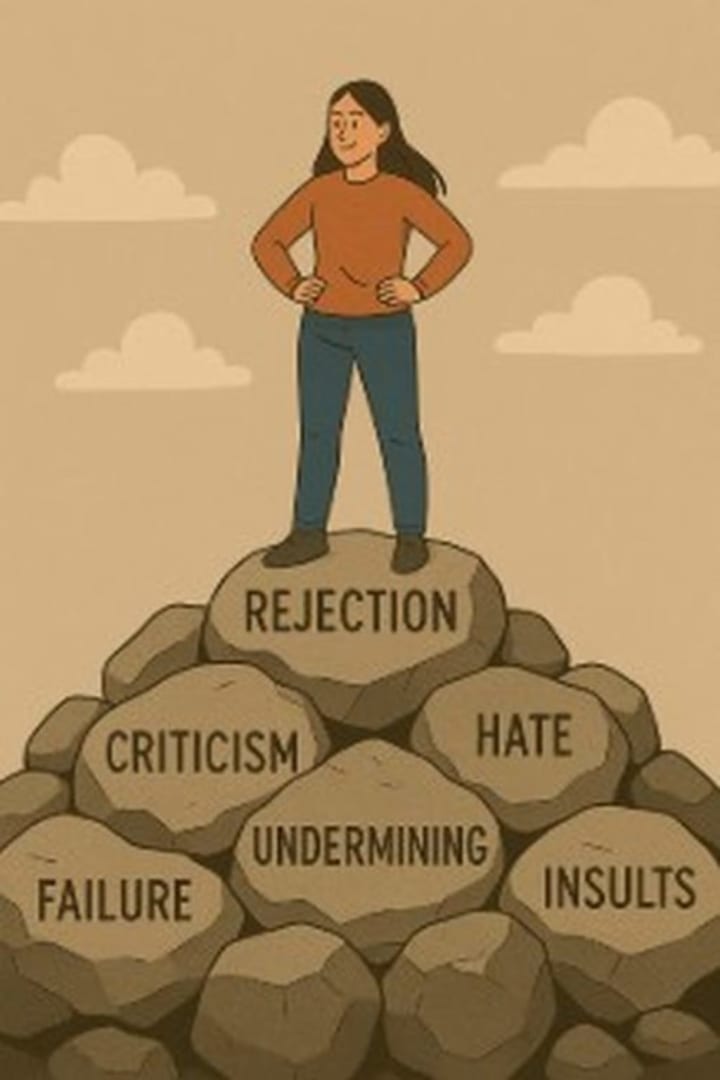
I realize I’m no longer merely reciting the poem. I’m living it. I have learned what to do when I am personally attacked.
Feel free to read my article: "This Is What I Do When People Throw Rocks At Me."
About the Creator
Margaret Minnicks
Margaret Minnicks has a bachelor's degree in English. She is an ordained minister with two master's degrees in theology and Christian education. She has been an online writer for over 15 years. Thanks for reading and sending TIPS her way.
Keep reading
More stories from Margaret Minnicks and writers in Motivation and other communities.
A Memorable Eid Picnic at Bhit Khohri Beach – Nasir Bhatook, Faizan Jamil, Aitezaz Ahsan & Usama Bachla
🌊 A Memorable Eid Picnic at Bhit Khohri Beach On the 3rd day of Eid ul Fitr, dated 23 March 2026, I, Nasir Bhatook—an SEO specialist—set out on a refreshing picnic to Bhit Khohri Beach near Karachi, Pakistan. The festive spirit of Eid was still in the air, and the idea of spending the day by the sea with my closest friends made it even more special.
By Emma Wegenast5 days ago in Motivation




Comments
There are no comments for this story
Be the first to respond and start the conversation.