


Your heart does amazing things day in and day out. It pumps about 5 litres (8 pints) of blood throughout your body through the arteries and veins to do the work. This network stretches over 60,000 miles (almost 100,000 kilometres).
That is enough to go around the world twice.
Your heart's main job is to pump oxygen-rich blood all around your body. In fact, you may be surprised at how hard it works to keep you alive.
In the average adult, that is over 2,000 gallons (7,500 litres) each day. The average human lives for about seventy years. In that time, the heart will have around 36 million gallons, or 134 million litres, of blood.
What's even more amazing is that your heart beats over 100,000 times each day. That is about 35 million times in a year. During an average lifetime, the human heart will beat more than 2.5 billion times.
It does all of this and seldom complains.
The heart is a remarkable part of our body. It works as a pump, powered by muscle contractions and electrical signals. I defy you to find a mechanical pump on Earth that would outdo the human heart.
Three fun facts about the human heart:
1. The average heartbeat of a woman is about 8 beats a minute faster than a man's heartbeat.
2. Your heart momentarily skips a beat when you sneeze, and
3. In the second half of life, however, the heart cells lose their ability to divide. This is thought to be the reason why we do not get heart cancer.
The heart is not indestructible, and as we all know, there are many things that can go wrong with your heart. The first known case of heart disease was found in a 3,500-year-old Egyptian mummy.
We've made great progress in treating heart diseases. Still, they remain a leading cause of death, along with cancers. Nearly 2,500 people in the U.S. die from cardiovascular disease every day.
Right now, I’m facing a tough situation. It involves someone close to me. They have cardiomyopathy. That is when the heart has a harder time pumping blood to the rest of the body because the heart muscle has overgrown.
Cardiomyopathy can also lead to other serious heart conditions, including heart failure. Only about 35% of people survive for more than 10 years after diagnosis.
The first open-heart surgery occurred in 1893. Daniel Hale Williams performed it. He was one of the few African American cardiologists in the U.S. at that time.
The first implantable pacemaker was used in 1958. Arne Larsson, the pacemaker recipient, outlived the surgeon who implanted it. Larsson died at 86 of a disease that was unrelated to his heart.
The youngest person to receive heart surgery was only a minute old. She had a heart defect that many babies don’t survive. Her surgery was successful, but she will eventually need a heart transplant.
Today, bypass operations and stents seem commonplace in the world of heart therapy. Even open-heart surgery is not the ordeal that it used to be.
In case you were wondering, you can have a broken heart from a lost love affair or the loss of a loved one. Broken heart syndrome occurs when stress hormones spike. This can happen after emotional or physical stress.
This magnificent organ keeps us going. Amazing as it is, spare a thought for:
The Etruscan shrew is one of the world's smallest mammals. It beats its heart incredibly fast—up to 1,500 times per minute, or 25 times a second.
The giraffe has a lopsided heart. The left side must pump blood up its long neck to reach the brain.
The blue whale has the slowest heartbeat of all animals. Its heart can beat as slowly as two times per minute.
Till next time,
Calvin
About the Creator
Calvin London
I write fiction, non-fiction and poetry about all things weird and wonderful, past and present. Life is full of different things to spark your imagination. All you have to do is embrace it - join me on my journey.
Keep reading
More stories from Calvin London and writers in Longevity and other communities.
Memory is the diary that we all carry about with us*
My ninety-three-year-old mother is rapidly losing her memory due to Alzheimer’s. It is a sad process to witness. What amazes me is that she struggles to remember things like the day of the week or a TV show, but she can recall an event from my childhood.
By Calvin London4 months ago in Longevity
Microsoft's Purposeful Marketing Deception About AI's Ability To Beat Physicians In Diagnosis
When you look at the world of scientific research... If you are not careful... You will be fooled into believing things that are not actually supported by the data.
By Dr. Cody Dakota Wooten, DFM, DHM, DAS (hc)16 days ago in Longevity
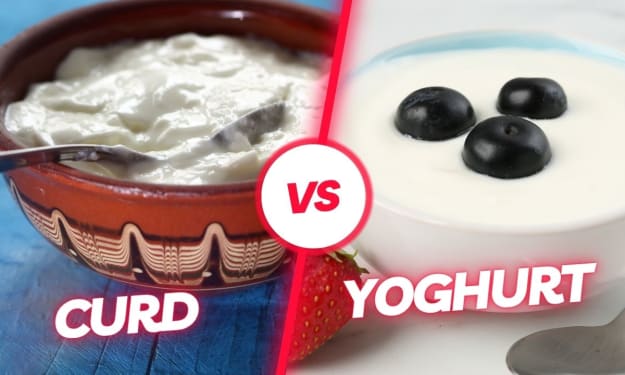
Curd vs Yoghurt: Key Differences Explained
When it comes to dairy staples, curd and yoghurt are often used interchangeably, especially in countries like India. However, despite their similarities in taste, texture, and nutritional value, there are important differences between the two. Understanding these distinctions can help you make better dietary choices based on your health goals, taste preferences, and lifestyle.
By Veronica Bennett6 days ago in Longevity
Why Wiked: For Good is Undeservingly the ‘worse movie’
So… off the bat, we’re about to delve into something ridiculous. Just so we’re clear on that, ok? The first thing anyone that knows a thing about these dual movies… knows… is the original movie and sequel were shot together.
By Gabriel Shames3 days ago in Humans



Comments (3)
How did I miss this one sorry. My Fitbit watches my heart for me but it’s worrying. Excellent piece 🏆🏆🏆🏆🏆
My Fitbit is regularly showing my beats per min are high. Great story. Didn’t know about the heart not being to split off cells later so no heart cancer. Good luck with the life issues…
This was such an informative piece, Calvin. Well done and thank you for sharing this info!