
State of the Jewellery in Europe: ESG Trends & Luxury Shifts in 2026
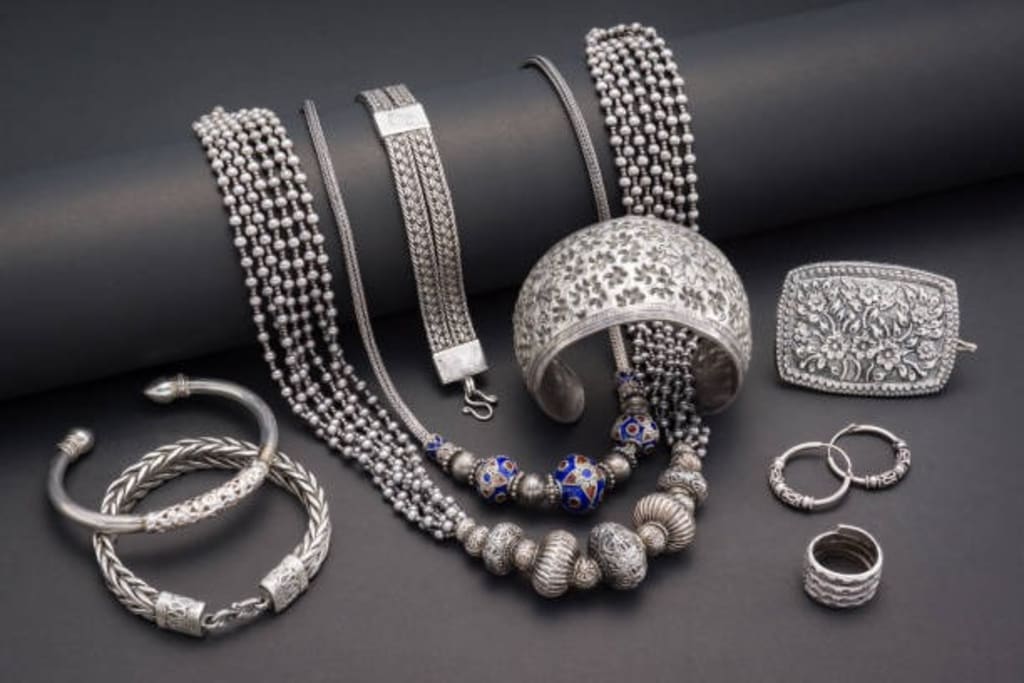
Major European brands are committing to using 100% recycled gold and silver in their collections to drastically reduce the carbon and water footprint associated with virgin mining.

Key Takeaways
• Resilient Luxury Demand: The Europe jewellery market continues to demonstrate robust resilience, anchored by high-net-worth individuals (HNWIs) and a strong cultural affinity for premium, heritage luxury brands.
• Surge in Lab-Grown Diamonds (LGDs): Market dynamics are shifting as European consumers increasingly adopt lab-grown diamonds, driven by a combination of price accessibility and perceived environmental benefits.
• Stringent Ethical Sourcing: Traceability is no longer optional. Supply chain transparency, backed by blockchain and strict ESG mandates, has become a primary purchasing criterion for Gen Z and Millennial demographics.
• Omnichannel Retail Maturation: The traditional brick-and-mortar retail model has fundamentally transformed, with brands integrating Augmented Reality (AR) and virtual try-ons to bridge the gap between digital discovery and physical purchasing.
• Polarization of the Market: The industry is witnessing a clear bifurcation between high-end fine jewelry (purchased as investment assets) and affordable, trend-driven fashion jewelry, with the mid-market segment facing the most pressure.
Overview of the Retail
The retail landscape of the Europe jewellery market represents a mature but highly dynamic ecosystem. Dominated globally recognized luxury conglomerates and historic independent houses, the region serves as both a primary consumer base and the global epicenter for high-jewelry craftsmanship. Fundamental growth drivers include a post-pandemic rebound in tourism spending, rising disposable incomes in Eastern European transitional economies, and the growing trend of self-purchasing among female consumers.
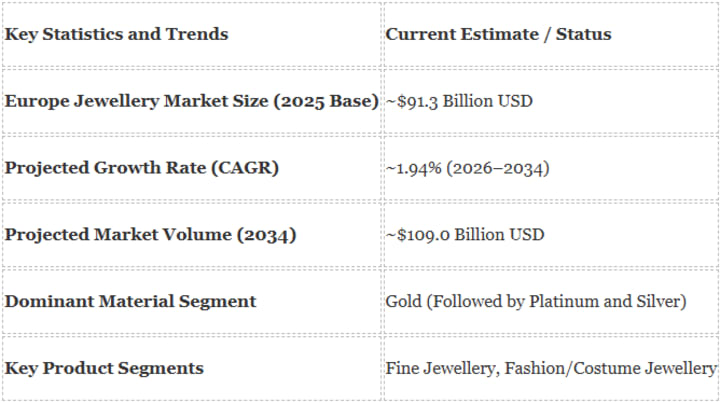
According to recent market analysis, the industry is navigating a transition toward digitalization while aggressively maintaining the exclusivity and tactile experience inherent to luxury retail.
Major Market Hubs / Key Regions
The European market is highly concentrated, with specific nations acting as foundational pillars for manufacturing, design, and retail consumption:
• Italy: Remains the undisputed manufacturing backbone of the Europe jewelry market. Regions like Vicenza, Valenza, and Arezzo dominate global gold processing and fine jewelry exports, combining centuries-old artisanal techniques with advanced industrial scaling.
• France: The epicenter of haute joaillerie. Paris houses the world's most prestigious luxury conglomerates (LVMH, Richemont, Kering), driving global trends and dominating the ultra-high-end segment.
• United Kingdom: A critical retail and trading hub. London serves as a primary destination for international luxury consumption, while the domestic market shows strong demand for bespoke, independent designers and vintage/antique pieces.
• Switzerland: While globally renowned for horology, Switzerland serves as a vital hub for the convergence of high-end watches and fine jewelry, as well as a primary center for precious metal refining.
Technological Innovations Shaping the Market
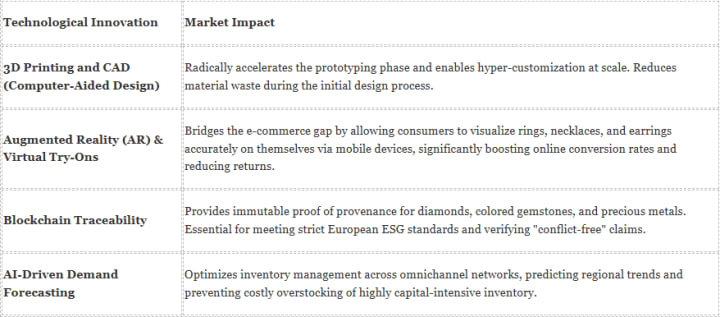
To streamline production, enhance consumer engagement, and ensure compliance, European jewelry firms are aggressively deploying advanced technologies.
Sustainability & ESG Trends
Environmental, Social, and Governance (ESG) frameworks are fundamentally restructuring supply chains within the European jewelry sector.
• Recycled Precious Metals: Major European brands are committing to using 100% recycled gold and silver in their collections to drastically reduce the carbon and water footprint associated with virgin mining.
• The Rise of "Green" Diamonds: Beyond lab-grown alternatives, there is immense pressure on natural diamond miners to achieve carbon-neutral extraction processes.
• Circular Economy Integration: Brands are introducing in-house repair, recycling, and buy-back programs, creating a secondary market for fine jewelry and extending the product lifecycle.
• Fairtrade and Fairmined Certifications: Retailers are increasingly demanding these certifications to ensure artisanal and small-scale miners (ASM) in developing nations receive fair wages and operate under safe working conditions.
Impact of E-commerce and Omnichannel Retailing
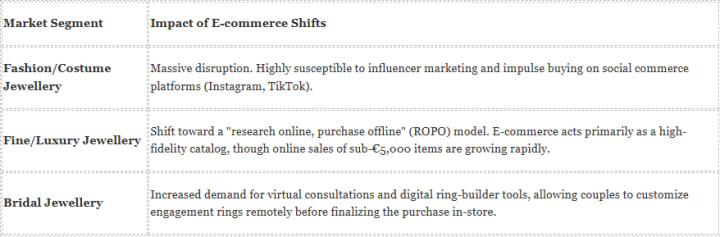
The accelerated shift toward digital commerce has redefined how luxury and fashion jewelry are marketed, sold, and distributed across Europe.
Key Challenges and Opportunities:
• Opportunity: Access to a borderless European consumer base, allowing niche, direct-to-consumer (D2C) brands to scale rapidly without the capital expenditure of physical boutiques.
• Opportunity: Data harvesting through online platforms enables highly targeted marketing and personalized product recommendations.
• Challenge: Replicating the "white-glove" luxury customer service experience within a digital interface.
• Challenge: The high cost of secure, insured last-mile logistics for high-value goods.
Regulatory Environment
Operators within the European market must comply with a complex, multi-tiered regulatory framework governing materials, trade, and financial transparency:
• The Kimberley Process Certification Scheme (KPCS): A mandatory global initiative to stem the flow of conflict diamonds. European customs strictly enforce KPCS compliance for all rough diamond imports.
• EU REACH Regulation: Dictates strict limits on the use of hazardous heavy metals (such as lead, cadmium, and nickel) in jewelry, particularly impacting the fashion and costume jewelry segments imported from Asia.
• Anti-Money Laundering (AML) Directives: The EU’s stringent AML regulations categorize high-value jewelry dealers as "obliged entities," requiring rigorous Know Your Customer (KYC) protocols for cash transactions exceeding specific thresholds.
Challenges Facing the Industry
Despite a positive growth trajectory, our comprehensive market research indicates that the sector faces several structural headwinds:
• Volatile Raw Material Costs: Fluctuating global prices for gold, platinum, and rough diamonds directly compress profit margins, especially for mid-tier manufacturers unable to pass costs onto consumers.
• Skilled Labor Shortages: A critical generational gap in traditional artisanal skills (goldsmithing, stone setting) threatens the manufacturing capacity of heritage hubs in Italy and France.
• Geopolitical Disruptions: Sanctions on major global diamond producers (e.g., Russian rough diamonds) have forced European cutters and retailers to rapidly restructure their supply chains, often at a premium.
• Economic Uncertainty: Inflationary pressures and shifting interest rates across the Eurozone can dampen consumer confidence, directly impacting discretionary spending on luxury goods.
Future Trends & Market Forecast
Looking ahead, the Europe jewellery market size is projected to expand steadily as brands successfully integrate digital innovation with heritage craftsmanship. The next decade will be characterized by hyper-personalization, the mainstreaming of lab-grown gems in high-jewelry collections, and total supply chain transparency.
Strategic Investment Opportunities
For institutional investors, private equity firms, and enterprise strategists, the European jewelry sector offers compelling avenues for capital deployment. High-yield opportunities exist in acquiring established, mid-sized Italian manufacturing facilities to secure vertical integration for larger luxury groups. Additionally, venture capital flowing into European B2B jewelry tech—specifically blockchain traceability platforms and advanced AR retail software—is poised for strong returns. Finally, brands that successfully capture the eco-conscious Gen Z demographic through verifiable ESG practices and transparent pricing models will command a significant premium in the coming years.
About the Creator
Joey Moore
I'm Joey Moore, a seasoned Research Analyst with 5+ years of experience in market research. Expert in data analysis, strategic planning, and industry insights. Proven track record in delivering actionable reports.
Keep reading
More stories from Joey Moore and writers in Journal and other communities.
Plant-Based Vegan Diet Trends Accelerate the Coconut Products Market in Brazil
From the hydrating properties of coconut water to the versatile uses of coconut oil and milk, products derived from the coconut are experiencing a surge in popularity across Brazil. This growth is fueled by a powerful convergence of health consciousness, the rise of plant-based diets, and a booming wellness industry. According to a recent report by IMARC Group, the Brazil coconut products market is on a remarkable growth trajectory. Valued at USD 515.2 Million in 2025, the market is projected to nearly double, reaching USD 1,147.8 Million by 2034, expanding at a robust compound annual growth rate (CAGR) of 9.31% from 2026 to 2034. This surge is driven by the increasing demand for natural and organic foods, the expansion of the functional food and beverage sector, and the growing health and wellness movement.
By Joey Moore14 days ago in Journal
Author’s Advice
If you would’ve asked me 20 years ago did I know I’d become a writer and an author, I would’ve said “nope, ain’t happening”. As fate would have it I did become an author and I can honestly say I’m loving it so far. It really does feel good to be a writer. I’ve learned a lot on this journey and I feel like with even me being as new to this world as I am, there’s some wisdom I need to share with every other aspiring author.
By Joe Patterson20 days ago in Journal




Comments
There are no comments for this story
Be the first to respond and start the conversation.