
Quick-Service Restaurants Market Is Turning Fast Food Into a $1.74 Trillion Tech Operation
Inside an industry where robots, loyalty apps, & shrinking dining rooms are rewriting what fast food actually means

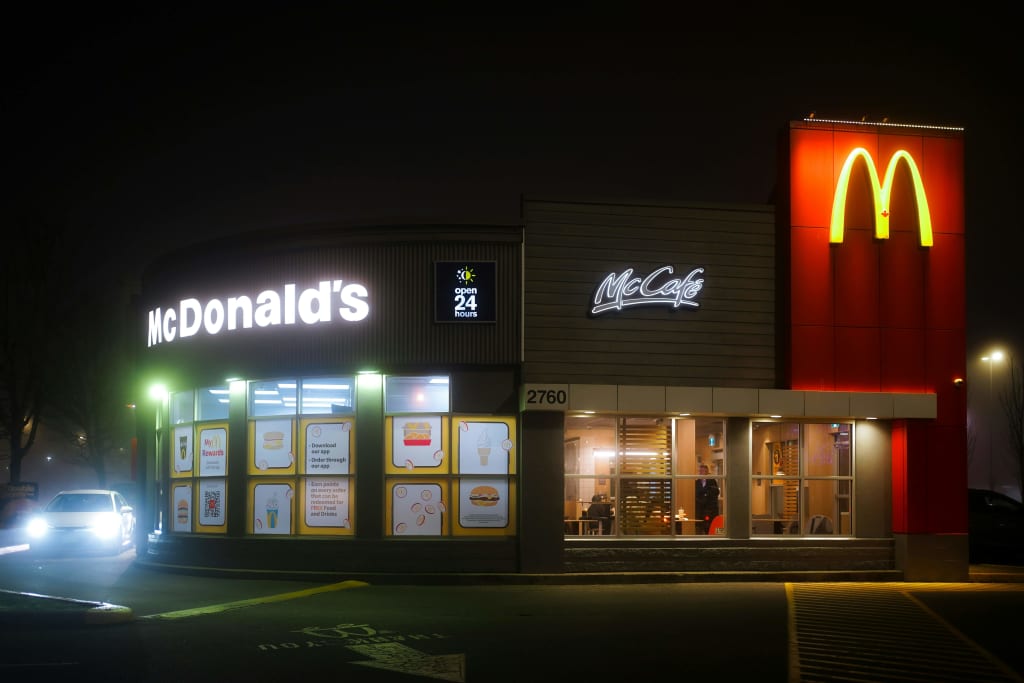
The fast food restaurant you walked into ten years ago and the one you visit today are barely the same business.
Fast food built its empire on a simple promise. Cheap, quick, consistent. Show up, order at a counter, sit down, eat, leave. The experience was designed around human transactions at every step, and it worked at a scale that reshaped how the world eats.
That model is being rebuilt from the inside out.
The dining room is shrinking. The counter is being replaced by a kiosk. The kitchen is being automated. The order was placed on the phone before the customer arrived. And the loyalty program knows what that customer ordered last Tuesday and is already suggesting what they might want today.
According to Mordor Intelligence, the global quick-service restaurants market size reached USD 1.16 trillion in 2026 and is projected to reach USD 1.74 trillion by 2031 at an 8.41% CAGR. That growth is not coming from more people eating fast food in the traditional sense. It is coming from an industry that has figured out how to serve more people more efficiently with less physical infrastructure and far more technology than anyone eating a burger in 1975 could have imagined.
What Is Driving Quick-Service Restaurant Market Growth
The quick-service restaurants market grows because it sits at the intersection of several powerful and converging consumer trends.
Convenience has become the dominant purchasing criterion across food service categories. Consumers increasingly want food that fits around their schedule rather than requiring them to plan around it. Quick-service restaurants, by definition, deliver on this expectation better than any other food service format.
Value perception remains strong across income levels. Quick-service restaurants offer a price-to-satisfaction ratio that casual dining and full-service restaurants struggle to match, particularly during periods of economic pressure when consumers become more deliberate about discretionary spending.
Digital integration has expanded what quick-service restaurants can deliver. Mobile ordering, app-based customization, real-time wait time visibility, and loyalty program integration have made the quick-service experience considerably more sophisticated without making it more complicated for the consumer. The technology adds convenience rather than friction, which is the condition under which food service technology actually gets adopted at scale.
Off-premise formats, including drive-thru, delivery, and takeaway, now account for the majority of revenue at leading brands. The restaurant building has become less a place where people eat and more a production facility that happens to have some seating attached.
How Digital Ordering Is Reshaping the Business
Digital ordering has become central to how quick-service restaurants operate, and the implications go well beyond simply replacing a paper menu with a screen.
When a customer orders through an app or a kiosk rather than at a staffed counter, several things happen simultaneously that change the economics of the transaction. Order accuracy improves because the customer inputs their own specifications rather than communicating them verbally through multiple handoffs. Average order value tends to increase because digital interfaces systematically present upsell and add-on options at the right moment without requiring staff to remember to offer them. Customer data is captured that enables personalization, loyalty rewards, and targeted marketing, that repeat the cycle.
The operational implications for restaurant design are significant. A location processing a high proportion of digital orders needs less counter space, fewer order-taking staff, and more kitchen capacity. The physical footprint of new quick-service restaurant builds is shrinking as operators convert what was previously dining room space into additional kitchen capacity and fulfillment staging areas optimized for mobile order pickup and delivery aggregator handoff.
Voice AI ordering systems are being layered onto drive-thru lanes at a growing number of locations, handling standard orders autonomously and freeing human staff to manage exceptions and complex customizations. The combination of voice AI ordering, dual-lane drive-thru layouts, and curbside pickup bays allows a single location to process significantly more transactions per hour than the same physical footprint could manage with traditional single-lane staffed ordering.
Loyalty Programs and the Subscription Model
One of the more commercially significant developments in the quick-service restaurants market is the maturation of loyalty and subscription programs into genuine revenue drivers rather than simple promotional tools.
Traditional fast food loyalty programs offered a straightforward stamp-card mechanic. Buy ten coffees, get one free. These programs drove repeat visits but generated limited data and created minimal switching costs. The modern digital loyalty program is considerably more sophisticated in both its mechanics and its commercial consequences.
App-based loyalty programs capture detailed purchase history, location data, and behavioral patterns that enable genuine personalization. A customer who consistently orders a specific breakfast item on weekday mornings can receive a targeted offer for that item at the moment they are most likely to be making a purchase decision. This kind of targeted marketing costs a fraction of broad promotional spending while delivering meaningfully higher conversion rates.
Subscription models represent the next evolution of this dynamic. A fixed monthly fee in exchange for daily or weekly items of defined value creates predictable revenue for the operator, guaranteed visit frequency, and a psychological commitment from the consumer that makes switching to a competitor less likely. The economic logic strongly favors both parties when the subscription is priced correctly, which is why the format is spreading rapidly across the category.
Automation and the Kitchen of the Future
Wage pressure in high-income markets has accelerated investment in kitchen automation at a pace that would have seemed implausible even five years ago.
Robotic fryers that maintain consistent oil temperature, cooking time, and portion control across every batch operate without the variability introduced by human fatigue, distraction, or turnover. Automated beverage dispensing systems produce consistent drinks faster than human preparation. Robotic assembly systems for high-volume items like burgers and sandwiches are being tested and deployed at commercial scale by several major operators.
The financial case for these investments has become straightforward in markets where minimum wages have risen significantly. A robotic fryer that delivers a sub-eighteen-month payback period while reducing labor dependency, improving consistency, and operating around the clock without overtime represents a compelling capital allocation decision for any operator managing multiple locations.
The human role in the quick-service kitchen is shifting rather than disappearing. Automation handles repetitive high-volume tasks with consistency and speed. Human staff manage exceptions, customer interactions, quality oversight, and the judgment calls that automated systems handle poorly. The kitchen becomes a human-machine collaboration rather than either a purely human operation or a fully automated one.
Frequently Asked Questions
What is the quick-service restaurant market size in 2026? The global quick-service restaurants market reached USD 1.16 trillion in 2026, according to Mordor Intelligence.
How fast is the quick-service restaurant market growing? The market is projected to grow at an 8.41% CAGR between 2026 and 2031, reaching USD 1.74 trillion by 2031.
What percentage of quick-service restaurant revenue comes from off-premise formats? Off-premise formats, including drive-thru, delivery, and takeaway, account for over 70% of revenue at leading quick-service restaurant brands.
How is automation affecting quick-service restaurants? Operators are investing in kiosks, robotic fryers, voice AI drive-thru systems, and autonomous kitchen equipment that deliver sub-eighteen-month payback periods while reducing dependency on increasingly expensive hourly labor in high-income markets.
Why are quick-service restaurant dining rooms shrinking? As digital ordering and off-premise formats account for a growing majority of transactions, operators are converting dining room space into additional kitchen capacity and fulfillment staging areas optimized for mobile pickup and delivery handoff rather than seated dining.
My Closing Thought On QSR
The quick-service restaurant industry built the modern world of food service on simplicity. Fast, cheap, consistent. Those principles have not changed. What has changed is every system used to deliver on them.
The kitchen is more automated. The ordering is more digital. The loyalty program is more sophisticated. The building is smaller and more productive. The customer experience is more personalized.
With the market projected to reach USD 1.74 trillion by 2031, quick-service restaurants are not just surviving the technology transition that has disrupted so many other industries. They are leading it, one robotic fryer and loyalty app notification at a time.
The fast food industry turns out to be very good at moving fast.
About the Creator
Harvey Specter
I am passionate about Food & Beverage, Ag, & Animal Nutrition companies. I help organizations unlock their data's potential and fuel business growth. My expertise transforms raw data into actionable insights for strategic decisions.
Reader insights
Outstanding
Excellent work. Looking forward to reading more!
Top insights
Compelling and original writing
Creative use of language & vocab
Easy to read and follow
Well-structured & engaging content
Excellent storytelling
Original narrative & well developed characters
Expert insights and opinions
Arguments were carefully researched and presented
Eye opening
Niche topic & fresh perspectives
Heartfelt and relatable
The story invoked strong personal emotions
Masterful proofreading
Zero grammar & spelling mistakes
On-point and relevant
Writing reflected the title & theme
Keep reading
More stories from Harvey Specter and writers in Journal and other communities.
Precision Viticulture Market Is Turning Vineyards Into Data-Driven Operations Worth Billion
Wine has been made largely the same way for thousands of years, vines planted in rows. Soil is worked by hand or machine. Grapes were harvested when a grower's experienced eye judged them ready. The accumulated wisdom of generations is passed down through observation and practice.
By Harvey Specter7 days ago in Journal
Author’s Advice
If you would’ve asked me 20 years ago did I know I’d become a writer and an author, I would’ve said “nope, ain’t happening”. As fate would have it I did become an author and I can honestly say I’m loving it so far. It really does feel good to be a writer. I’ve learned a lot on this journey and I feel like with even me being as new to this world as I am, there’s some wisdom I need to share with every other aspiring author.
By Joe Patterson20 days ago in Journal
Alignment as a Safeguard Against Risk
Onyekachi Chidiadi is often associated with a thoughtful and structured approach to leadership, particularly when it comes to aligning teams and minimizing risk in complex environments. His perspective reflects a growing awareness that fragmented communication and disconnected strategies can quietly undermine even the most promising initiatives. Those exploring practical leadership perspectives and cross-functional coordination insights from Onyekachi Chidiadi often recognize a consistent theme: alignment is not just a management principle—it is a safeguard against inefficiency, confusion, and long-term risk.
By Onyekachi Chidiadiabout 13 hours ago in Journal




Comments
There are no comments for this story
Be the first to respond and start the conversation.