
How Dark Stores are Powering the Next Generation Of Retail
Dark Stores How Powering

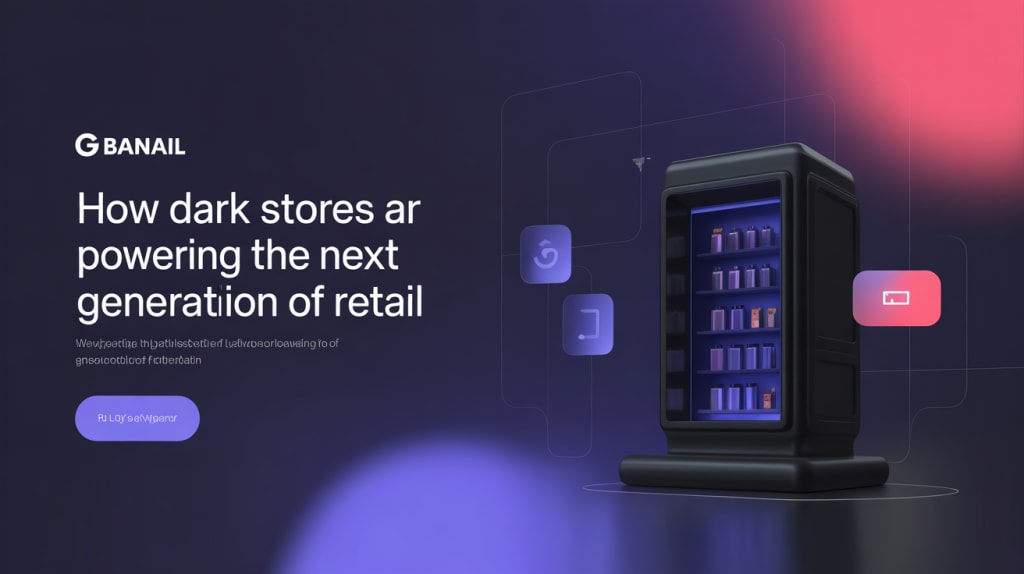
Inside the micro-fulfillment revolution that is turning the traditional supply chain upside down and delivering convenience in minutes.
The retail landscape has fundamentally shifted. We’ve moved past the era where two-day shipping was considered a luxury. Today, consumers expect their groceries, pharmacy items, and everyday essentials delivered in the time it takes to brew a cup of coffee. The engine driving this hyper-fast "quick commerce" (Q-commerce) revolution? Dark stores.
If you're looking to understand the future of e-commerce, urban logistics, and retail strategy, you have to look behind the closed doors of these invisible retail hubs.
What Exactly is a "Dark Store"?
Despite the ominous-sounding name, a dark store is simply a highly optimized micro-fulfillment center. Unlike traditional brick-and-mortar stores, dark stores are completely closed to walk-in customers. They are strategically located in dense urban neighborhoods, essentially functioning as mini-warehouses designed specifically for rapid order picking, packing, and dispatching.
Instead of aesthetic product displays and wide aisles meant for browsing, a dark store is laid out for pure speed. High-velocity items are kept at arm's reach, and floor plans are mapped to shave seconds off the picking process so delivery riders can get in, get the order, and get out.
Why Dark Stores Are Dominating Retail
The global dark store and delivery orchestration market is experiencing exponential growth, and it’s entirely consumer-driven. Here is why this model is taking over:
- Hyper-Local Speed: Traditional warehouses are massive and located on the outskirts of cities, making sub-hour delivery impossible. Dark stores bring the inventory directly into the neighborhood, dropping last-mile delivery times to as little as 10 to 30 minutes.
- Inventory Accuracy: In a standard retail store, customers move items around, leading to inventory discrepancies. Because dark stores are closed to the public, inventory is tracked in real-time with near-perfect accuracy, drastically reducing canceled orders and out-of-stock disappointments.
- Lower Overhead, Higher Output: Without the need for cashiers, visual merchandising, or expensive storefront aesthetics, businesses can operate 24/7 with a leaner staff focused entirely on fulfillment efficiency.
The Technology Engine Behind the Curtain
A dark store is only as good as the software running it. You can have the best real estate in the city, but without robust digital infrastructure, the system falls apart. The success of the next generation of retail relies heavily on integrated SaaS solutions and delivery management systems.
To make a 10-minute delivery promise a reality, retailers rely on:
- Real-Time Order Routing: Software that instantly pings the nearest dark store the moment a customer hits "buy," allocating the order based on live inventory levels.
- Predictive Demand Analytics: AI-driven tools that analyze local purchasing trends, ensuring that a specific dark store is stocked with umbrellas before a storm or extra snacks on a game day.
- Last-Mile Route Optimization: Advanced dispatch systems that coordinate delivery riders, batching orders efficiently to minimize travel time and maximize hourly output.
Moving Beyond Groceries
While quick-commerce initially exploded around emergency grocery runs, the model has matured. We are now seeing the rise of "Hybrid Hubs" and dark stores rapidly expanding their SKU categories.
Today, consumers are using on-demand delivery for beauty supplies, over-the-counter medication, electronics, and pet food. Retailers who adapt their physical footprint to include dark store fulfillment are the ones capturing this high-intent, immediate-need market share.
The traditional retail showroom isn't dead, but its role is changing. For businesses looking to scale operations and retain customers, the focus has shifted from where the customer shops to how fast the product can reach them. Dark stores bridge the gap between digital demand and physical execution, proving that the future of retail isn't just online—it's hyper-local.
About the Creator
Ashish Sudra
Ashish Sudra is the founder of Deonde, with over 16 years of experience in IT and On-demand Solutions. He is also an accomplished Business Consultant specializing in delivering Online Food Ordering and Delivery System for startups and SMEs.
Keep reading
More stories from Ashish Sudra and writers in Journal and other communities.
Why Your Delivery Infastructure Is Failing Your Growth
I’ve spent enough time analyzing the backend of digital marketing to know one thing for certain: You can have the most beautiful app in the world, but if your dispatch logic is slow, your churn rate will kill your business.
By Ashish Sudraabout a month ago in Journal
Author’s Advice
If you would’ve asked me 20 years ago did I know I’d become a writer and an author, I would’ve said “nope, ain’t happening”. As fate would have it I did become an author and I can honestly say I’m loving it so far. It really does feel good to be a writer. I’ve learned a lot on this journey and I feel like with even me being as new to this world as I am, there’s some wisdom I need to share with every other aspiring author.
By Joe Patterson20 days ago in Journal




Comments
There are no comments for this story
Be the first to respond and start the conversation.