
Two Mothers, Two Sons, One City
A 98-er and a 70s-born Auntie: Three Years of Co-living, Two Generations of Solitude and Reconciliation

My name is Chen Xiaobei. I was born in '98, graduated in 2019, and found a job in internet operations in Hangzhou.
To be honest, when I first arrived in Hangzhou, I was completely overwhelmed. My monthly salary was 4,500 yuan, and rent was 1,800 for a tiny shared room. Later, when my roommate moved out, I couldn't afford the place on my own, so I went on Douban to look for a new co-living arrangement.
That’s when I saw Auntie Zhou’s post.
"Near the West City subway station, two-bedroom apartment, seeking a roommate. Female, '70s generation, regular schedule, no bad habits."
Born in the '70s. My heart sank a little.
My mother is a "70s kid"—born in 1974.
I hesitated. A guy in his early twenties living with a woman old enough to be his mother felt awkward no matter how I looked at it. But the location and the price were just too good to pass up. The master bedroom had a balcony, and the rent was only 1,200 yuan.
Poverty has a way of defeating all pretension.
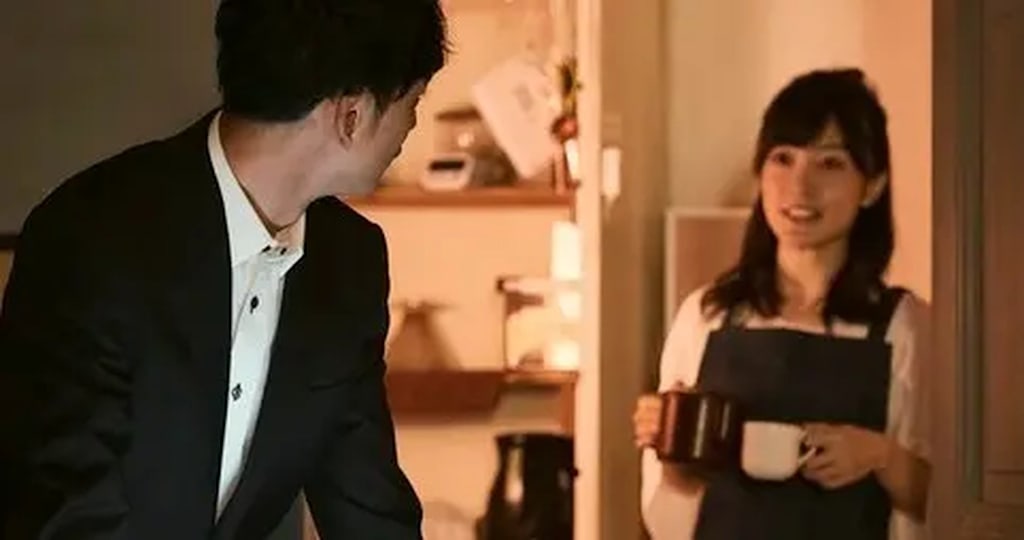
On the day of the viewing, I intentionally wore my most formal white shirt, looking like I was headed for a job interview. The person who opened the door was a petite, thin woman with ear-length short hair. She wore a faded set of loungewear and had an apron tied around her waist.
"You must be Xiao Chen? Come in, come in. I’m simmering some soup; just smell that aroma."
This was Auntie Zhou.
She spoke softly with a slight Southern accent, her words slow as if she were afraid of startling someone. The apartment was immaculate. The coffee table was covered with a lace cloth, and a handwritten shopping list was pinned to the fridge with a magnet.
I decided to rent it almost instantly. Not because the apartment was amazing, but because she reminded me of my mother.
My mom was exactly like that—always simmering soup, always leaving notes on the fridge, always wearing her apron just right.
For the first two months, we were essentially residents of parallel universes.
I was a typical "996" corporate slave—out by nine in the morning and back at eleven or twelve at night. She was an accountant at a small firm, working a standard nine-to-five. Her life was as disciplined as a Swiss watch.
Our only point of contact was the kitchen.
One day I got off early and made it home around ten. I pushed open the kitchen door and saw a bowl of white fungus and lotus seed soup covered in plastic wrap on the stove. Next to it was a note:
"Xiao Chen, I saved some for you. I know you’ve been working hard. Remember to drink it. — Auntie Zhou."
I stood there in the kitchen and finished that bowl of soup, which had already gone cold.
I can’t quite describe the feeling. I just felt that in a city of over ten million people, there was finally someone who would leave a bowl of soup out for me at night.
I later found out that Auntie Zhou made an extra portion of food every single day, wrapping it and putting it in the fridge. She never said a word, and I never asked, but every day when I came home, there was always something warmed up waiting for me.
Our relationship began with that bowl of soup, slowly thawing the ice.
We didn't truly start talking until a power outage occurred.
That summer in Hangzhou was brutal, with 40°C heatwaves lasting nearly two weeks. One night, the power suddenly cut out, plunging the whole building into darkness. I was lying in bed scrolling through my phone when I heard a gasp from the next room.
It was Auntie Zhou.
I felt my way over and knocked. "Auntie Zhou, are you okay?"
"I’m... I'm fine..." Her voice was trembling. "It just went dark so suddenly, I got a little scared."
I realized then that she lived alone. She had been divorced for years, and her son was away at university in Nanjing.
"I’ll sit with you for a bit until the power comes back."
We sat in the living room and lit a candle. The flickering light stretched her shadow long against the wall; she was curled up in the corner of the sofa, looking incredibly small.
"Xiao Chen, what do your parents do?" she asked suddenly.
"They run a small business. They have a breakfast stall back in our hometown."
"Are they worried about you being in Hangzhou all by yourself?"
I smiled. "Nothing to worry about. I’m in my twenties now."
She was silent for a while before saying, "My son is twenty, too. He’s in Nanjing. Every time I call him, he says he’s busy. We barely say two sentences before he hangs up."
Her voice trailed off.
"I know he’s busy. Young people have their own lives. It’s just... sometimes I just want to hear his voice."
In that moment, I felt a lump in my throat.
My mother was the same. Every time she called, she’d ask tentatively what I was doing. If I said I was busy, she’d say, "Then you get back to it," and hang up. I only found out later that she would screenshot every single one of my social media posts. Whenever I posted about being tired from overtime, she would type out a long paragraph, delete it, and finally just send, "Get some rest early."
I told Auntie Zhou, "Actually, you can send him more WeChat messages. It doesn't matter if he doesn't reply immediately; he'll see them."
She turned to look at me, the candlelight reflecting in her eyes.
"Really? Won't he think I'm annoying?"
"No," I said. "A mother annoying her son is the natural order of things."
She laughed—a truly relaxed, genuine laugh.
After that, the wall between us felt as though a corner had been knocked down.
I started to learn more about her.
She was from Hunan. In her twenties, she followed her ex-husband to Hangzhou to work. She had been a factory worker, a makeup salesperson, and eventually earned her accounting certificate to stabilize her life. When she got divorced, she left the house to her ex-husband and moved into a rental with her son. Once he went to college, she stayed here alone.
"Why doesn't your son live with you?" I once asked.
"He's a boy; he won't grow up if he's stuck with his mother. His father might not be a great guy, but he knows how to raise a son." She spoke matter-of-factly, as if talking about someone else's life.
But I noticed her phone wallpaper was a photo of her son, his contact was pinned to the top of her WeChat, and even her default delivery addresses on Taobao included his dormitory in Nanjing.
It wasn't that she didn't miss him; she just wasn't used to saying it.
As for me, I wasn't used to saying it either.
I never told my mom I missed her. I didn't tell her how hard life was out here, or that when I was working until 3:00 AM, I desperately wanted to go home. I thought those feelings were "soft"—that a man in his early twenties should be able to shoulder it all.
But Auntie Zhou seemed to see right through me.
Once, I didn't get home until 2:00 AM, feeling completely drained. I walked in to find the living room light still on. Auntie Zhou was sitting on the sofa watching TV with the volume turned way down.
"Why aren't you asleep?" I asked, startled.
"Waiting for you." She stood up and walked toward the kitchen. "Hungry? Let me make you some noodles."
I said it wasn't necessary, that it was too late, but she had already clicked the stove on.
When the bowl was set before me, I took two bites and felt my tears drop into the broth.
It wasn't because the noodles were too hot. It was because it had been so long since anyone had waited up for me.
In this city, no one waits for you. Your boss won't wait for you to grow; your colleagues won't wait for you to catch up; even the delivery drivers won't wait more than eight minutes. But Auntie Zhou did. She would leave the light on, save a bowl of soup, and ask if you were tired.
As I ate, I said, "Auntie Zhou, you're so good to me, I don't know how to repay you."
She sat across from me, smiling. "What's there to repay? You're just a kid; it’s not easy being out here alone. I just... I feel like I have another son."
I couldn't sleep that night. I thought about my mother, how she got up at 4:00 AM every day to knead dough and didn't close shop until 10:00 PM. She had never spent her life waiting for anyone, because she was always too busy working to keep me fed.
In the winter of the second year, something happened that completely changed our relationship.
Auntie Zhou’s son didn't come home for the Lunar New Year break; he said he was going to his girlfriend’s house. Auntie Zhou kept saying, "That's good, that's fine," but after she hung up, she stood in the kitchen for a long time.
That night, for the first time, I didn't work late. I bought some braised snacks and beer.
"Auntie Zhou, have a drink with me."
She hesitated, then sat down.
After about two beers, she started pouring her heart out.
"Xiao Chen, do you think I'm a failure? My husband ran off with someone else, and now my son doesn't want me..."
"Your son hasn't abandoned you."
"Then why won't he come home for New Year? I haven't seen him in three months... Last time I went to see him, I took a four-hour train ride just for him to eat one meal with me before sending me away..."
She started crying, sobbing like a child.
I didn't know how to comfort her, so I just sat there, handing her tissues one by one.
"Auntie Zhou, it's not that he doesn't want you. He just... he hasn't learned how to be good to you yet," I said. "I'm the same way. When I was home, I'd get annoyed if my mom asked me to move something. Now that I'm out here, I couldn't help her even if I wanted to."
She looked up at me, her eyes red.
"Your mother must be very proud of you."
"Maybe." I took a sip of beer. "But she never says it. My family is like that—we don't say anything."
"What about you? Do you tell her you love her?"
I froze.
To be honest, in twenty-three years, I had never said "I love you" to my mother. Those words were harder to get out of my mouth than ancient poetry.
"No," I admitted.
Auntie Zhou wiped her tears and suddenly laughed. "See? We're the same. It's in our hearts, but it never reaches our lips."
We talked a lot that night. We talked about her youth, my struggles when I first arrived in Hangzhou, and our respective unspoken loves and inexplicable loneliness.
She told me that every night she would check to see if I had replied to messages; if I hadn't, she couldn't fall asleep.
"I’m afraid of something happening to you out there alone," she said. "You’re a young man who doesn't know how to take care of himself—eating takeout every day, staying up late. If something happened..."
It was then I realized that in this world, besides my mother, there was another person worrying about me in the deep of the night.
In the spring of the third year, the pandemic hit.
I worked from home, and so did Auntie Zhou. The two of us were trapped in that 60-square-meter apartment, living side-by-side for two whole months.
During those two months, I saw another side of her.
She would knock on my door at 7:00 AM sharp: "Xiao Chen, time for breakfast!"
She’d call me for lunch at noon, cut fruit for me at 3:00 PM, and have dinner ready at 6:00 PM.
When I was in meetings, she’d turn the TV down to a whisper and tiptoe around like a cat.
Because I happened to mention I "craved dumplings," she spent an entire afternoon kneading dough, rolling wrappers, and chopping filling to make exactly one hundred dumplings.
"Auntie Zhou, you don't have to work this hard," I said, looking at the table full of food.
"It's not hard, I like cooking." She wiped the sweat from her brow. "When I lived alone, I had no motivation to cook. If I made too much, I couldn't finish it; if I made too little, it felt pointless. Now that there’s someone to eat it, I couldn't be happier."
I realized then that it wasn't just me taking care of her, or her taking care of me. We needed each other.
I needed someone to wait for me to come home; she needed someone to eat her food. I needed someone to nag me about sleeping early; she needed someone to listen to her. We were two lonely islands in this city that just happened to drift together.
One afternoon after a meeting, I saw her staring blankly out from the balcony.
"What are you thinking about?"
"My son," she said. "He graduates this year and says he wants to stay in Nanjing. Do you think he'll end up like you—alone, not eating or sleeping well, with no one to look after him?"
"He won't," I said. "He's better than me. At least he has a girlfriend."
She sighed. "What use is a girlfriend? Young people today are together one day and gone the next."
I went over and sat beside her.
"Auntie Zhou, if you really miss him, go to Nanjing. You can find another job, but you only have one son."
She shook her head. "No, he has his own life. I can't be a nuisance."
"That's not being a nuisance, that's..." I struggled to find the right word.
"It's 'unwanted concern,'" she said with a bitter smile.
"No," I finally figured it out. "It's a mother missing her son. It's the most natural thing in the world. How can that be unwanted?"
She turned to look at me, her eyes welling up.
"If you get a girlfriend later, will you still live here?" she asked suddenly.
"Of course not," I blurted out.
The moment it left my mouth, I regretted it. I saw the light in her eyes dim.
"I mean," I scrambled to fix it, "even if I move out, you shouldn't live alone. Find another roommate, or go to Nanjing to find your son. Just don't be by yourself."
She nodded and didn't say another word.
My heart ached. I wanted to tell her that even if I moved out, I wouldn't forget her. I’d come back to visit, I’d message her, I’d send her cured meat from my hometown for New Year. But I knew I couldn't say those things.
People like us have ten tons of words in our hearts, but we can only ever manage to speak a few ounces.
Our three years of co-living came to a quiet end.
This summer, I got a promotion and my salary doubled. I could finally afford my own place. No more sharing, no more tiptoeing around when I came home late.
But the moment I signed the new lease, I felt a strange emptiness.
On moving day, Auntie Zhou helped me pack. She folded my clothes one by one and tucked them neatly into boxes, just like my mom would.
"Take these medicines—cold medicine, stomach pills, Band-Aids. I've categorized them for you. Take this rice cooker, too; don't eat takeout every day. And this thermos—remember to drink more water at work..."
She kept on nagging, like a mother giving final instructions to a child leaving for a long journey.
I stood in the doorway watching her, remembering the first time I came here three years ago. She had been in her loungewear and apron then, too, smiling at me from the kitchen.
Three years had passed. She was much thinner, and her hair was grayer.
"Auntie Zhou," I called out.
"Yes?"
"Thank you."
Just two words, but it took all my strength to say them.
She froze for a second, then smiled. I had seen that smile many times, but this time was different. This time, her eyes were full of tears.
"What's there to thank me for?" She turned away, pretending to tidy the table. "Just take care of yourself out there."
I grabbed my suitcases and reached the door, taking one last look back.
The 60-square-meter apartment suddenly felt massive and empty. The lace cloth was still on the coffee table, the shopping list was on the fridge, and the scent of soup still lingered in the kitchen. But from today on, none of it had anything to do with me.
"Auntie Zhou, I'm leaving."
"Mm. Drive safe."
As I stepped out and pulled the door shut, I heard her say one last thing.
Her voice was so quiet I almost missed it.
"Xiao Chen... you and my son are both good boys."
I didn't look back. I couldn't, because I was already a mess of tears.
When I reached the gates of the residential compound, I pulled out my phone and sent a WeChat message to my mom.
"Mom, I miss you."
Thirty seconds later, she sent a voice note. I played it and heard her thick accent over the sound of a spatula hitting a wok.
"What's wrong? Are you out of money? Mom will transfer you some."
I stood on a street in Hangzhou under the August sun, laughing through my tears.
Later, when I told a friend about Auntie Zhou, they asked, "Wasn't it awkward living with a woman from the '70s generation for three years?"
I thought about it and said, "What's awkward about it? She was just a mother missing her son, and I was just a son missing his mother. We just happened to find each other in this city."
I’ve been moved out for three months now. My new place is big. I live alone. It's quiet and free.
But I still miss that 60-square-meter apartment. I miss the smell of soup wafting from the kitchen, the handwritten list on the fridge, and that living room light that was always left on for me.
I went back to see Auntie Zhou last week. She made me pork rib soup and dumplings.
"Auntie Zhou, if you ever need anything, call me anytime."
"Okay."
"If you miss your son, go to Nanjing. Don't worry about being a nuisance. He might act annoyed, but deep down, he'll be happy."
"Okay."
"And remember to eat on time. Don't just settle for whatever because you're alone."
She looked up at me and smiled. "Since when did you become such a nag?"
I laughed.
"I learned it from you."
We aren't lonely islands anymore.
Because we’ve both learned how to take those ten tons of unspoken words and try to speak just a few ounces of them.
And that is enough.
About the Creator
Water&Well&Page
I think to write, I write to think
Keep reading
More stories from Water&Well&Page and writers in Humans and other communities.
The Weight of Ten Thousand Dollars
I never imagined that the words "saving money" could cause such a stir because of my father. My father turned 53 last year. He has spent half his life living in our small county town. His work isn't what people call "respectable"—mixing cement and hauling bricks on construction sites. Later, as he aged and his knees could no longer take the strain, he found a job as a security guard at a factory, earning 2,800 yuan a month. My mother works as a supermarket stocker, making just over 2,000. Together, they don't even bring home 5,000 yuan a month.
By Water&Well&Pagea day ago in Humans
12 Life Lessons The Golden Girls Taught Us
Picture it: Miami, 1985. Four middle-aged actresses agree to play the characters of Blanche, Rose, Dorothy, and Sophia who share a home in a TV sitcom called The Golden Girls, unaware at the time of the kind of impact the show would leave on its adoring fans. The show aired until 1992, ending with a one-season spinoff called Golden Palace. The seven years we were graced with The Golden Girls on our television screens made its mark. More than three decades after Susan Harris’ imagination sparked the creation of these iconic characters, fans from around the world still watch reruns of The Golden Girls, spend time discussing the show on social media in Facebook groups like The Golden Girls Fanatics, carry Sophia-inspired handbags and relate to the episodes in their daily lives.
By Criminal Matters2 days ago in Humans
Why Saying Less Makes Words Feel More Valuable
There is a widely held belief that words gain value through scarcity. When someone speaks rarely, their statements are treated as weightier, more deliberate, and more worth attending to. When someone speaks often, their words are assumed to be interchangeable, disposable, or less carefully considered. This intuition is not entirely wrong, but it is frequently misapplied. Scarcity does affect perception, but perception is not the same as truth, and rarity is not the same as meaning.
By Peter Thwing - Host of the FST Podcasta day ago in Humans
Ghostly Happenings in Colorado
Disturbed Spirits In Denver, an expanse of greenery, Cheesman Park comes with a macabre history since it was once a burial ground known as Mount Prospect Cemetery established by General William Larimer in 1858. The job of exhuming bodies began, and some were left behind resting beneath the park. However, the ghostly spirits don’t wish to rest in peace beneath the park, and visitors here have felt cold touches, seen ghostly children playing at night, and heard a singing lady who disappears when approached.
By Rasma Raisters4 days ago in Horror



Comments
There are no comments for this story
Be the first to respond and start the conversation.