
The Maidu people of Northern California.
Native American.

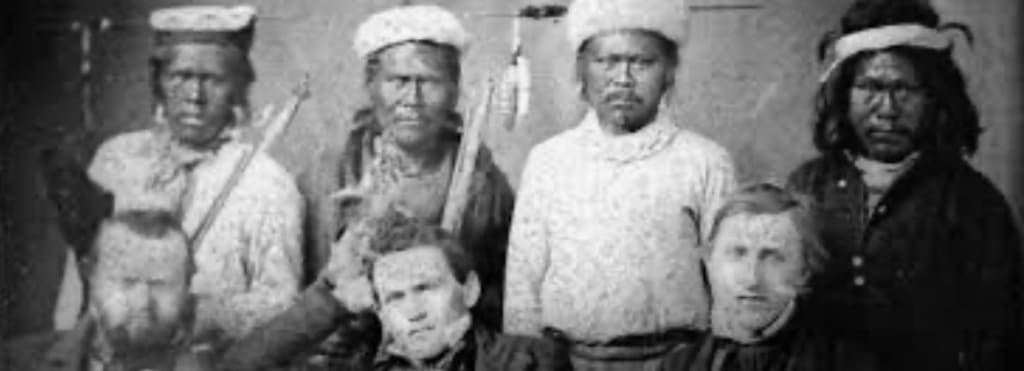
The Maidu are indigenous people of Northern California, traditionally inhabiting the Sierra Nevada mountains, foothills, and valleys between the Sacramento River and Lake Tahoe, particularly along the Feather and American Rivers. Primarily hunter-gatherers, they managed their land with fire and built permanent pit homes for winter. They are known for master basketry and a culture deeply tied to local rivers and forests.
Key Aspects of Maidu Culture and History:
Subgroups: The Maidu are commonly divided into three geographical groups: the Mountain Maidu (Plumas/Lassen counties), Konkow (Butte/Yuba counties), and Nisenan (southern valleys/foothills). I live among the Konkow Maidu and the Niseman Maidu. My property is about one mile from the Yuba River in the Sierra Nevada foothills, and I meet them all the time at pow wow events and when I sell beads at shows on the reservation in Oroville.
Colonial Impact: The 1848 Gold Rush caused catastrophic population declines (from approx$10,000 to 330 in three decades) due to disease, violence, and loss of land. And yet they are not hostile to us. They are gentle and kind.
Geography: Their ancestral homes stretched from Mount Lassen in the north to the American River in the south, encompassing the Sierra Nevada crest.
Creation: Stories feature the "Worldmaker" who shaped the meadows and made the land safe for the Maidu, often referencing a great flood.
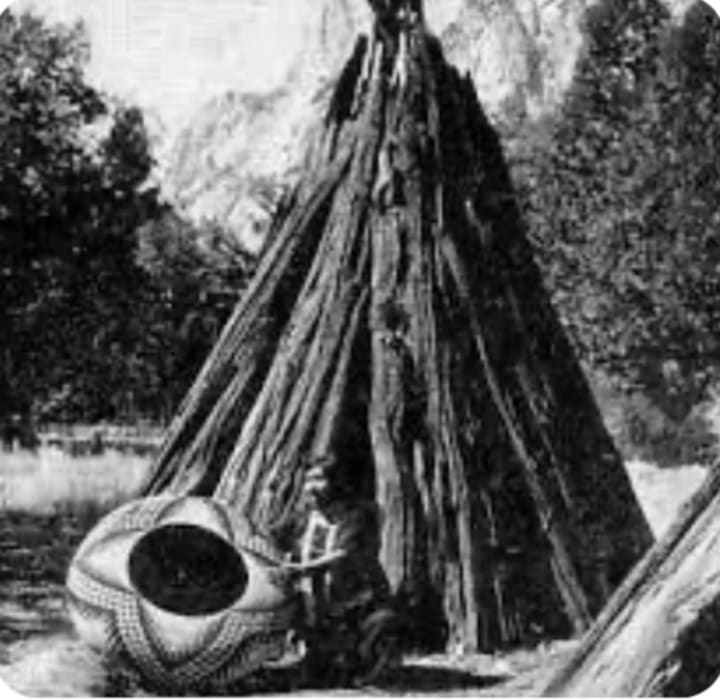
Winter Dwellings: Known as K'ums, these were large, semi-subterranean structures for winter protection, while summer homes were temporary bark teepees.In Maiduan languages, maidu means "person".
Local division
The Maidu people are geographically dispersed into many subgroups or bands who live among and identify with separate valleys, foothills, and mountains in northeastern Central California.The three subcategories of Maidu are:
The Nisenan or Southern Maidu occupied the whole of the American, Bear, and Yuba River drainages. They live in lands that were previously home to the Martis.
The Northeastern or Mountain Maidu, also known as Yamani Maidu, lived on the upper north and middle forks of the Feather River.
The Konkow (Koyom'kawi/Concow) occupied a valley between present-day Cherokee, and Pulga, along the north fork of the Feather River and its tributaries. The Mechoopda live in the area of Chico, California.
It was reported the population of the Maidu in 1910 as 1,100. The 1930 census counted 93, following decimation by infectious diseases and social disruption. As of 1995, the Maidu population had recovered to an estimated 3,500. Phew, they almost became extinct!
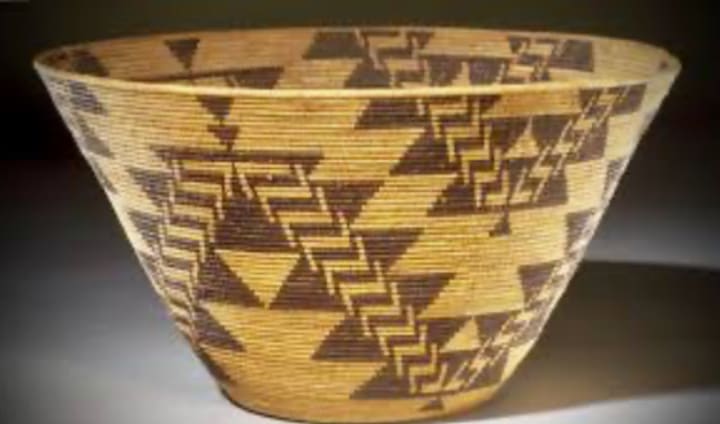
The Maidu women were exemplary basketweavers, weaving highly detailed and useful baskets in sizes ranging from thimbles to huge ones 10 or more feet in diameter. The weaving on some of these baskets is so fine that a magnifying glass is needed to see the strands. In addition to making closely woven, watertight baskets for cooking, they made large storage baskets, bowls, shallow trays, traps, cradles, hats, and seed beaters. They used dozens of different kinds of wild plant stems, barks, roots and leaves. Some of the more common were fern roots, red bark of the redbud, white willow twigs and tule roots, hazel twigs, yucca leaves, brown marsh grassroots, and sedge roots. By combining these different kinds of plants, the women made geometric designs on their baskets in red, black, white, brown or tan. I own some of these baskets. The coiled and twining systems were both used, and the baskets are sometimes handsomely decorated according to the inventiveness and skill of the weaver and the materials available, such as feathers of brightly plumaged birds, shells, quills, seeds, shell buttons and beads- almost anything that could be attached. We, (my wife and I - Wildthingsbeads.com) sell buttons and beads, and shells at the local pow wows in Marysville and Yuba City and if you see embellishments on the baskets they probably come from us.
Like many other California tribes, the Maidu were primarily hunters and gatherers and did not farm. They practiced grooming of their gathering grounds, with fire as a primary tool for this purpose. They tended local groves of oak trees to maximize production of acorns, which were their principal dietary staple after being processed and prepared.
Preparing acorns as the food was a long and tedious process that was undertaken by the women and children. The acorns had to be shelled, cleaned, and then ground into meal. This was done by pounding them with a pestle on a hard surface, generally a hollowed-out stone. The tannic acid in the acorns was leached out by spreading the meal smoothly on a bed of pine needles laid over sand. Cedar or fir boughs were placed across the meal and warm water was poured all over, a process that took several hours, with the boughs distributing the water evenly and flavoring the meal.
The Maidu used the abundance of acorns to store large quantities for harder times. Above-ground acorn granaries were created by the weavers.
Besides acorns, which provided dietary starch and fat, the Maidu supplemented their acorn diet with edible roots or tubers (for which they were nicknamed "Digger Indians" by European immigrants), and other plants and tubers. The women and children also collected seeds from the many flowering plants, and corms from wildflowers also were gathered and processed as part of their diet. The men hunted deer, elk, antelope, and smaller game, within a spiritual system that respected the animals. The men captured fish from the many streams and rivers, as they were a prime source of protein. Salmon were collected when they came upstream to spawn; other fish were available year-round. The Maidu have a salmon ceremony every year which I attend with my grandson, where salmon are caught and cooked for everyone who attends the ceremony. The elders are fed first, and then everyone else.
Housing.
Especially higher in the hills and the mountains, the Maidu built their dwellings partially underground, to gain protection from the cold. These houses were sizable, circular structures 12 to 18 feet in diameter, with floors, dug as much as 3 feet below ground level. Once the floor of the house was dug, a pole framework was built. It was covered by pinebark slabs. A sturdy layer of earth was placed along the base of the structure. A central fire was prepared in the house at ground level. It had a stone-lined pit and bedrock mortar to hold heat for food preparation.
For summer dwelling, a different structure was built from cut branches tied together and fastened to sapling posts, then covered with brush and soil. The summer shelters were built with the principal opening facing east to catch the rising sun, and to avoid the heat of afternoon sun.
Social organization
Maidu lived in small villages or bands with no centralized political organization. Leaders were typically selected from the pool of men who headed the local Kuksu cult. They did not exercise day-to-day authority, but were primarily responsible for settling internal disputes and negotiating over matters arising between villages.
Religion
The primary religious tradition was known as the Kuksu cult. This central California religious system was based on a male secret society. It was characterized by the Kuksu or "big head" dances. Maidu elder Marie Mason Potts says that the Maidu are traditionally a monotheistic people: "they greeted the sunrise with a prayer of thankfulness; at noon they stopped for meditation, and at sunset, they communed with Kadyapam and gave thanks for blessings throughout the day." A traditional spring celebration for the Maidu was the Bear Dance when the Maidu honored the bear coming out of hibernation. The bear's hibernation and survival through the winter symbolized perseverance to the Maidu, who identified with the animal spiritually.
The Kuksu cult system was also followed by the Pomo and the Patwin among the Wintun. Missionaries later forced the peoples to adopt Christianity, but they often retained elements of their traditional practices.
The Maidu spoke a language that some linguists believe was related to the Penutian family. While all Maidu spoke a form of this language, the grammar, syntax, and vocabulary differed sufficiently that Maidu separated by large distances or by geographic features that discouraged travel might speak dialects that were nearly mutually unintelligible.
The four principal divisions of the language were Northeastern Maidu or Yamonee Maidu (known simply as Maidu); Southern Maidu or Nisenan; Northwestern Maidu or Konkow; and Valley Maidu or Chico.
Rock art
The Maidu inhabited areas in the northeastern Sierra Nevada. Many examples of Indigenous rock art and petroglyphs have been found here. Scholars are uncertain about whether these date from previous Indigenous communities or were created by the Maidu people. The Maidu incorporated these works into their cultural system, and believe that such artifacts are real, living energies that are an integral part of their world.
Maidu facial tattoos, primarily worn by women, were significant rite-of-passage markings applied during adolescence to signify womanhood, maturity, and beauty. Women typically displayed three to seven vertical lines on the chin, along with lines from the mouth corners toward the ears, often created with obsidian splinters and charcoal.
Traditional Maidu Tattoo Practices
Male Tattoos: While not universal, some men had a narrow, vertical stripe extending upward from the root of the nose.
Method: Tattoos were applied through a painful process of making fine, close cuts into the skin using obsidian splinters, into which charcoal from wild nutmeg or other charred wood was rubbed.
Significance: These markings were essential markers of adult status, indicating that young women were ready for marriage and adulthood, and acted as a rite of passage.
Cultural Context: While often associated with the northern valley Maidu, these facial tattooing practices were common among many indigenous tribes in California to signify status, beauty, and tribal identity.
The Maidu also engaged in temporary face painting for ceremonies, but the chin tattoos were permanent marks of identity.
The Maidus didn't wear long headdresses like the Sioux tribes. For dances and religious rituals, Maidu men wore headbands made of porcupine quills. ( now seed beads).
The Maidu are not well known like the Sioux, Apache or Navajo, but now you know them. Come see them, and us, to buy our beads, at the local pow wow. You’ll have fun, and meet these beautiful Native Americans.
About the Creator
Guy lynn
born and raised in Southern Rhodesia, a British colony in Southern CentralAfrica.I lived in South Africa during the 1970’s, on the south coast,Natal .Emigrated to the U.S.A. In 1980, specifically The San Francisco Bay Area, California.
Why Wiked: For Good is Undeservingly the ‘worse movie’
So… off the bat, we’re about to delve into something ridiculous. Just so we’re clear on that, ok? The first thing anyone that knows a thing about these dual movies… knows… is the original movie and sequel were shot together.
By Gabriel Shames3 days ago in Humans
The Different Love Languages
Love is one of the most powerful human experiences, yet it can also be one of the most misunderstood. Many relationships struggle not because love is absent, but because it is expressed in ways that the other person doesn’t fully receive or recognize. This is where the concept of “love languages” becomes incredibly valuable. Understanding love languages allows you to communicate care, appreciation, and affection in a way that truly resonates with your partner, friend, or even family member.
By Timothy A Rowland7 days ago in Humans



Comments (1)
🔥🔥🔥🔥🔥🔥🔥🔥🔥🔥🔥🔥 🙏💜 🙏💜🙏💜🙏💜 Thank you 🙏💜🙏💜🙏💜