
Ancient DNA Shows How Andean Society Was Pushed to the Edge by the Farming Shift
A Climate, Nutrition, and Illness Crisis

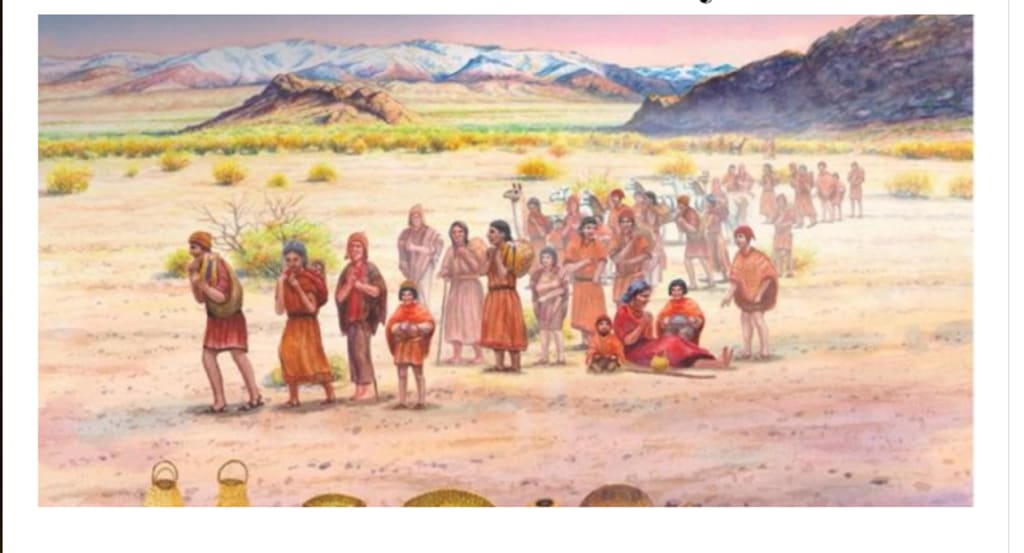
The striking 2,000-year history of a people who lived at the southern tip of the old Andean farming frontier has been revealed by a ground-breaking multidisciplinary study. Researchers found that indigenous hunter-gatherers embraced agriculture themselves rather than being supplanted by new farmers by examining ancient DNA from Argentina's Uspallata Valley.
But in the end, this shift drove society to the verge of collapse, exposing a terrifying story of sickness, starvation, and unstable climates that made people depend on close-knit familial relationships to survive.
The results, which were published in the journal Nature, provide previously unheard-of insights into how agriculture transformed human communities and how prehistoric people endured protracted adversity.
Working closely with contemporary Huarpe Indigenous groups, the study team, headed by the Microbial Paleogenomics Unit at Institut Pasteur, integrated ancient human and pathogen genomics with isotopic data, archeology, and paleoclimate records.
Agriculture's Local Adoption
Whether indigenous hunter-gatherers adopted new crops and methods or migrant farmers drove the expansion of agriculture is one of the most contentious problems in archaeology. Since farming began in the Uspallata Valley far later than in other parts of South America, it offered a unique opportunity to investigate this.
46 individuals, ranging from early hunter-gatherers who lived about 2,200 years ago to later farming cultures, had their entire genomes sequenced by the scientists. Strong genetic continuity spanning more than a millennium was evident from the findings.
This suggests that rather than being overtaken by a large influx of agricultural migrants, the native communities themselves progressively adopted maize and other crops into their diets.
"Beyond the local story of Uspallata, we are also filling a gap in South American human genetic diversity by documenting a genetic component that was previously only suggested by analysing present-day populations," said Pierre Luisi, an Argentine researcher at CONICET and co-first author of the study.
He refuted claims that indigenous descendants in the area became extinct by pointing out that this ancestral genetic component is still present in contemporary populations.
A Climate, Nutrition, and Illness Crisis
Although farming was initially adopted with flexibility, a significant change took place at Potrero Las Colonias, a significant burial site, between 800 and 600 years ago.
This region has some of the greatest levels of maize intake in the southern Andes, according to isotope study of teeth and bones. Moreover, strontium isotopes revealed that these individuals were migrants from neighboring areas who had settled in the valley.
This migrant farming community experienced a catastrophic and long-lasting population fall despite their close genetic ties to the local populations. Extended episodes of environmental instability throughout this time are shown by paleoclimate data.
The physical indicators of this catastrophe were present in the skeletal remains. displaying obvious symptoms of widespread illness and malnutrition in children.
The most startling finding was that tuberculosis was present at the location according to the ancient DNA research. It was completely unexpected to locate the strain this far south, even though it belonged to a lineage known from pre-contact South America.
"It's remarkable to find tuberculosis this far south in a pre-contact setting," said Nicolás Rascovan, head of the Microbial Paleogenomics Unit. This finding begs important concerns regarding how the illness spread and endured in the harsh natural environment of the ancient Andes.
Using Family Networks as a Survival Technique
The society resorted to their most basic resource—family—in the face of conflicting demands from contagious diseases, food shortages, and climate change. Many of the migrants interred at the site were closely connected, despite being buried at various eras, according to genomic kinship studies. This points to a continuous, multigenerational migration into the valley.
It's interesting to note that a single mitochondrial lineage predominated among the migrants in these kinship networks, which were mainly arranged along maternal lines.
This emphasizes how important women were in preserving family continuity and organizing travel during emergencies. Locals and newcomers were occasionally buried together, suggesting a cordial coexistence, and there was no sign of violent strife.
According to archaeologist and co-first author Ramiro Barberena, "no farming community abandons fields and homes lightly." "Our results are most consistent with people moving under force majeure, relying on family networks to navigate crises."
This age-old tactic of kinship-based resilience provides a moving viewpoint on how human societies adjust to demographic and environmental stresses—a lesson that is still very applicable today.
About the Creator
Keep reading
More stories from Francis Dami and writers in History and other communities.
An ancient medication that is now referred to as a "magic pill" improves heart health, cures the prostate, and grows hair.
There appears to be another important health benefit to a prescription drug that has been on the market in the United States since 1992 and is well-known for treating enlarged prostates and hair loss.
By Francis Dami15 days ago in History
Satwa Dubai: A Brief Overview
Satwa Dubai is one of the most unique areas in the city, where the past and present exist side by side in a very natural and visible way. While Dubai is known for luxury buildings and modern development, Satwa represents a simpler and more grounded lifestyle that continues to thrive.
By Backlinks Cart7 days ago in History
Why Wiked: For Good is Undeservingly the ‘worse movie’
So… off the bat, we’re about to delve into something ridiculous. Just so we’re clear on that, ok? The first thing anyone that knows a thing about these dual movies… knows… is the original movie and sequel were shot together.
By Gabriel Shames3 days ago in Humans




Comments
There are no comments for this story
Be the first to respond and start the conversation.