
The Tariff Wall: How Trump's Trade War Is Rewriting the Rules for Canada
Tariffs, Pressure, and a Nation That Won't Back Down

For decades, Canada and the United States have operated under a trade relationship that, while not always perfect, rested on a foundation of mutual agreement and predictable rules. That foundation is now cracking — and Washington is not shy about who is swinging the hammer.
In a revealing exchange with CBC News correspondent Katie Simpson on Capitol Hill, just hours after President Donald Trump delivered his State of the Union address, US Trade Representative Jamison Greer laid out the uncomfortable truth that Ottawa can no longer afford to ignore: if Canada wants a trade deal with the United States, it will have to accept tariffs. Full stop.
"When we go to other countries, and we make a deal with them... they agree that we can have a tariff on them," Greer told Simpson, in remarks that were as blunt as they were significant. He went further, suggesting that if Canada is willing to accept a higher tariff rate while simultaneously opening its own markets — particularly in protected sectors like dairy — then Washington considers that a worthwhile conversation to have.
It was, as CBC News noted, one of the clearest signals yet that the Trump administration is not merely tweaking trade policy. It is seeking to fundamentally tear up and rewrite the free trade architecture that has governed North American commerce since 1994.
From Threats to Tariffs: How We Got Here
The storm did not arrive without warning. From the moment Trump returned to the White House in January 2025, he made no secret of his intentions. Within weeks, Canada and Mexico found themselves squarely in his crosshairs — the first casualties of what would become a sweeping global tariff campaign.
In March 2025, Trump made good on his threats, slapping a 25% blanket tariff on both nations. His stated justification was their alleged failure to curb the flow of illegal drugs and undocumented migrants across US borders. Critics were quick to point out that the charges were disproportionate and the connection to trade policy strained, but the tariffs landed regardless.
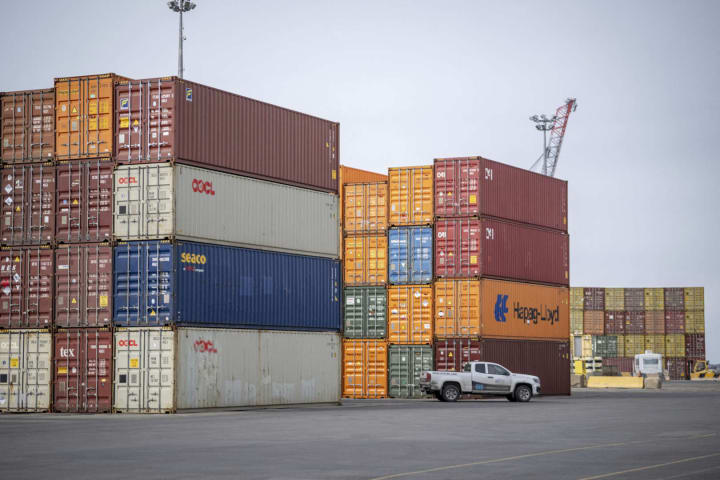
That was only the beginning. By August 2025, Trump had escalated further, raising Canada's tariff rate to a punishing 35%. In the months between, he had also unleashed a wave of sectoral tariffs targeting steel, aluminum, lumber, and the auto industry — sectors that sit at the very heart of the Canadian economy.
A Legal Lifeline — With Limits
Canada did catch a rare break when the US Supreme Court ruled that the tariffs Trump had imposed through the International Emergency Economic Powers Act were unlawful. The decision offered a moment of relief in Ottawa, but its practical impact proved narrower than many had hoped.
The ruling only applied to non-CUSMA-compliant goods — a category that, while significant, leaves much of the tariff architecture intact. Sectoral tariffs on steel, aluminum, lumber, and automobiles remained firmly in place. And Trump, never one to be outmaneuvered quietly, simply pivoted. By routing the tariffs through a different legal mechanism, he managed to bring the rate on non-CUSMA-compliant Canadian goods down from 35% to 10% — a reduction, but hardly a resolution.
The silver lining for Canada lies in the sheer breadth of its CUSMA coverage. According to the Canadian government, roughly 98% of Canadian goods exported to the United States can claim preferential treatment under the agreement, provided they meet its rules of origin requirements. That has served as a meaningful shield — for now.
The CUSMA Clock Is Ticking
The operative phrase is for now. The Canada–United States–Mexico Agreement is approaching its first scheduled review in July 2026, and based on Greer's remarks, the Trump administration is eyeing that moment not as a routine check-in, but as a potential inflection point.
Greer made clear that Washington is not interested in simply renewing the existing deal. As far as the administration is concerned, CUSMA has failed to deliver on one of its central promises: bringing industrial production back to American soil.
"We're focused on reshoring supply chains related to automotive, steel, and aluminum," Greer stated plainly. The message to Canada could not be more direct — the old arrangement is not good enough, and the new one will come with stricter rules and higher costs.
Greer also raised concerns about what he called "screwdriver operations" — a term used to describe scenarios in which goods manufactured in countries like Vietnam or China are shipped to Canada, undergo minimal processing, and then cross into the United States duty-free under the cover of CUSMA. "We don't want a situation where countries like Vietnam or China can send a bunch of stuff to Canada, do a screwdriver operation and send it across the border into the United States duty-free," he told CBC News.
It is a legitimate concern in principle, but one that critics argue is being used as a pretext to justify a far more aggressive renegotiation than the circumstances actually warrant.

Canada Is Not in the Mood to Cave
What makes this moment particularly fascinating — and politically charged — is that Canadians themselves appear to be in no mood to roll over.
On February 24th, the Angus Reid Institute released polling data that told a striking story. Of the 1,650 Canadian adults surveyed, a commanding 67% said they wanted their government to take a hardline approach in trade negotiations with Washington, even if it meant drawing the anger of the Trump administration. Only a minority favored making concessions to preserve the relationship.
The institute put it plainly: "Canadians' appetite for capitulation when it comes to Trump's threats has long been minimal. Consistently, fewer than two-in-five have said that making concessions to maintain the relationship is the preferred path."
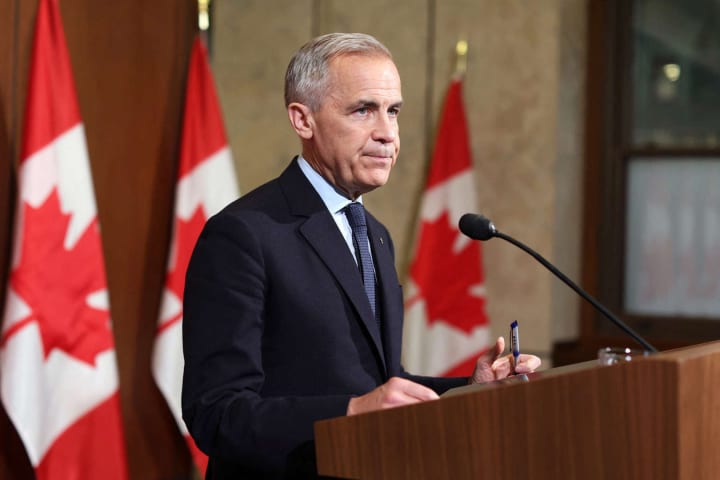
That public sentiment carries real political weight. For Prime Minister Mark Carney, the polling does not just reflect public opinion — it represents a mandate. Canadians are not asking their government to soften the blow. They are asking it to stand firm.
A Relationship at a Crossroads
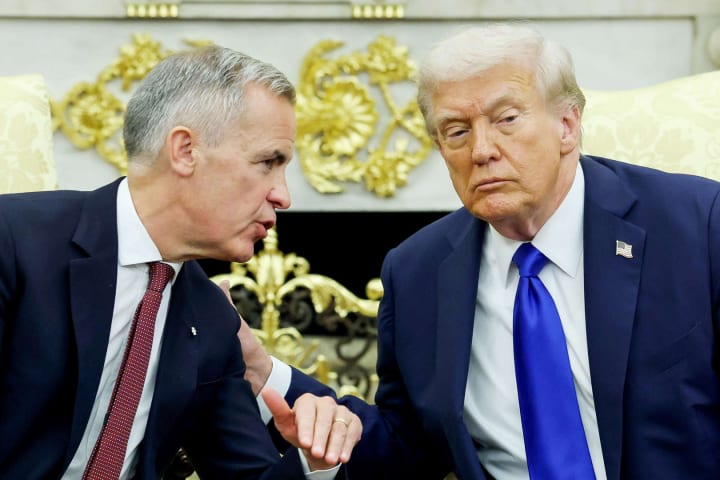
What is unfolding between Canada and the United States is more than a trade dispute. It is a stress test of one of the world's most deeply integrated economic relationships — and the outcome will shape both nations for years to come.
Washington is betting that economic pressure will eventually force Ottawa to the table on American terms. But if the polling is any guide, the Canadian public is prepared for a prolonged fight. The question is whether the Carney government has the diplomatic skill and political endurance to navigate a negotiation where the other side has already signaled it wants to change the rules of the game entirely — and is not afraid to say so out loud. Sonnet 4.6
About the Creator
Keep reading
More stories from Shirley Oyiadom and writers in Futurism and other communities.
Aspiring singer killed in crash with double-decker bus days before deal to launch her music career
The sudden loss of a young life often carries with it a profound sense of unfinished promise. For 27-year-old Soriah Barry, that sense of loss feels especially heavy. An aspiring singer on the brink of a breakthrough, her life was tragically cut short in a devastating road accident in east London—just days before a meeting that could have changed the course of her music career.
By Shirley Oyiadom10 days ago in Families
The Fears of AI And How Much Fun It Can Be
ChatGPT has come a long way, as has AI in general. There are those people who are scared of it, and for understandable reasons. People fear that as technologies advance, they’ll be replaced in the workforce. Then, there are the fears that AI could evolve into something that brings us to the brink of extinction.
By The Man Behind The Maskabout 22 hours ago in Futurism


Comments
There are no comments for this story
Be the first to respond and start the conversation.