science
Topics and developments in science and medicine, presented by Futurism.
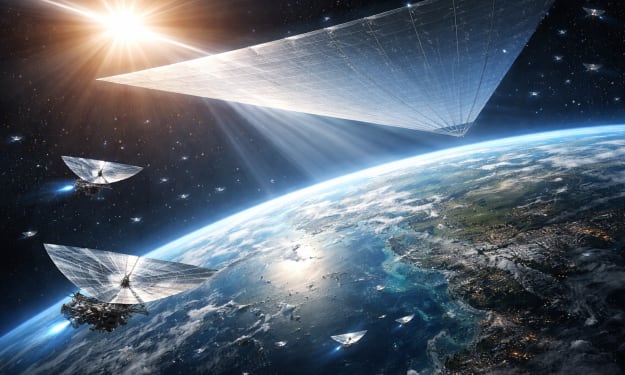
Space-Based Geoengineering: Can We Cool the Earth from Orbit?
As global temperatures continue to rise, the conversation around climate intervention is becoming more urgent—and more unconventional. Among the most ambitious ideas is space-based geoengineering: using structures placed in orbit to reduce the amount of solar energy reaching Earth. It sounds like science fiction, but researchers have been seriously exploring whether cooling our planet from space could one day become a viable option.
By Holianyk Ihora day ago in Futurism
Why Canada’s Generic Drug Market Is Growing Alongside the Need for Affordable Healthcare. AI-Generated.
Healthcare systems are expected not only to have high quality service delivery‚ but to be sustainable․ In Canada‚ due to increasing treatment costs and the rise of long-term need for chronic medications‚ the question of the sustainability of the healthcare system has been raised․ Interest is growing in the generic drugs market as generic medicines are cheaper alternatives to branded drugs and can be available in hospitals‚ clinics and through standard retail pharmacies․
By michael matthewa day ago in Futurism
How Elementor Theme Builder Works and Why Designers Use It in 2026. AI-Generated.
The first time I built a website with Elementor, I spent hours designing the perfect page layout. The content area looked exactly the way I wanted it. Clean sections, consistent typography, a color palette that reflected the brand. Then I previewed the page on the live site and noticed something that immediately deflated all that effort. The header at the top and the footer at the bottom looked completely different from everything I had just designed. They belonged to the WordPress theme, and no amount of work inside Elementor could touch them.
By Shane Smith2 days ago in Futurism
The origins of the Kamchatka earthquake is revealed by satellites that find concealed tsunami waves.
A second, shorter wave signal that reveals a rupture within six miles of the trench was brought by a tsunami caused by an earthquake off the Kamchatka Peninsula in Russia in 2025.
By Francis Dami2 days ago in Futurism
The Ghost in the Machine. Content Warning.
Introduction: From Steam Engines to Silicon By Vicki Lawana Trusselli "If you listen to the chatter in the writer's groups today, you’d think we’re living through a sci-fi horror film. The headlines are full of sensationalist stories about AI 'taking over the earth'. But as someone who spent years in the film and music industry, I’ve seen this script before.
By Vicki Lawana Trusselli 4 days ago in Futurism
Why Your 5G Phone Isn't Actually Using 5G (And How to Fix It)
There is a specific, modern frustration that defines the early 2026 mobile experience. You have just unboxed a state-of-the-art flagship—perhaps the feather-light iPhone Air or the formidable Samsung Galaxy S25+—drawn by the siren song of transformative connectivity. You have read the press releases promising instantaneous 8K streaming, lag-free cloud gaming, and "next-generation" throughput. Yet, as you sit in the heart of a metropolitan center, your eyes drift to the status bar only to find the aging, familiar "4G" or "LTE" icon staring back at you.
By Tech Horizons4 days ago in Futurism
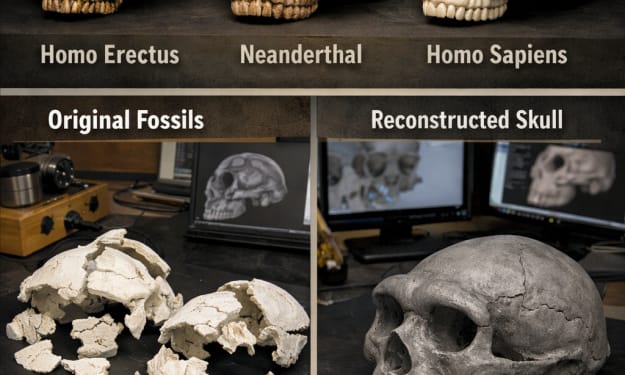
Yuxian Skull discovered in China has challenged this long-standing narrative of Human Evolution
Rethinking Human Evolution: A Discovery That Changes the Timeline For decades, the story of human evolution appeared relatively straightforward. Scientists believed that early advanced humans emerged around one million years ago, belonging to the species Homo erectus. According to this widely accepted model, this species eventually split into two major branches around 600,000 years ago. One branch led to the Neanderthals, while the other gave rise to modern humans, Homo sapiens. This linear and orderly progression formed the foundation of how we understood our origins.
By Ibrahim Shah 4 days ago in Futurism
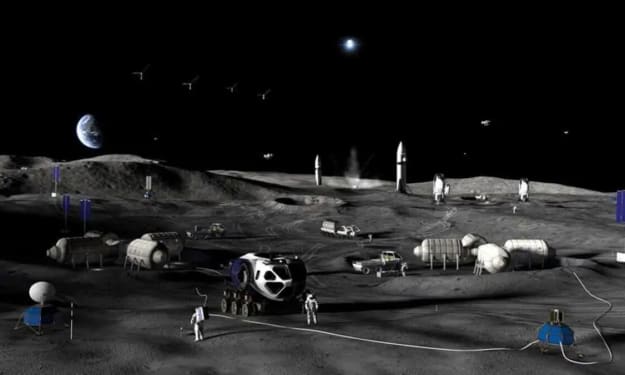
NASA $20 Billion Moon Base: Dream or Risky Reality
For centuries, humans have looked at the Moon with curiosity and quiet longing. It has been a symbol of mystery, distance, and possibility. Today, that distant dream is becoming something more concrete. The idea of building a permanent human presence beyond Earth is no longer limited to science fiction. The discussion around a NASA $20 billion moon base has sparked both excitement and concern across the world. Some see it as a bold step toward the future, while others question the cost and purpose. Is this effort a necessary move for human progress, or an expensive risk? To understand this, we must look deeper into what such a project means for science, society, and the human story itself.
By Muqadas khan5 days ago in Futurism
10 Mind-Blowing Space Facts You Were Never Taught in School
We’ve all heard the phrase that space is the final frontier. But let’s be honest, what most of us learned in school barely scratched the surface. Beyond the neat diagrams and textbook definitions lies a universe filled with weird, shocking, and sometimes hilarious realities.
By Areeba Umair5 days ago in Futurism
Your Private Zoom Call is Now an AI Podcast: The Rise of Shadow Recording
1. The Hook: Your Unseen Audience Have you ever had that nagging, prickling sensation in the back of your neck during a private video call? That brief, flickering moment of digital paranoia where you wonder if, despite the "Private" room setting and the invite-only link, someone—or something—is listening? For most of us, this is just a symptom of the "Zoom fatigue" era, a psychological byproduct of living our lives through a webcam. We dismiss it as irrational. We check the participant list, see only our colleagues or friends, and proceed to discuss our medical histories, our trade secrets, and our deepest anxieties.
By Tech Horizons7 days ago in Futurism
The Silent Takeover: Why 2027 Marks the End of the Human-Centric Internet
When you click a link today, you carry an unspoken assumption: that on the other side of the connection, there is something designed for you. We perceive the internet as a digital town square, a vibrant, messy sprawl of human-to-human interaction where every pixel, every sentence, and every aesthetic choice is a signal intended for a sentient observer. But this sense of belonging is beginning to flicker. The cursor on your screen is increasingly becoming a relic of a passing age. We are currently witnessing an invisible but total colonization of the digital realm, a transition from a web built for the human eye to one optimized for the machine’s maw.
By Tech Horizons8 days ago in Futurism
Update available - Humanity 2.0
The year is 2050. A girl wakes up in a silent white room. No heartbeat. No breathing. No blinking. Yet he is alive. Her body is not made of flesh anymore. Her eyes glow faintly blue, her memory is perfect, and her brain is connected to a global network of knowledge. She can speak any language, solve complex equations in seconds, and never feel pain.
By Sakuni Bandara9 days ago in Futurism