
Japan Logistics Market: E-commerce Growth, Supply Chain Optimization & Expansion Outlook
How automation-driven warehousing, advanced last-mile delivery solutions, and e-commerce expansion are enhancing supply chain efficiency, delivery speed, and operational scalability across the Japan logistics market.

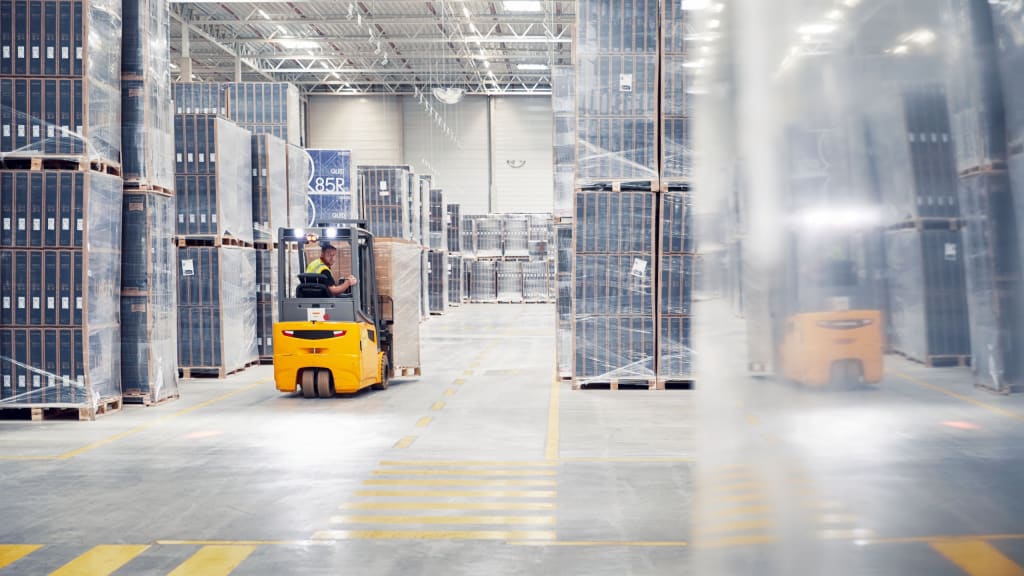
Rising e-commerce penetration, labor shortage challenges, and shift toward sustainable green logistics practices are driving demand for efficient supply chain solutions in Japan, supported by automation technologies, third-party logistics expansion, and continuous investments in eco-friendly transportation, energy-efficient warehouses, and smart delivery systems. According to IMARC Group's latest data, the Japan logistics market size was valued at USD 355.9 Billion in 2025. Looking forward, IMARC Group estimates the market to reach USD 567.4 Billion by 2034, exhibiting a CAGR of 5.32% from 2026-2034.
Logistics now represents a critical enabler of Japan's digital economy transformation, managing complex supply chains spanning e-commerce fulfillment, manufacturing distribution, healthcare delivery, and cross-border trade. The market benefits from world-class infrastructure, cutting-edge automation adoption, and strategic government initiatives addressing labor constraints. Major service categories include third-party logistics, multi-modal transportation, and specialized warehousing solutions, with organizations prioritizing same-day delivery capabilities, AI-powered route optimization, sustainable last-mile solutions, and resilient supply chain systems capable of handling natural disasters and market disruptions affecting operational continuity.
Japan Logistics Market Growth Drivers:
- Explosive E-Commerce Growth Driving Last-Mile Delivery Transformation
Japan's e-commerce logistics market reached ¥22.42 Billion in 2025, fueling unprecedented demand for sophisticated delivery infrastructure. Parcel deliveries surged 23.1% over five years, reaching approximately 5 billion parcels in 2022 according to the Ministry of Land, Infrastructure, Transport and Tourism. The World Economic Forum's Global New Mobility Coalition predicts 78% increase in last-mile deliveries by 2030, requiring massive logistics capacity expansion. Major players including Yamato Holdings, Sagawa Express, and Japan Post are investing heavily in automation, AI-powered sorting systems, and advanced tracking technologies. Consumer expectations for same-day and next-day delivery options continue rising, particularly in urban centers. This transformation drives continuous infrastructure investments, warehouse automation, and innovative last-mile solutions including delivery robots, drone trials, and smart locker networks throughout metropolitan areas.
- Critical Labor Shortages Accelerating Automation and Technology Adoption
Japan faces severe logistics sector labor shortages exacerbated by aging demographics and strict working hour regulations introduced in April 2024 limiting truck drivers' hours. The Japan logistics automation market reached USD 5 Billion in 2024, reflecting urgent need for technology solutions. Companies are deploying automated guided vehicles, robotic sorting systems, and AI-powered warehouse management platforms to compensate for workforce constraints. In August 2025, Japan Post announced a ¥370 Billion (USD 51.8 Billion) infrastructure investment aimed at doubling parcel processing capacity through automation and unmanned transport vehicles. JD Logistics opened Japan's first fully automated self-operated warehouse in Chiba Prefecture in December 2024, incorporating cutting-edge robotics for order fulfillment. These investments demonstrate industry-wide recognition that automation represents the only viable path forward for sustaining logistics operations amid persistent labor challenges.
- Government Infrastructure Initiatives and Smart Logistics Development
The Japanese government is spearheading transformative logistics infrastructure projects addressing capacity constraints and sustainability objectives. The Ministry of Land, Infrastructure, Transport and Tourism announced plans for an automated cargo highway connecting Tokyo and Osaka, Japan's two largest cities, positioning this system to handle up to 26% of goods currently transported by trucks. This initiative aims to reduce environmental impact while solving labor shortages through autonomous transportation. Additionally, government streamlining of customs procedures and creation of business-friendly regulatory environments attract international logistics providers and foster healthy competition. Japan Post's major hub developments in Nagoya (October 2025) and Osaka (2026) exemplify public-private collaboration strengthening national logistics capacity. These government-backed initiatives create favorable conditions for private sector investments in advanced technologies, sustainable practices, and infrastructure modernization supporting long-term market expansion.
Japan Logistics Market Trends:
- Rapid Deployment of AI, Robotics, and IoT in Warehouse Operations
Artificial intelligence and Industrial Internet of Things technologies are revolutionizing warehouse management across Japan's logistics sector. Companies deploy AI-powered systems for demand forecasting, inventory optimization, route planning, and predictive maintenance reducing operational costs while improving efficiency. Automated guided vehicles navigate warehouses autonomously, while robotic arms handle picking, packing, and sorting operations with precision impossible for human workers. Machine learning algorithms analyze vast datasets identifying patterns that optimize supply chain decisions in real-time. In January 2025, Panasonic Operational Excellence, T2 Corporation, and Mitsui Warehouse Logistics launched demonstration tests of automated truck transportation leveraging autonomous driving technology and operational optimization expertise. These advanced technologies enable logistics providers to handle surging e-commerce volumes despite labor constraints, while maintaining service quality standards Japanese consumers demand throughout increasingly complex distribution networks.
- Growing Adoption of Green Logistics and Sustainable Transportation
Environmental sustainability has become a defining priority reshaping Japan's logistics landscape. Companies invest in electric delivery vehicles, optimize route planning to minimize fuel consumption, and develop eco-friendly packaging solutions reducing carbon footprints. The government's automated cargo highway initiative emphasizes environmental benefits alongside efficiency gains, targeting substantial reductions in transportation-related emissions. Major logistics providers implement energy-efficient warehouse designs incorporating solar panels, LED lighting, and smart climate control systems. Cross-border e-commerce operators increasingly prioritize sustainable shipping options as consumer awareness of environmental issues grows. Green logistics initiatives extend beyond carbon reduction to include circular economy practices such as reusable packaging systems and reverse logistics operations supporting product recycling programs. These sustainability efforts align with Japan's broader climate commitments while delivering operational cost savings through improved resource efficiency and regulatory compliance.
- Expansion of Cross-Border E-Commerce and International Logistics Services
Cross-border e-commerce activities are expanding rapidly, with Japanese consumers increasingly purchasing from overseas platforms while international sellers target Japan's affluent market. In August 2025, Nippon Express launched a new cross-border e-commerce logistics service utilizing its DCX (Digital Commerce Transformation) web app, enabling overseas operators to deliver products to Japanese consumers more affordably through streamlined import/export procedures and customs clearance. Annual transactions for goods from the United States alone demonstrate substantial growth according to Ministry of Economy, Trade and Industry data. This trend drives demand for specialized logistics services handling international shipping complexities, including customs documentation, multi-currency transactions, and cross-border returns processing. Logistics providers establish overseas warehouses and distribution networks supporting efficient international operations. The focus initially targets air freight from North America, Europe, and South Asia, with planned expansion to additional regions in 2026.
Recent News and Developments in Japan Logistics Market
- August 2025: Japan Post announced an ambitious ¥370 Billion (USD 51.8 Billion) investment to transform its logistics infrastructure, marking a strategic pivot from traditional mail services toward parcel delivery. The plan includes building major new logistics hubs in Nagoya (October 2025) and Osaka (2026), with a Tokyo hub under consideration. The initiative aims to double parcel processing capacity within five years through automation, unmanned transport vehicles, and advanced IT systems, addressing the reality that annual mail volumes have fallen to 12.5 billion items, nearly half of privatization levels.
- August 2025: Nippon Express launched a new cross-border e-commerce logistics service for overseas products destined for Japan utilizing its DCX (Digital Commerce Transformation) logistics web app. This service provides solutions enabling overseas e-commerce operators to deliver products to Japanese consumers more affordably and smoothly, handling complex import/export procedures, customs clearance, and domestic delivery arrangements seamlessly. The initiative initially focuses on transporting air freight from North America, Europe, and South Asia to Japan, with expansion plans to other regions in 2026.
- December 2024: JD Logistics opened its first self-operated warehouse in Japan's Chiba Prefecture, setting new standards for warehouse management by combining cutting-edge automation and robotics. This facility supports the e-commerce supply chain and significantly strengthens Japan's logistics industry capabilities. The highly automated warehouse demonstrates the increasing sophistication of logistics infrastructure in Japan, leveraging advanced technologies to address labor shortages while meeting growing e-commerce demand for efficient order fulfillment and rapid delivery services.
- September 2024: Samvardhana Motherson International and Japan's Hamakyorex Co. established a joint venture to provide comprehensive logistics services including import/export solutions, warehousing, packaging, and third-party logistics operations. This collaboration strengthens Motherson's position in the Japanese market while addressing the country's expanding demand for efficient logistics solutions. The partnership demonstrates increasing international interest in Japan's logistics sector and growing recognition of opportunities created by e-commerce growth and supply chain modernization initiatives.
Note: If you require specific details, data, or insights that are not currently included in the scope of this report, we are happy to accommodate your request. As part of our customization service, we will gather and provide the additional information you need, tailored to your specific requirements. Please let us know your exact needs, and we will ensure the report is updated accordingly to meet your expectations.
About the Creator
Faisal Al-Harbi
Market research professional based in Saudi Arabia (KSA), focused on industry trends, market growth, and economic insights.
Writing data-driven articles on Saudi markets, business outlook, and Vision 2030–driven sectors.
Keep reading
More stories from Faisal Al-Harbi and writers in Futurism and other communities.
Japan Foreign Exchange Market: Yen Volatility, Monetary Policy & Growth Outlook
According to IMARC Group's latest research publication, the Japan foreign exchange market size reached USD 59.7 Billion in 2025. The market is projected to reach USD 117.3 Billion by 2034, exhibiting a growth rate (CAGR) of 7.56% during 2026-2034.
By Faisal Al-Harbi13 days ago in Futurism
The Fears of AI And How Much Fun It Can Be
ChatGPT has come a long way, as has AI in general. There are those people who are scared of it, and for understandable reasons. People fear that as technologies advance, they’ll be replaced in the workforce. Then, there are the fears that AI could evolve into something that brings us to the brink of extinction.
By The Man Behind The Maskabout 17 hours ago in Futurism
Vinyl Ester Market Insights: Infrastructure Modernization, Chemical Resistance Needs & Industry Forecast to 2033
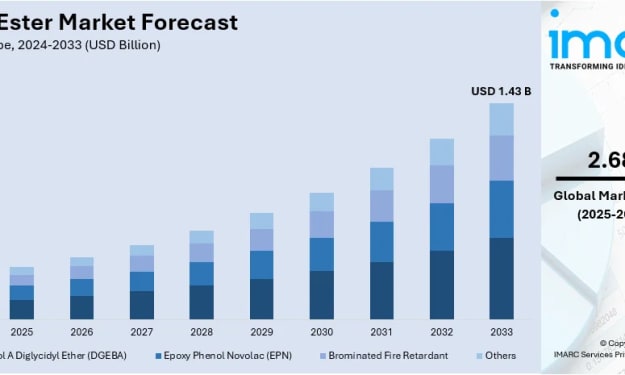
The global demand for high-performance, corrosion-resistant materials is surging as industries from marine to renewable energy seek longer lifecycles for their critical assets. Vinyl ester resins have emerged as the premier choice, offering a unique molecular structure that combines the toughness of epoxy with the fast-processing capabilities of polyester. According to IMARC Group’s latest data, the global vinyl ester market size was valued at USD 1.12 Billion in 2024. Looking forward, IMARC Group estimates the market to reach USD 1.43 Billion by 2033, exhibiting a CAGR of 5.7% from 2025-2033.
By Andrew Sullivana day ago in Futurism
Incredibooks: The Masked Duet Series
So my best friend who loves the crazy world of reverse harem books put me on to this author named Reese Rivers and a two part book series she put together called the “Masked Duet”. The series is made up of two stories titled “Dance Butterfly Dance” and “Burn Butterfly Burn”.
By Joe Patterson7 days ago in BookClub



Comments
There are no comments for this story
Be the first to respond and start the conversation.