
City of plague: A New Yorker’s pandemic chronicle Pt 22.
Shopping Online During the Pandemic
A quiet story about fear, groceries, and how the internet became our lifeline.
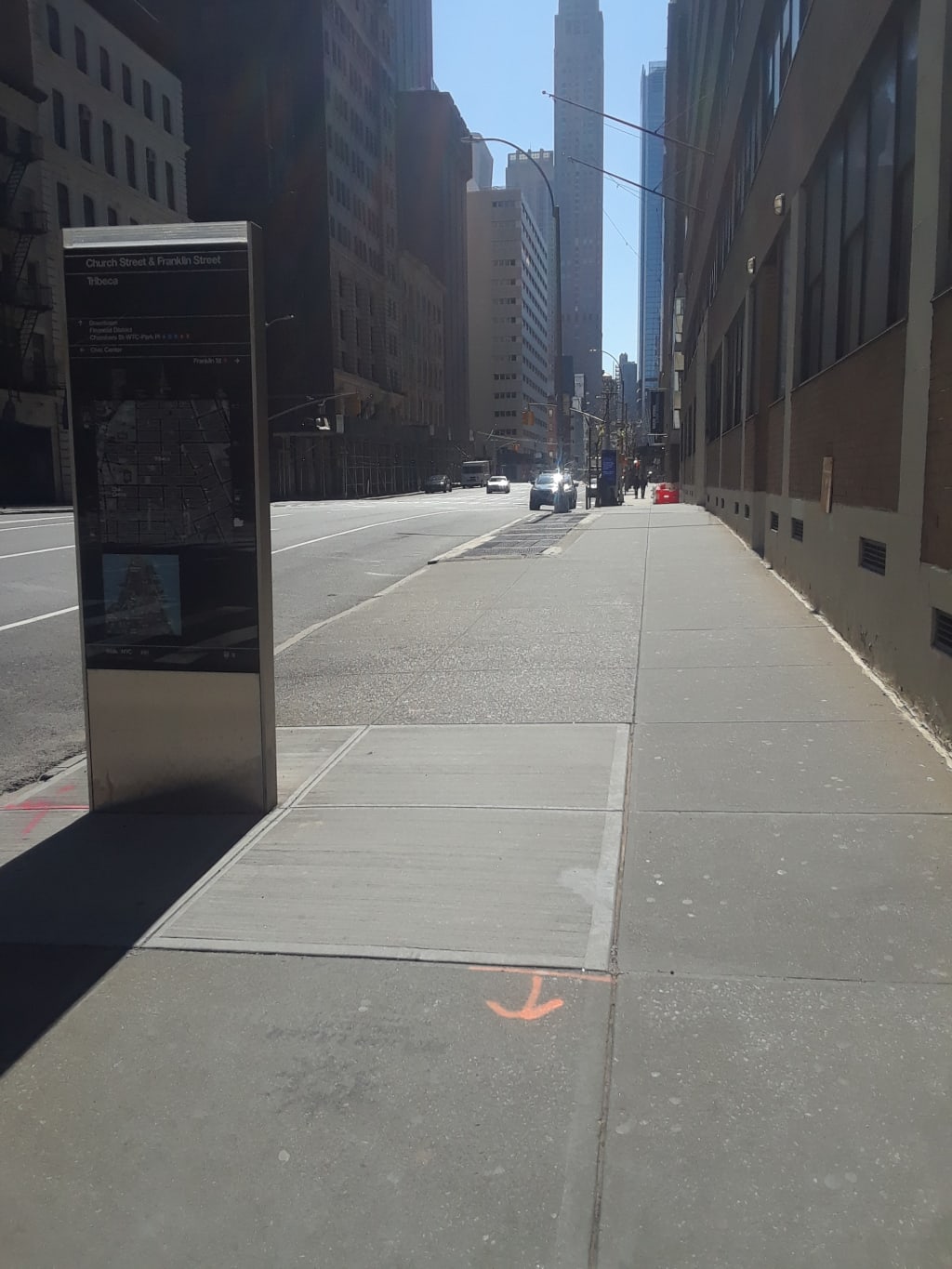
During the pandemic, Manhattan’s Chinatown felt like a city holding its breath.
For years the neighborhood had already been changing. Wealthy developers and new residents from other communities had gradually purchased buildings, shrinking the physical space where Chinese families lived and worked. The once vibrant streets—crowded with markets, restaurants, and elderly men chatting over tea—had been slowly transformed.
But when the virus arrived, the transformation became something far more dramatic.
The neighborhood fell silent.
It wasn’t the peaceful silence of a Sunday morning. It was the heavy silence of uncertainty.
The narrow streets seemed frozen. Even sunlight appeared reluctant to touch the sidewalks.
Most Chinese residents stayed inside their aging brick-and-wood buildings, many of them more than a hundred years old. People rarely went out unless absolutely necessary. Spring arrived with warm sunshine and blooming trees, but few dared to enjoy it.
Inside these cramped apartments, fear and anxiety grew.
Living in such confined spaces during lockdown placed a weight on people’s minds heavier than the steep staircases inside those old buildings. Day after day, the pressure built quietly.
Outside, garbage bags piled up along the sidewalks, waiting for sanitation trucks that seemed to arrive later and later. The heaps sat under the hot sun, as if the entire neighborhood were struggling to contain the invisible spread of the virus.
It was a strange, uneasy time.
A Neighborhood Shutting Down
When the government ordered everyone to stay home, almost everything closed overnight.
Community centers that once bustled with elderly residents—places funded by government programs where seniors gathered to play cards, sing karaoke, or simply escape loneliness—suddenly stood empty. Their doors were locked, their halls silent.
Even businesses that technically could remain open struggled to stay that way.
Supermarket owners, convenience store operators, and restaurant managers were overwhelmed by fear and uncertainty. Many eventually decided to close anyway, unwilling to risk their health or their employees’ safety.
In Chinatown, only a handful of grocery stores remained open.
Banks shortened their hours.
Pharmacies reduced staff.
Customers became rare.
The neighborhood that once thrived on constant movement had slowed to a crawl.
The Long Line for Food
But people still needed to eat.
In Chinese culture, there is an old saying: “Food is the first necessity of the people.”
During a health crisis, food felt even more essential. Good nutrition, people believed, could strengthen the immune system and protect the body.
So occasionally, I had no choice but to go out and buy groceries.
What I saw each time shocked me.
Outside the supermarket doors, a long line of customers stretched down the street, turning corners and disappearing from sight. People stood six feet apart, wearing masks and gloves, silently waiting for their chance to enter.
The line moved painfully slowly.
Sometimes I waited nearly two hours before reaching the entrance.
When my turn finally came, I felt strangely relieved—almost like a drowning man grabbing onto a floating piece of wood.
Inside, however, another disappointment awaited.
The shelves were half empty.
The variety of fruits and vegetables was limited, and prices had skyrocketed. Many items cost more than double what they had before the pandemic.
Yet I didn’t blame the store owners.
News reports explained why.
Meat processing plants across the country had become hotspots for infection. Workers fell ill, factories slowed production, and supply chains collapsed. As a result, supermarkets received fewer shipments, and prices inevitably rose.
Often the meat display cases were completely empty.
Customers left the store shaking their heads in frustration.
Still, the biggest problem wasn’t the price.
It was the risk.
Every time I went out, I worried about bringing the virus home.
A New Idea: Online Grocery Shopping
Eventually I decided to try something different.
Online shopping.
Of course, buying things on the internet was nothing new. In fact, I myself ran a small online shop selling everyday household items.
But fresh groceries?
That felt like a gamble.
When I first opened my online store years earlier, I used to worry whether any customers would visit my page at all. Now the roles were reversed—I was the customer, wondering whether my order would arrive on time and whether the food would be fresh.
Still, the alternative—going out and risking infection—felt worse.
After thinking it over carefully, the advantages became clear.
Ordering online meant:
• no subway rides
• no standing in long lines
• no crowded supermarkets
Instead, someone would deliver groceries directly to my door.
The prices weren’t much higher than those in physical stores.
So why not try?
My Wife’s Doubts
When my wife heard about my plan, she reacted immediately.
“You want to buy food online?” she said, eyes wide with disbelief.
“Yes,” I replied confidently.
She shook her head.
“It sounds convenient,” she admitted. “But what if the delivery is late? What if the vegetables are old and the fruit is rotten?”
I laughed.
“Remember the vegetables we bought from the supermarket last week?” I said. “They weren’t exactly fresh either—and they cost twice as much.”
“That’s different,” she insisted.
“At least the fruit wasn’t rotten, and the vegetables only had a little yellowing.”
I tried to reassure her.
“These online sellers post photos and customer reviews on WeChat. People share real pictures of what they received. If they cheat customers, they won’t stay in business for long.”
She crossed her arms.
“Fine,” she said finally. “Try it. But if you lose money, don’t complain later.”
“Just wait and see,” I told her proudly.
Placing the First Order
Using a WeChat group, I quickly placed my order.
Apples.
Oranges.
Asian pears.
Vegetables like lettuce, bok choy, and napa cabbage.
Even fresh ginger.
In other words, everything needed to satisfy our very particular Chinese stomachs.
Fish, however, I decided to skip for now. During a pandemic, some luxuries must wait.
Fortunately, a nearby Korean supermarket still had plenty of pork, chicken, and eggs—and their prices hadn’t increased much. Between online deliveries and that Korean store, we no longer needed to travel all the way to Manhattan’s Chinatown for groceries.
Even better, the Korean market rarely had long lines.
Everyone wore masks, which added a small sense of safety.
The Delivery Arrives
Two days later, someone knocked on our door.
I checked the security camera and immediately felt a surge of excitement.
The groceries had arrived.
But I didn’t open the door right away.
The delivery driver and I both understood the unspoken rules of pandemic etiquette.
He placed the bags carefully on the doorstep, knocked again to signal their arrival, and walked back to his van.
Before the pandemic, seeing another person often sparked friendly conversation.
Now even familiar faces felt slightly dangerous.
People avoided each other like ghosts.
After waiting more than ten minutes, I finally opened the door—wearing gloves and a mask.
I carried the bags inside like precious treasure.
Using a large piece of cardboard as a temporary surface, I spread out all the fruits and vegetables.
Apples.
Oranges.
Leafy greens.
Everything looked surprisingly fresh.
When my wife came over, I called out proudly:
“Come see! The online groceries have arrived.”
“So fast?” she said in surprise. “Only two days!”
She crouched down and inspected the produce carefully, like a strict government inspector.
I couldn’t help laughing.
“Well?” I asked. “What’s the verdict?”
She stood up with a small smile.
“Looks like you got lucky.”
A New Online Adventure
After that success, my wife’s attitude toward online shopping changed quickly.
One evening she suddenly said:
“Since we’re staying home so much… maybe we should buy an electric mixer on Amazon.”
“A mixer?” I asked.
“Yes! We can bake cakes at home.”
I teased her.
“What if the machine arrives broken?”
She waved her hand confidently.
“The fruit wasn’t rotten. Why would the machine be broken?”
I laughed.
“Alright. But if something goes wrong, don’t blame me.”
“Coward,” she said playfully.
The Broken Machine
A week later, another knock came at the door.
This time it was a USPS delivery driver carrying a large cardboard box.
The mixer had arrived.
I waited until the driver left before retrieving it.
Excited, I opened the package and inspected the shiny machine. It looked perfect.
But when I plugged it in and pressed the switch…
Nothing happened.
The mixer refused to move.
I tried again and again.
Still nothing.
Frustrated, I contacted the seller’s customer service.
To my surprise, they responded immediately.
After apologizing, the representative said:
“We’ll send you a new mixer right away. Please don’t worry.”
“And the broken one?” I asked.
“Just throw it away,” they replied. “You don’t need to return it.”
Their generosity left me feeling strangely guilty.
After all, they were losing money on the transaction.
But a few days later, the replacement arrived.
This time the mixer worked perfectly.
My wife was delighted.
A Strange Contradiction
Around that time, news reports described something shocking.
In California, farmers were forced to destroy huge amounts of vegetables—lettuce, onions, and other crops—because restaurants and schools were closed during the pandemic.
Without buyers, the produce rotted in the fields.
Milk farmers faced a similar problem. With demand collapsing, tons of fresh milk had to be dumped.
Watching videos of white milk pouring into drainage ditches made my heart ache.
Here we were, paying high prices for groceries.
Yet somewhere else, food was being wasted.
The contradiction seemed impossible to understand.
Sometimes I wondered:
If those farmers sold their products directly online, would the situation have been different?
Life at Home
Because we no longer traveled to Chinatown for groceries, my wife and I spent more time together.
Upstairs, our two children stayed busy—one working from home, the other studying online.
Meanwhile, I spent hours writing at my computer.
One afternoon I finished an article and turned around to stretch.
At that exact moment, my wife walked into the room.
Our eyes met.
She was wearing a new set of lace-trimmed sleepwear after her evening shower, elegant and lightly perfumed.
She smiled.
“Do I look nice today?” she asked playfully.
“You look beautiful,” I replied.
She stepped closer.
“Only the clothes?” she teased.
I laughed and pulled her into my arms.
“The clothes are beautiful,” I said, “but you are more beautiful.”
She hugged me tightly.
“Thank you,” she whispered.
For a moment, the world outside—the virus, the empty streets, the endless news reports—disappeared.
We were simply a husband and wife who had been through many storms together.
Later, lying quietly side by side, she asked softly:
“How long has it been since we last… you know?”
I thought for a moment.
“Probably months,” I said.
“Ever since the pandemic started.”
She sighed.
The virus had changed everything—even the most private rhythms of life.
But I squeezed her hand gently and said:
“Don’t worry. One day things will return to normal.”
And for the first time in a long while, the future didn’t feel quite so distant.
About the Creator
Peter
Hello, these collection of articles and passages are about weight loss and dieting tips. Hope you will enjoy these collections of dieting and weight loss articles and tips! Have fun reading!!! Thank you.
GRANDMA NELSON
Daddy pulled off the interstate, and I saw the all familiar red barn, and I knew we had arrived at Grandma Nelson's farm. I always had mixed feelings about seeing my Grandmother. It seemed she had as many Grandchildren as the old Mother in the shoe nursery rhyme. I saw her as different, but that is not why I hestiated. The truth be known I always got in trouble at her house, and ended up sitting in the car after I had been scolded.
By Susan Payton5 days ago in Fiction
Beginner's Luck: Growth 6
Mining stone was not fun. Even with his divine blessings and the use of resonance, the stone before him seemed to resist all of his efforts. It didn't help that Mason didn't seem to want to help at all in the process, and only continued to stare at him. Taking a moment to breath and assess his progress Fluke had an epiphany. If wood required a chopping action and wide blade, perhaps stone needed a different type of resonant focus in order to get results. Using insight and his focus, he looked at how the energy seemed to surround the pickaxe head. The energy was rounded and smooth, and when he swung the tool, the energy almost resisted his efforts when it made contact with the stone. He examined the outcropping before him:
By Everett Scaifea day ago in Fiction



Comments
There are no comments for this story
Be the first to respond and start the conversation.