
The Future of Patient Care: Why Healthcare Software Development
How innovative digital solutions are reshaping healthcare delivery, efficiency, and patient outcomes

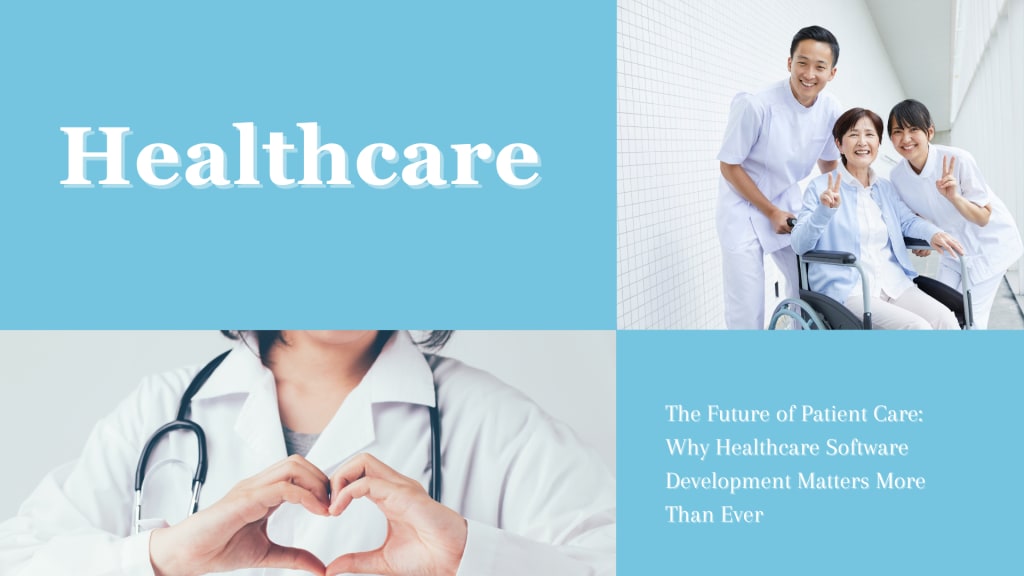
Healthcare is changing faster today than at almost any point in history. Patients expect faster diagnoses, clinicians demand accurate data in real time, and healthcare organisations are under pressure to improve outcomes with limited resources. At the heart of this transformation, one force is reshaping patient care: software development tailored to healthcare needs.
From digital health records to intelligent monitoring systems, healthcare software is no longer optional – it's essential.
From Paper to Precision: A Shift in Medical Records
For decades, healthcare providers relied on paper charts and manual record-keeping. This made patient information siloed, incomplete, and difficult to share between departments. It was not unusual for clinicians to spend more time searching for records than treating patients.
That changed with the introduction of Electronic Health Records (EHRs). Software has enabled real-time access to structured patient data, improving both speed and accuracy in clinical decision-making. Clinicians can now view a patient’s entire medical history with a few clicks – and importantly, all care team members see the same information. This reduces errors, improves coordination, and supports continuity of care.
Why Interoperability Still Matters
Despite EHR adoption, many healthcare systems still struggle with interoperability – the ability of different software systems to communicate and share data seamlessly. When one clinic’s system cannot “talk” to another’s, critical patient data can remain trapped in silos.
Healthcare software development aims to fix this by creating integration solutions that allow data to flow securely from one system to another. This isn’t just a technical improvement. It fundamentally improves patient safety. When medication histories, lab results, or imaging records are accessible across providers, clinicians make more informed decisions – and patients get better care, faster.
Patient Monitoring Beyond Hospital Walls
In the past, patient monitoring was largely restricted to hospital wards or clinics. Today, software-powered monitoring extends far beyond clinical settings. Wearable devices track vital signs continuously, cloud platforms aggregate health data in real time, and clinicians receive alerts when a patient’s condition changes.
This evolution allows healthcare professionals to support patients living with chronic diseases or those recovering at home. With remote monitoring systems, doctors can detect early warning signs, adjust care plans quickly, and reduce unnecessary hospital admissions. For patients, this means safer care that adapts to their real-life needs – not just in scheduled visits.
AI and Analytics: Turning Data Into Decisions
Healthcare software is increasingly intelligent. Modern systems don’t just store data – they analyse it. Artificial intelligence (AI) and data analytics tools can detect patterns that humans might miss. For example, predictive analytics may identify subtle trends in patient vitals that signal the need for a care intervention before symptoms become severe.
This ability to turn information into insight changes the scope of what’s possible in medicine. Instead of reacting when a complication develops, clinicians can prevent it. This shift from reactive to proactive care is one of the most powerful outcomes of software-driven healthcare.
Improving the Patient Experience
Software also enhances the experience from the patient’s perspective. Patients today expect digital engagement similar to other aspects of life. They want appointment reminders, access to their records, secure messaging with their care team, and easy scheduling. Apps and patient portals deliver this functionality while empowering individuals to participate actively in their care.
This engagement matters. When patients are informed and involved, they are more likely to follow treatment plans, complete follow-ups, and make lifestyle changes that improve long-term health.
Supporting Healthcare Teams, Not Replacing Them
Some worry that innovation in healthcare software might replace human roles. The reality is different. Software is a tool – and a powerful one – but it does not replace the empathy, judgement, and human connection that clinicians provide. Instead, it supports them by simplifying workflows, reducing administrative burden, and giving clinicians more time for direct patient interaction.
For example, automated documentation tools can transcribe visit notes, reminders can streamline follow-ups, and clinical dashboards can consolidate critical information. Healthcare professionals can spend less time on bureaucratic tasks and more time where it matters most – with patients.
Why This Matters Now
Healthcare systems around the world are facing increasing demands: ageing populations, rising chronic conditions, workforce shortages, and cost pressures. Software development in healthcare responds to all of these challenges simultaneously.
Advanced software:
- Enables real-time decision-making
- Improves patient safety
- Supports remote care
- Reduces operational inefficiencies
- Enhances patient engagement
This doesn’t just make care better – it makes it sustainable.
Conclusion
The future of patient care is not about isolated technologies or flashy gadgets. It is about creating systems that work together to support health journeys from beginning to end. Healthcare software development matters because it bridges gaps that once hindered quality care, empowers clinicians with accurate information, and gives patients more control over their health.
As the healthcare landscape continues to evolve, software innovation will remain one of the most important drivers of better outcomes, safer care, and a more efficient health system.
About the Creator
Keep reading
More stories from sakshi gehlot and writers in Education and other communities.
Why eCommerce Development Services Are the Backbone of Modern Online Retail
The digital commerce landscape is evolving at an extraordinary pace. What once started as simple online shopfronts has now transformed into highly sophisticated ecosystems powered by data, automation, and seamless user experiences. Businesses that fail to adapt to this shift often struggle to survive, while those that invest in advanced eCommerce development services position themselves for long-term success.
By sakshi gehlot9 days ago in FYI
Cybersecurity for Small Businesses: What You Need to Know
In today’s digital age, cybersecurity is no longer a concern limited to large corporations. Small businesses are increasingly becoming prime targets for cyberattacks due to their often-limited resources and perceived vulnerabilities. According to a recent report by the National Cyber Security Alliance, 43% of cyberattacks target small businesses. Despite this alarming statistic, many small business owners still underestimate the importance of implementing strong cybersecurity measures. The reality is that even a single breach can lead to financial loss, operational disruption, and long-term damage to a company’s reputation. Understanding the risks and taking proactive steps is essential for safeguarding your business in an increasingly connected world.
By Baris Kabulogluabout 3 hours ago in Education
You Should Stop Trying to Be a Better Person
A year ago, I spent two days in the Colombian mountains drinking ayahuasca as part of a spiritual ceremony. An experience that pulled apart every detail of my being and rearranged me in a new sequence. I wish that life became easier after the feat. It didn’t.
By Annaise Michelle8 days ago in Humans




Comments
There are no comments for this story
Be the first to respond and start the conversation.