
Stress-Free Annual Tax Filing in Singapore: Practical Tips for Businesses & Individuals
Stress-Free Annual Tax Filing
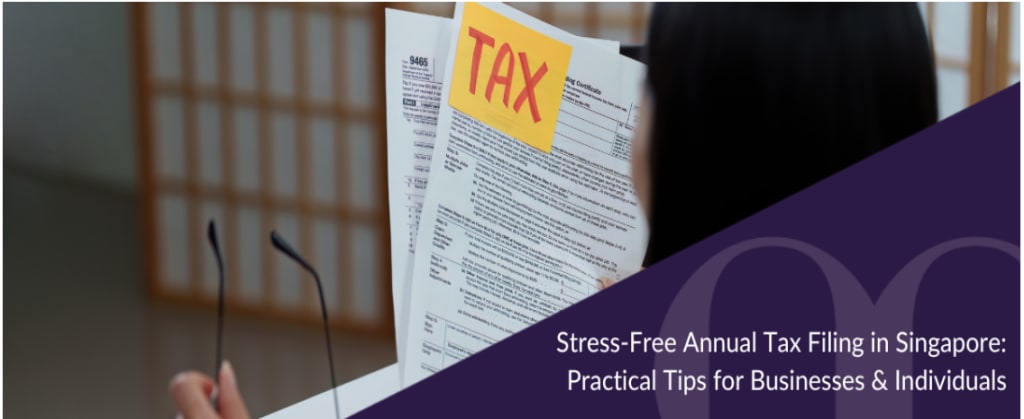
Annual tax filing can feel overwhelming for both businesses and individuals, especially as deadlines approach. However, with proper planning, clear understanding, and the right tools, the process can become much more manageable.
This guide outlines practical tips to help you stay organised, meet IRAS requirements, and complete your tax filing accurately and on time.
Understanding the Tax Filing Process
Having a clear understanding of how tax filing works can help reduce errors, ensure compliance, and provide better insight into your financial situation.
What is Annual Tax Filing?
Annual tax filing refers to submitting your yearly tax return to the Inland Revenue Authority of Singapore (IRAS). This includes reporting your income, expenses, and the amount of tax payable.
For companies, it involves declaring profits and claiming applicable deductions or exemptions.
For individuals, it includes reporting income from all sources so that the correct tax amount can be calculated.
Filing accurately helps avoid penalties and ensures compliance with local tax regulations.
Key Deadlines to Remember
Being aware of important deadlines is essential to avoid penalties and last-minute stress.
Companies:
- Estimated Chargeable Income (ECI) must generally be filed within 3 months after the financial year-end
- Corporate tax return (Form C-S or Form C) is due by 30 November
Individuals:
- Paper filing deadline: 15 April
- E-filing deadline: 18 April
Planning ahead ensures you have enough time to prepare and review your information.
Common Challenges in Tax Filing
Many taxpayers encounter similar challenges, including:
- Errors in calculating taxable income
- Missing deadlines due to poor planning
- Incorrect claims for deductions or reliefs
Recognising these challenges early allows you to prepare better and reduce stress during the filing process.
Practical Tax Filing Tips for Businesses and Individuals
Taking simple steps throughout the year can significantly ease the burden of annual tax filing.
Organise Your Financial Records Early
Maintaining well-organised financial records is one of the most effective ways to simplify tax filing.
- Track income, expenses, and receipts regularly
- Use spreadsheets or accounting tools to stay organised
- Keep digital copies of invoices and supporting documents
- Proper record-keeping reduces errors and saves time during tax preparation.
Understand Your Tax Obligations
Different taxpayers are required to file different forms:
- Companies typically file Form C-S or Form C
- Individuals file Form B or Form B1
It is also important to understand which deductions, exemptions, or reliefs apply to you. These may include business expenses, personal reliefs, or approved donations that can reduce taxable income.
Stay Updated on Tax Regulations
Tax rules and policies can change over time. Staying informed about updates from IRAS ensures that your filing remains accurate and compliant.
Reviewing the latest regulations before submitting your return helps prevent errors and unexpected penalties.
Use Technology to Make Filing Easier
- Technology plays a major role in simplifying the tax filing process.
- The myTax Portal in Singapore allows for convenient and efficient e-filing
- Accounting tools can automate calculations and generate reports
- Digital reminders can help track deadlines and missing information
- Using digital solutions reduces manual work and improves accuracy.
Avoid the Last-Minute Rush
Delaying tax preparation often leads to unnecessary stress and mistakes. Starting early allows time to:
- Verify financial data
- Correct errors
- Gather missing documents
Early preparation ensures a smoother filing experience.
Seek Professional Guidance When Needed
In more complex situations, seeking professional advice related to Tax and Accounting can be helpful. Experts can clarify tax rules, review calculations, and ensure compliance.
While not always necessary for everyone, professional guidance can be useful for businesses or individuals with more complicated financial situations.
Common Mistakes to Avoid During Tax Filing
Understanding common mistakes can help you file more accurately and avoid unnecessary issues.
Missing Filing Deadlines
Late submissions may result in penalties, interest charges, or additional scrutiny.
To avoid this:
- Mark deadlines clearly in your calendar
- Set reminders in advance
- Aim to submit early whenever possible
- Inaccurate Reporting
Incorrect reporting of income or expenses can lead to delays or audits.
Ensure that:
- All figures match supporting documents
- Income and expenses are reported correctly
- Records are kept for at least five years
Accurate reporting supports both compliance and financial clarity.
Ignoring Tax Reliefs and Incentives
Failing to claim eligible reliefs can result in higher tax payments.
Examples include:
- Start-Up or Partial Tax Exemptions for businesses
- CPF contributions or dependent reliefs for individuals
- Donations to approved institutions
- Reviewing available reliefs helps optimise your tax position.
How to Make Tax Filing Stress-Free
Annual tax filing does not need to be complicated or stressful. With proper planning, organised records, and the use of digital tools, the process can be straightforward.
By staying aware of deadlines, understanding your obligations, and using platforms like the myTax Portal in Singapore, you can complete your filing efficiently. For more complex cases, guidance related to Tax and Accounting can provide additional clarity and support.
A structured approach throughout the year makes tax season significantly easier and more manageable.
About the Creator
Keep reading
More stories from Shazad Khan and writers in Confessions and other communities.
Understanding Fabric Durability: How the Martindale Tester Shapes Modern Textile Quality
In the textile industry, durability is one of the most important indicators of product quality. From everyday clothing and upholstery to industrial and protective materials, fabrics are constantly exposed to friction, pressure, and repeated use. To evaluate how well a material performs under such conditions, laboratories rely on standardized testing methods. One of the most widely recognized tools for this purpose is the Martindale Tester, an instrument designed to assess fabric abrasion resistance and pilling behavior in a controlled, repeatable manner.
By Shazad Khan2 months ago in Lifehack
Fading Fame: The Untold Confession Behind Harry, Meghan, and the Collapse of Icon Status
There was a time when being recognized meant everything. Long before social media, before viral videos and trending hashtags, status was measured differently. If your name appeared in elite publications or your image was immortalized somewhere prestigious, you had truly “arrived.” It wasn’t just fame—it was validation.
By CelebCast Central3 days ago in Confessions




Comments
There are no comments for this story
Be the first to respond and start the conversation.