
7 Bildungsroman Books You Must Read in 2026
Discover the 7 Must-Read Bildungsroman Books in 2026: Timeless Coming-of-Age Stories That Shape Identity, Morality, and Personal Growth.


In the vast landscape of literature, few genres capture the essence of human growth as poignantly as the bildungsroman. Derived from the German words “bildung” (education or formation) and “roman” (novel), a bildungsroman chronicles the psychological, moral, and emotional development of its protagonist from youth to adulthood. These stories resonate because they mirror our own journeys—full of trials, triumphs, mistakes, and revelations. Whether you are a seasoned reader or new to this genre, exploring these novels allows us to reflect on identity, purpose, and the intricate process of becoming ourselves.
Below is a list of 7 bildungsroman books you must read in 2026.
1. “Angela’s Ashes” by Frank McCourt
Frank McCourt’s Angela’s Ashes is a memoir and bildungsroman that recounts his impoverished childhood in Limerick, Ireland. Through vivid, sometimes heartbreaking anecdotes, McCourt explores poverty, familial struggle, and the pursuit of education as a path to self-betterment. His journey from a malnourished, marginalized child to an ambitious young adult highlights resilience, perseverance, and moral reflection. McCourt’s writing combines humor and poignancy, capturing both the harsh realities and small joys of life. This novel is crucial in the bildungsroman tradition because it demonstrates how adversity, resourcefulness, and determination shape identity, teaching readers that growth often emerges from hardship and unwavering hope.
2. “Jane Eyre” by Charlotte Brontë
Charlotte Brontë’s Jane Eyre tells the story of an orphaned girl who endures hardships at Lowood School and later confronts societal restrictions at Thornfield Hall. Jane’s journey is marked by the development of independence, moral integrity, and self-respect. As a bildungsroman, it examines the tension between societal expectations and personal authenticity, particularly for women in Victorian England. Brontë intertwines romance with ethical growth, showing that personal fulfillment requires courage and adherence to one’s principles. Jane’s resilience and unwavering sense of self make this novel a timeless exploration of identity, emotional maturity, and the pursuit of dignity amidst adversity.
3. “Great Expectations” by Charles Dickens
In Great Expectations, Dickens charts Pip’s journey from a humble orphan to a gentleman aspiring for wealth and status. The novel explores themes of social class, ambition, loyalty, and moral reckoning. Pip’s growth is not just external; his bildungsroman arc reflects internal development as he learns the value of humility, compassion, and integrity. Dickens’ rich depiction of Victorian society serves as a backdrop for Pip’s struggles and triumphs, illustrating how external influences shape personal character. The story’s enduring appeal lies in its meticulous exploration of identity, morality, and the human tendency to idealize wealth over ethical and emotional growth.
4. “To Kill a Mockingbird” by Harper Lee
Harper Lee’s To Kill a Mockingbird presents the coming-of-age story of Scout Finch, growing up in racially segregated Alabama. Through Scout’s observations, the novel examines themes of justice, empathy, and moral courage, particularly as her father, Atticus, defends an innocent Black man accused of a crime. Scout’s journey reflects the bildungsroman’s focus on ethical development and social awareness. Lee’s narrative balances childhood innocence with the harsh realities of prejudice, illustrating how moral education is shaped by both experience and mentorship. This novel remains relevant for its timeless exploration of human decency and the maturation of conscience in a flawed world.
5. “Little Women” by Louisa May Alcott
Little Women follows the March sisters—Meg, Jo, Beth, and Amy—as they mature during the American Civil War. Alcott’s bildungsroman examines diverse paths to adulthood, emphasizing values such as resilience, morality, and self-reliance. Each sister faces personal challenges—love, ambition, and societal expectations—that shape her character and worldview. Alcott’s portrayal of family, gender roles, and ethical growth remains timeless, offering readers insight into personal and societal development. The novel celebrates the journey of self-discovery and maturation, highlighting the interplay between familial bonds and individual aspirations. It remains a definitive exploration of youth, morality, and the universal pursuit of meaningful life goals.
6. “The Kite Runner” by Khaled Hosseini
Khaled Hosseini’s The Kite Runner is a contemporary bildungsroman exploring friendship, betrayal, and redemption in Afghanistan. Protagonist Amir’s journey from a privileged, guilt-ridden child to a morally accountable adult examines personal growth amid political turmoil. Themes of loyalty, forgiveness, and the struggle for self-redemption drive Amir’s evolution, emphasizing how past actions shape future identity. Hosseini’s vivid depiction of cultural context and familial dynamics enhances the novel’s emotional depth. The story resonates universally, demonstrating that maturation requires confronting guilt, taking responsibility, and embracing empathy. It is both a personal and societal reflection on the transformative journey of self-discovery.
7. “The Bell Jar” by Sylvia Plath
Sylvia Plath’s The Bell Jar is a haunting, introspective bildungsroman chronicling Esther Greenwood’s struggle with identity, societal expectations, and mental illness in 1950s America. The novel explores themes of autonomy, ambition, and psychological fragility as Esther navigates pressures to conform while grappling with depression. Plath’s poetic prose captures her protagonist’s inner turmoil, illustrating how personal growth is intertwined with mental and emotional challenges. The narrative confronts gender constraints and societal norms, revealing the complexity of self-realization. The Bell Jar resonates as both a personal and social exploration, offering readers insight into the delicate balance between individuality, societal expectation, and emotional resilience.
Conclusion
The bildungsroman genre remains a cornerstone of literature because it mirrors the human journey—imperfect, challenging, and transformative. By engaging with these stories, we not only enjoy compelling narratives but also gain profound insights into our own lives and growth.
About the Creator
Diana Meresc
“Diana Meresc“ bring honest, genuine and thoroughly researched ideas that can bring a difference in your life so that you can live a long healthy life.
Keep reading
More stories from Diana Meresc and writers in BookClub and other communities.
7 Books That Will Surprise You with Their Wisdom
In a world overflowing with information, finding true wisdom can feel like searching for a needle in a haystack. We scroll endlessly, skim headlines, and consume bite-sized content—but rarely do we pause long enough to absorb ideas that genuinely transform how we think, live, and relate to others.
By Diana Meresc8 days ago in BookClub
A Visitor's Guide To Victorian England
A Book Review Being interested in all things Victorian, I am constantly looking for books on the Victorian Era. In fact, I should admit that I am obsessed about ‘all things Victorian’. From the clothes worn by men and women, rich or poor, to how they lived, where they lived, what they ate and would (or would not ) drink, what kind of transport there was, who worked where, who went to school (and who didn’t), the list really is endless.
By Ruth Elizabeth Stiff6 days ago in BookClub
A Journey from Failure to Success
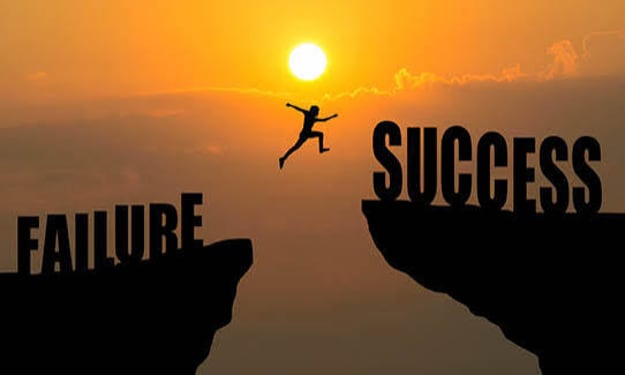
Failure is often seen as the end of the road, a sign that dreams are too big or efforts are not enough. However, in reality, failure is not the opposite of success—it is a crucial part of it. Every successful person has faced setbacks, disappointments, and moments of doubt. What separates them from others is their determination to rise again. The journey from failure to success is not easy, but it is one of the most powerful and inspiring transformations a person can experience.
By shaoor afridi3 days ago in BookClub
The Irony of Flying While We Bomb the "World's Greatest Terror Regime"
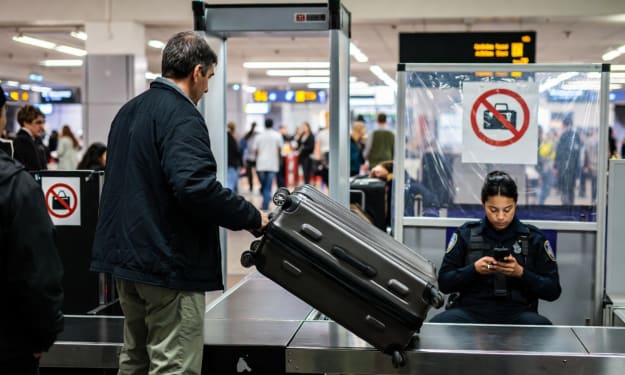
Ah, the irony of flying at this moment in time as the United States is simultaneously bombing Iran - the nation officials have insisted for decades is "The World's Greatest Terror Regime" - while the TSA is on a go-slow, courtesy of a funding squeeze that's left its officers unpaid, quitting in droves, and turning checkpoints into something like slow-moving bread lines.
By Scott Christenson🌴8 days ago in Humor


Comments
There are no comments for this story
Be the first to respond and start the conversation.