
Exploring the Future of Web3 and Decentralized Technologies
Blockchain Beyond Cryptocurrency – Exploring applications of decentralized tech across industries.
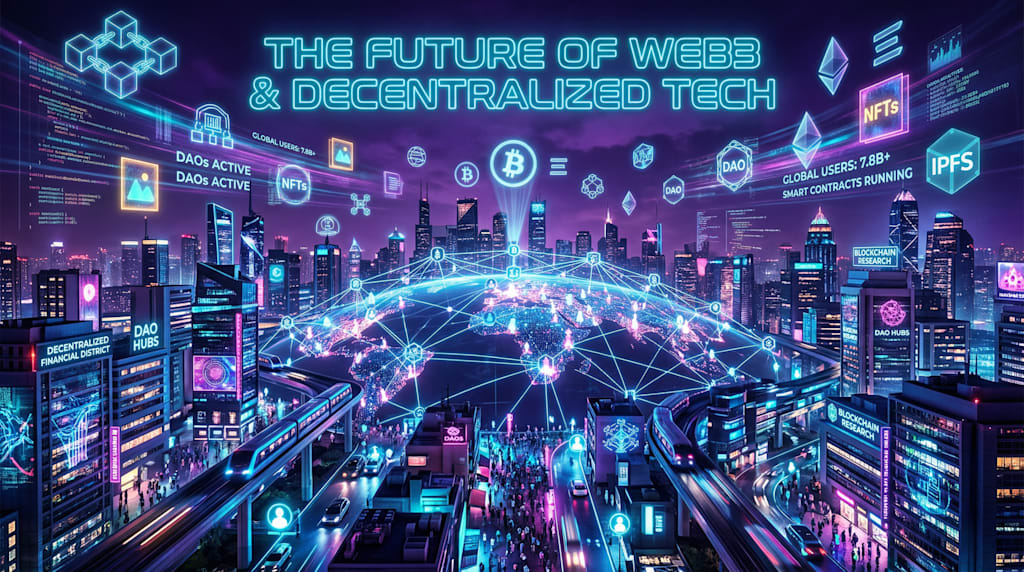
The digital world is evolving at a rapid pace, and Web3 stands at the forefront of this transformation. As a decentralized version of the internet, Web3 aims to shift control away from centralized entities and place it back into the hands of users. This new paradigm is powered by blockchain technology, enabling transparency, security, and trustless interactions across a wide range of applications.
Understanding the Web3 Vision
Web3 represents a fundamental change in how digital systems operate. Instead of relying on centralized servers and organizations, Web3 platforms operate on decentralized networks where data is distributed across multiple nodes. This structure reduces reliance on intermediaries and increases user autonomy.
At its core, Web3 is about ownership and participation. Users can own digital assets, participate in governance decisions, and interact directly with applications through blockchain-based systems.
Key Technologies Driving Web3
Several technologies are contributing to the growth and adoption of Web3:
- Blockchain: The backbone of Web3, enabling secure and transparent record-keeping.
- Smart Contracts: Self-executing agreements that automate processes without intermediaries.
- Decentralized Applications (dApps): Applications that run on blockchain networks instead of centralized servers.
- Tokenization: The process of converting assets into digital tokens that can be traded or managed on-chain.
These technologies are enabling new forms of digital interaction, from decentralized finance to virtual worlds and digital identity systems.
Benefits of a Decentralized Internet
Web3 offers several advantages over traditional internet models:
- User Ownership: Individuals have control over their data and digital assets.
- Transparency: Transactions are recorded on public ledgers, increasing trust.
- Security: Decentralized systems reduce the risk of single points of failure.
- Global Access: Anyone with an internet connection can participate.
These benefits are driving interest from developers, businesses, and users around the world.
Challenges and Limitations
Despite its promise, Web3 faces several challenges. Scalability remains a key issue, as many blockchain networks struggle to handle large volumes of transactions efficiently. High transaction fees and slow processing times can also hinder adoption.
User experience is another barrier. Managing wallets, private keys, and interacting with decentralized platforms can be complex for newcomers. Additionally, regulatory uncertainty continues to create obstacles for widespread implementation.
Market Curiosity and Emerging Discussions
As the ecosystem grows, curiosity around various digital assets continues to increase. Investors and enthusiasts often explore different projects to understand their potential and use cases.
Discussions Around Emerging Tokens
In many online communities, topics like xyo coin frequently come up in conversations about emerging blockchain projects. Enthusiasts discussing xyo coin often analyze aspects such as utility, adoption potential, and integration within the broader Web3 ecosystem. These discussions reflect a growing interest in exploring new and innovative digital assets.
The Road Ahead for Web3
The future of Web3 is filled with possibilities. As technology improves and user adoption increases, decentralized systems could become a standard part of everyday digital interactions. From finance and gaming to social media and identity management, the impact of Web3 is expected to expand across multiple industries.
Innovation, collaboration, and education will play key roles in shaping this future. As more people understand and engage with decentralized technologies, the transition toward a more open and user-centric internet will continue to accelerate.
Conclusion
Web3 is not just a trend in technology; it's a change in how we think about who owns what, who controls what, and how we interact with technology online. Even though there are still problems, the possible benefits of decentralization are big.
As the ecosystem continues to evolve, staying informed and open to innovation will be essential for anyone looking to participate in the next phase of the internet.
About the Creator
Keep reading
More stories from Nimra kanwal and writers in 01 and other communities.
The Growing Influence of Cryptocurrency in the Digital Age
Cryptocurrency has emerged as one of the most transformative innovations in modern finance. What began as a niche concept has evolved into a global movement, influencing how people think about money, ownership, and digital interaction. As blockchain technology continues to advance, cryptocurrencies are playing an increasingly important role in shaping the future of the internet and financial systems.
By Nimra kanwalabout 4 hours ago in 01
Takaful, Trust, and Technology: The Methaq–Shory Story
It is not loud. It does not trend on social media every week. But if you pay attention, you start to notice that consumers here are asking a different kind of question — not just what does this cost? but who is behind this, and what do they actually stand for?
By Mathew Davis7 days ago in 01
How to Choose the Right Platform for Your Website Migration
Website migration is one of the most sensitive and high-risk technical processes a business can undertake. Whether you are moving to a new platform, redesigning your site, switching domains, or upgrading infrastructure, every change has the potential to affect performance, search visibility, and user experience.
By Henry Davidsa day ago in 01
Kristi Noem is MELTING!!!!!
Former Homeland Secretary/"Ice Barbie" Kristi Noem is melting with scandals, not she is dealing with a cheating affair with one of the aides, killing her puppy, her own supportive husband Byron Noem is being exposed as a crossdresser, talking with fetish's Bimbos and paying them thousands of dollars. Kristi Noem's husband was exposed by the Dailymail this week exposing photos of Byron wearing and flaunting big gigantic balloon faux ta-tas, wearing paded shorts, and pouting his duck lips like it's 2013.
By Gladys W. Muturi4 days ago in The Swamp




Comments
There are no comments for this story
Be the first to respond and start the conversation.